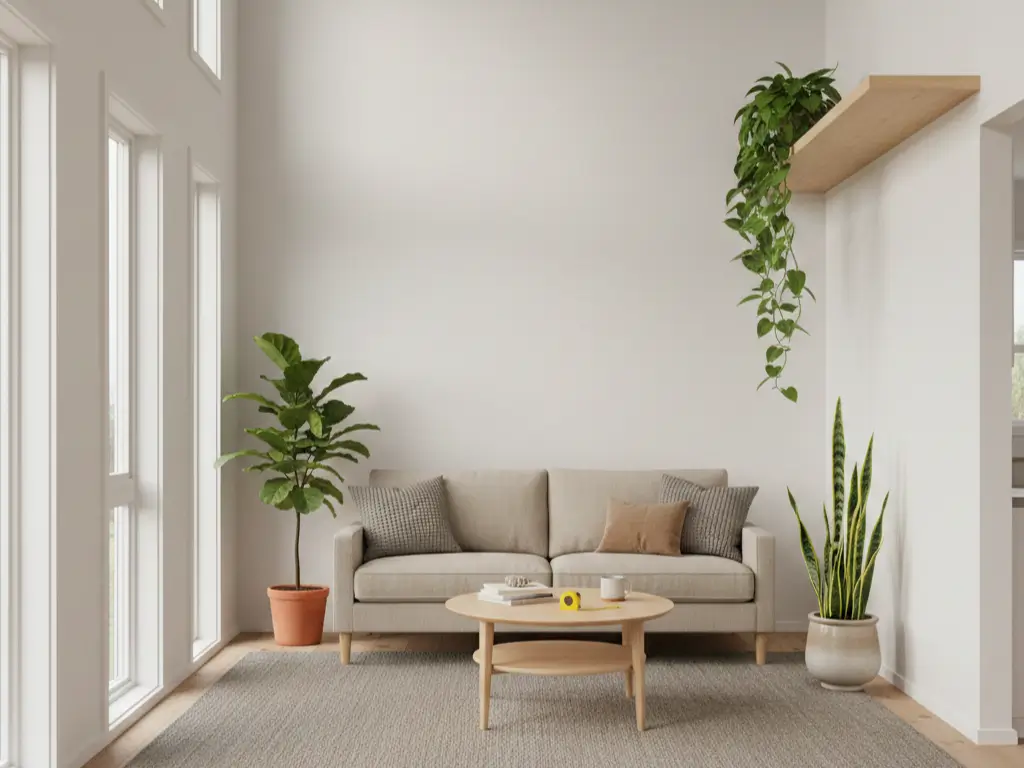
There is a romantic notion that living in a tiny house or small apartment means living closer to nature. But when I moved into my first 400 sq ft studio, I realized that “closer to nature” actually meant “tripping over pots” and watching ferns die because my heater was three feet away from everything.
The physics of small spaces changes how plants behave. A tiny volume of air heats up faster, holds humidity differently, and offers fewer places to hide a struggling Ficus.
Successful plant care in small spaces requires three shifts: utilizing vertical volume (walls/ceilings) rather than floor space, managing rapid micro-climate temperature fluctuations common in small volumes, and selecting plants based on your specific light map, not just aesthetics. Budget: $50 (DIY) to $300 (systems).
If you are trying to turn your compact living space into an oasis without sacrificing your walking path, you need a strategy that goes beyond “water once a week.” Here is how to cultivate a thriving indoor garden when every square inch counts.
How Does Square Footage Impact Plant Care Fundamentals?
In spaces under 600 sq ft, plants are subjected to “micro-climate intensity.” Temperature shifts occur 2x faster than in standard homes, and humidity spikes from showers or cooking affect the entire dwelling. You must position plants at least 3 feet from heat sources and utilize the naturally higher humidity.
The Thermal Swing
In a standard 2,000 sq ft home, the temperature is relatively stable. In a tiny house or a small apartment, cooking dinner can raise the ambient temperature by 5-10 degrees in minutes. Conversely, a drafty window in a small room chills the air rapidly.
Most tropical plants (Monstera, Pothos) hate drafts. In my experience, the “death zone” is usually within 24 inches of a mini-split HVAC unit or a tiny house wood stove.
- The Fix: Map your airflow. If you can feel the heater blowing, your plant will dry out. Use a cheap $10 hygrometer to track humidity swings.
Humidity: The Tiny House Superpower
Here is the good news: Small spaces trap humidity better. If you have a tiny house bathroom design that opens into the main living area, your shower steam is essentially a spa treatment for your tropical plants.
- Measurements: Aim for 40-60% humidity.
- Warning: If it exceeds 70%, you risk mold on your walls. This is why pairing plants with low-VOC paint that resists moisture is critical.
Vertical Gardening Techniques for Tight Layouts
To maximize greenery without losing floor space, utilize the “upper third” of your walls. Install floating shelves (6-8 inches deep) above eye level, use tension rod planters for window frames, or mount trailing plants on the sides of cabinetry. This approach adds visual height to low ceilings.
The “6-Inch Rule” for Shelving
When you don’t have floor space for a pot, you look up. However, standard shelves are often 10-12 inches deep, which can make a narrow tiny house feel claustrophobic.
I switched to using lumber specifically cut to 6 inches deep. This is wide enough for a standard 4-inch or 5-inch nursery pot but shallow enough that you won’t bump your head.
- Placement: Install shelves 12-18 inches below the ceiling. This draws the eye up, making the room feel larger.
- Material: If you are building this yourself, consider lightweight wood materials for tiny houses like pine or cedar to reduce weight on the walls.
Suspension and Tension
If you are renting, drilling holes might be off-limits. Tension rods placed inside window frames allow you to hang lightweight macramé holders.
- Weight Limit: Ensure your rod is rated for at least 15 lbs. A watered plant is heavier than you think.
- Location: This works best in tiny house kitchen designs where you might want herbs directly in the window for sunlight.
How to Assess Light in Compact Floor Plans?
Light intensity drops by 50% for every foot you move away from a window. In narrow tiny homes (often 8.5 ft wide), the center of the room is effectively “low light.” Use a light meter app to measure foot-candles: High (>1000 FC), Medium (250-1000 FC), and Low (<250 FC).
The “Tunnel Effect”
Many tiny houses on wheels resemble tunnels. You have windows on the sides, but the light doesn’t penetrate deep into the corners.
- Window Zone (0-2 ft): Succulents, Cacti, Fiddle Leaf Figs.
- Mid Zone (2-5 ft): Pothos, Philodendrons, Monstera.
- Deep Zone (5+ ft): Snake Plants, ZZ Plants, Cast Iron Plants.
If you are struggling with a dark apartment, you don’t necessarily need to move. You might need to paint. Using bright paint colors with a high Light Reflectance Value (LRV) can bounce available sunlight deeper into the room, effectively expanding your growing zone.
Supplemental Lighting
If you are living in a lofted bedroom with no windows, grow lights are mandatory.
- The Aesthetic Hack: Don’t buy the purple “blurple” lights. Buy full-spectrum LED bulbs (5000K-6500K temperature) and screw them into regular architect lamps or clamp lights.
- Link: For more on wiring these setups, check our guide on tiny house lighting solutions.
Benefits of Soilless Mediums for Small Apartments
Traditional potting soil can harbor fungus gnats and be messy to store in small closets. For small spaces, consider “LECA” (Lightweight Expanded Clay Aggregate) or Pon. These semi-hydroponic mediums are pest-resistant, reusable, and eliminate the need for bulky bags of dirt.
The Storage Reality
Where do you store a 20lb bag of potting soil in a 300 sq ft house? You don’t. This is why I transitioned about 60% of my plants to LECA.
- What is it? baked clay balls that wick water up to the roots.
- The Benefit: No dirt means no fungus gnats. In a tiny space where your kitchen, bedroom, and living room are one room, a gnat infestation is a nightmare.
Watering Logistics
Watering plants in a tiny house can be tricky if your sink is small.
- The Bathtub Method: If you have a tiny house bathroom fixture like a deep pan or tub, water everything at once there.
- Bottom Watering: Place pots in a shallow tray of water for 20 minutes. This prevents water from splashing onto your wood flooring and causing damage.
Best Indoor Plants for Small Apartments and Tiny Homes
Choose plants based on “architectural shape.” Avoid wide-spreading plants (like large Monsteras) that consume horizontal air space. Opt for columnar plants (Snake Plant), trailing plants (Pothos, String of Hearts), or compact growers (Peperomia) that stay under 12 inches in diameter.
The Loft Bedroom (Low Ceiling, High Heat)
Heat rises. If you sleep in a loft, it might be 10 degrees warmer than the ground floor.
- Recommendation: Pothos or Philodendron Brasil. They tolerate heat and look great trailing over the loft railing.
- Avoid: Ferns (they will crisp up immediately due to the dry heat).
- Design Tip: See our tiny house bedroom design guide for integrating hooks into rafters.
The Kitchen (High Humidity, Fluctuating Temp)
Cooking creates heat and steam.
- Recommendation: Aloe Vera (handy for burns) or Spider Plants.
- Placement: On top of the fridge or hanging in the window. Keep them away from the stove burner!
- Check indoor plants for small apartments for a wider list of species.
The Living Area (High Traffic)
In a narrow space, you will brush against these plants constantly.
- Recommendation: Rubber Tree (Ficus elastica). It grows vertically and has tough leaves that can handle being bumped.
- Avoid: Cacti with sharp spines. In a 3-foot wide hallway, a cactus is a weapon.
Biophilic Design in Tiny Homes vs. Cluttered Chaos
Biophilic design connects occupants to nature, which is vital in small spaces to reduce the feeling of confinement. The key is “grouping.” Instead of scattering 10 small pots everywhere (clutter), group them into 3 distinct clusters (design). Use matching pot colors to reduce visual noise.
The Rule of Threes
Cluster plants in odd numbers. A group of three varying heights (tall, medium, trailer) looks intentional.
- Visual Weight: Use white or terracotta pots. Bright, patterned pots can make a small room feel busy.
- Furniture Integration: Look for wood furniture for small spaces that includes built-in shelves or ledges specifically for plants.
Multi-Functional Decor
In a tiny house, everything must do two jobs. Can your plant stand also be storage?
- Idea: Use a utility cart (like a Råskog) as a mobile plant station. You can wheel it into the sun during the day and tuck it away at night.
- This aligns well with tiny house storage solutions, where mobility is key.
Final Thoughts
Growing a jungle in less than 600 square feet is entirely possible, but it requires discipline. It isn’t about buying every pretty plant you see at the nursery; it is about curating species that can survive your specific micro-climate and vertical constraints.
- Get a tape measure and check the depth of your window sills and potential shelf spots.
- Download a light meter app and check your “dark” corners.
- Move one floor plant to a wall or ceiling mount this week. You will be amazed at how much larger the room feels.
For more on making your small space work harder for you, explore our guide on plant placement and arrangement to take your design to the next level.