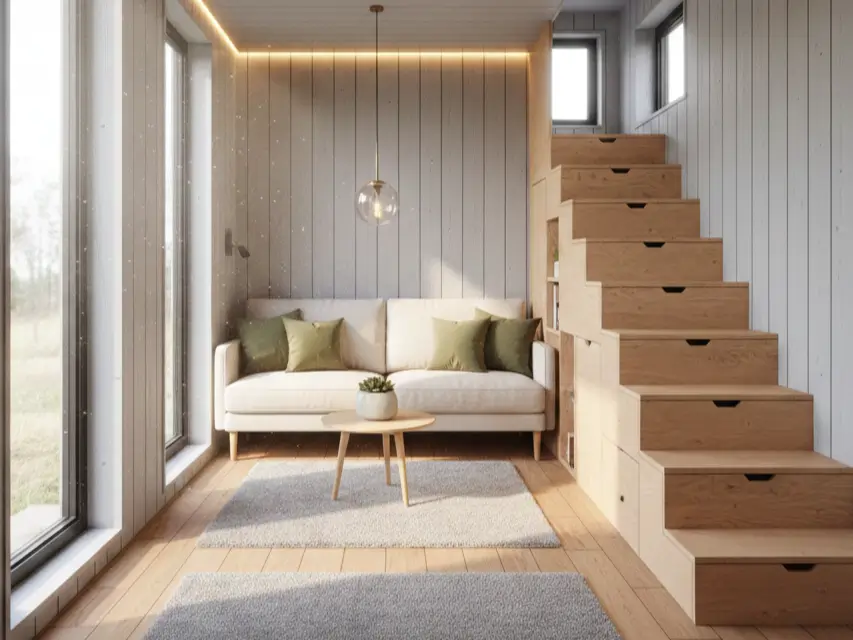
I used to think “wood is wood.” Then I tried to tow a tiny house framed with standard lumber and clad in heavy oak shiplap. The tongue weight was a disaster, and I realized quickly that when you are building or renovating under 400 square feet, every ounce counts.
If you are living in a small apartment, the calculation changes, but the principle remains: you want the warmth of natural grain without the visual heaviness that makes a 12×12 room feel like a coffin.
Here is the reality: Standard residential construction advice doesn’t always scale down. In a large home, using 3/4-inch solid hardwood floors is a luxury. In a Tiny House on Wheels (THOW), it adds hundreds of unnecessary pounds that kill your fuel economy and towing stability.
This guide breaks down the best wood materials for tiny houses, focusing on the “Weight-to-Warmth” ratio, getting that cozy aesthetic without overloading your chassis or your budget. From $15 plywood sheets to investment-grade cedar, we’re looking at what actually works in tight, moisture-prone spaces.
The Critical Factor: Weight vs. Durability in THOWs
For mobile tiny houses, prioritize high strength-to-weight ratios. Western Red Cedar (approx. 23 lbs/ft³) and Paulownia are superior for cladding due to lightness and rot resistance. For interiors, 1/4″ or 3/8″ Baltic Birch plywood offers structural rigidity at a fraction of the weight of drywall or solid pine planking. Always calculate payload capacity before selecting heavy hardwoods like Oak or Maple.
Why Density Matters
In a standard 2000 sq ft house, you rarely worry about how heavy your walls are. In a tiny house built on a trailer, you have a Gross Vehicle Weight Rating (GVWR), usually between 10,000 and 21,000 lbs depending on axles.
When I designed my first layout, I wanted reclaimed barn wood everywhere. It looked great on Pinterest. But when I did the math, cladding the interior walls in 1-inch thick reclaimed oak would have added nearly 1,500 lbs to the build.
Instead, I shifted to engineered thin-wood veneers and softwoods.
- Hardwoods (Oak, Maple, Walnut): Heavy, durable, expensive. Use sparingly for high-wear areas like countertops and surfaces.
- Softwoods (Pine, Cedar, Spruce): Lighter, prone to denting, easier to work with. Ideal for walls and ceilings.
- Engineered Woods (Plywood, Laminated Veneer Lumber): dimensionally stable and often the smartest choice for structural sheathing.
If you are in a stationary foundation tiny home or a rental apartment, weight matters less, but “visual weight” still applies. Dark, heavy grains can shrink a room visually.
Interior Wall Cladding: Beyond Heavy Shiplap
The best interior wall material for tiny houses is often 1/4″ AC Radiata Pine Plywood or 1/4″ Baltic Birch. Costs range from $30-$60 per 4×8 sheet. They are flexible enough to withstand road vibration without cracking (unlike drywall) and can be painted or stained. For the “plank look,” rip plywood sheets into 6-inch strips and install with a nickel gap.
The Plywood “Shiplap” Hack
This is my favorite budget maximizer. Real tongue-and-groove planking costs $2.00–$4.00 per linear foot. Plywood strips cost about $0.40 per square foot.
Here is the process I use for a 20-foot tiny house:
- Buy 4×8 sheets of 1/4″ underlayment plywood (smooth sanded face).
- Rip them into 6-inch or 8-inch wide strips.
- Sand the edges to remove splinters.
- Nail them up using a spacer (a nickel works perfectly) to create horizontal lines.
This mimics the look of shiplap but weighs roughly 0.7 lbs per sq ft, whereas solid pine tongue-and-groove weighs closer to 1.5 to 2.0 lbs per sq ft. Across 500 sq ft of wall space, you just saved over 500 lbs.
For a detailed look at other options, check out our guide on tiny house wall materials.
Moisture Concerns in Walls
Wood expands and contracts. In a tiny space (roughly 2,500 cubic feet of air volume), humidity spikes quickly when you cook or shower.
- Seal all faces: If you are using solid wood in a bathroom, you must seal the back of the wood before installation, not just the front. This prevents cupping.
- Leave gaps: Never butt wood joints tight against walls or ceilings; leave a 1/8″ expansion gap.
If you are dealing with a rental and can’t replace walls, consider painting wood elements to brighten the space while keeping the texture.
Flooring: durability in High-Traffic Zones
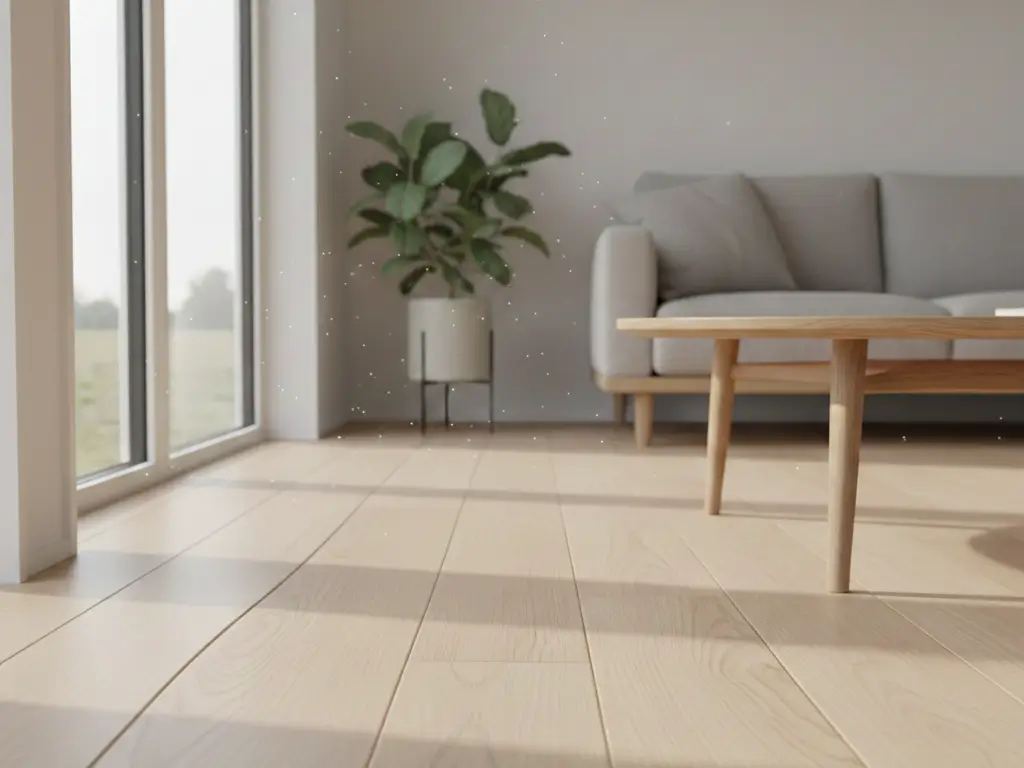
Solid hardwood is generally poor for THOWs due to weight and susceptibility to moisture fluctuation. Engineered Hardwood (3/8″ thick) or Luxury Vinyl Plank (LVP) with a realistic wood grain are superior. LVP is 100% waterproof, weighs roughly 1.5 lbs/sq ft, and tolerates the subfloor movement of a trailer. Budget: $2.50-$5.00/sq ft.
The “Hallway” Effect
In a tiny house, your entire floor plan is essentially a hallway. You will walk over the exact same spot in front of the sink 50 times a day. Softwoods like Pine floors will look destroyed within six months.
I love the look of reclaimed wood floors, but for tiny house flooring installation, I almost always recommend high-quality engineered wood or rigid-core vinyl.
Flooring for 200 Sq Ft Space
| Material | Weight (Approx) | Thickness | Cost (Material Only) | Small Space Verdict |
| Solid Oak | 550 lbs | 3/4″ | $800 – $1,200 | Too heavy; prone to buckling if temp fluctuates. |
| Engineered Wood | 300 lbs | 3/8″ – 1/2″ | $600 – $1,000 | Good balance of real wood feel and stability. |
| Pine Plank | 250 lbs | 3/4″ | $200 – $400 | Dents easily; requires frequent maintenance. |
| Rigid Core LVP | 350 lbs | 5-7mm | $500 – $800 | Best overall for durability and water resistance. |
If you choose engineered wood, ensure the wear layer is at least 2mm thick so it can survive life with pets. Speaking of which, if you are designing a tiny house with pets, scratch resistance is your number one priority.
Kitchens & Built-ins: Where to Spend the Weight Budget
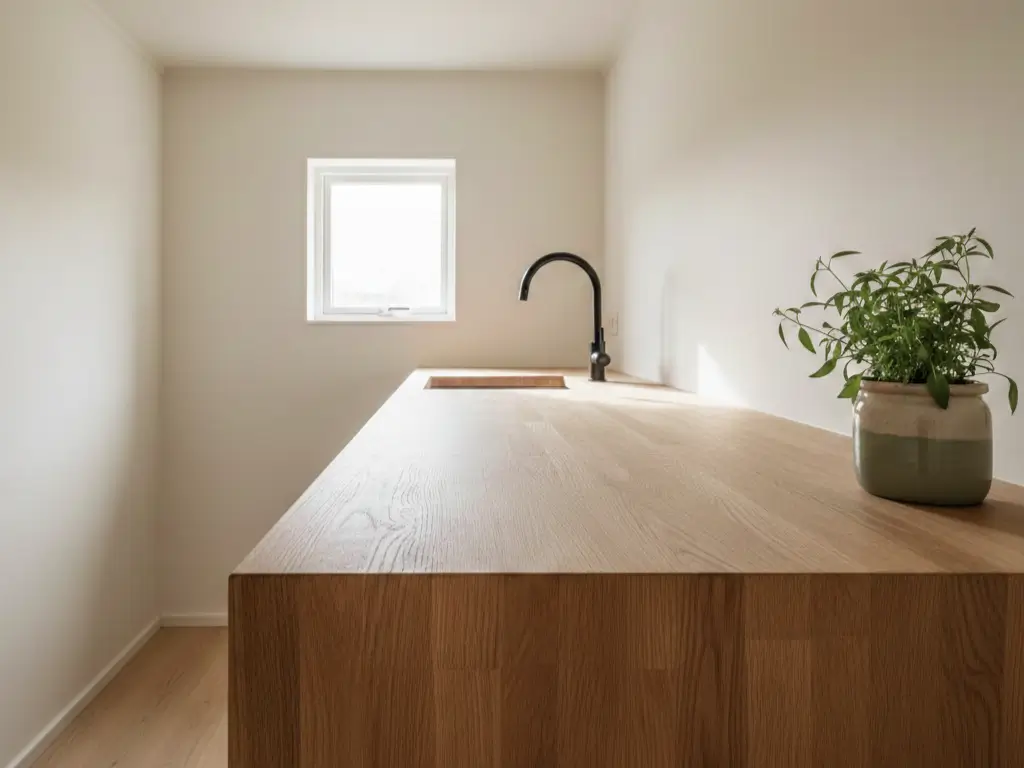
Kitchen countertops and tables are where real wood shines. Butcher Block (Birch or Acacia) is affordable ($200 for a 6ft slab) and durable. To save weight, use 1.5″ thickness for the countertop but use thinner 3/4″ material for shelving or cabinet boxes. Avoid particle board cabinetry; it’s heavy and swells with moisture.
Butcher Block: The Anchor
In a small kitchen, a butcher block counter adds immense warmth. However, a standard 25″ x 8′ slab can weigh 100 lbs.
- Weight Hack: If you have a tiny house kitchen design with a corner cabinet, you don’t need solid wood in the back corner where appliances sit.
- Finish: Use Tung Oil or Waterlox. Polyurethane can crack if the wood moves during transit.
Structural Joinery for Built-ins
Furniture in a tiny house usually serves two purposes (e.g., a staircase that is also a closet). This requires strong wood joinery techniques.
- Pocket Holes (Kreg Jig): Excellent for DIYers building lightweight cabinets using 1/2″ or 3/4″ plywood.
- Dado Joints: Stronger for drawers that hold heavy items.
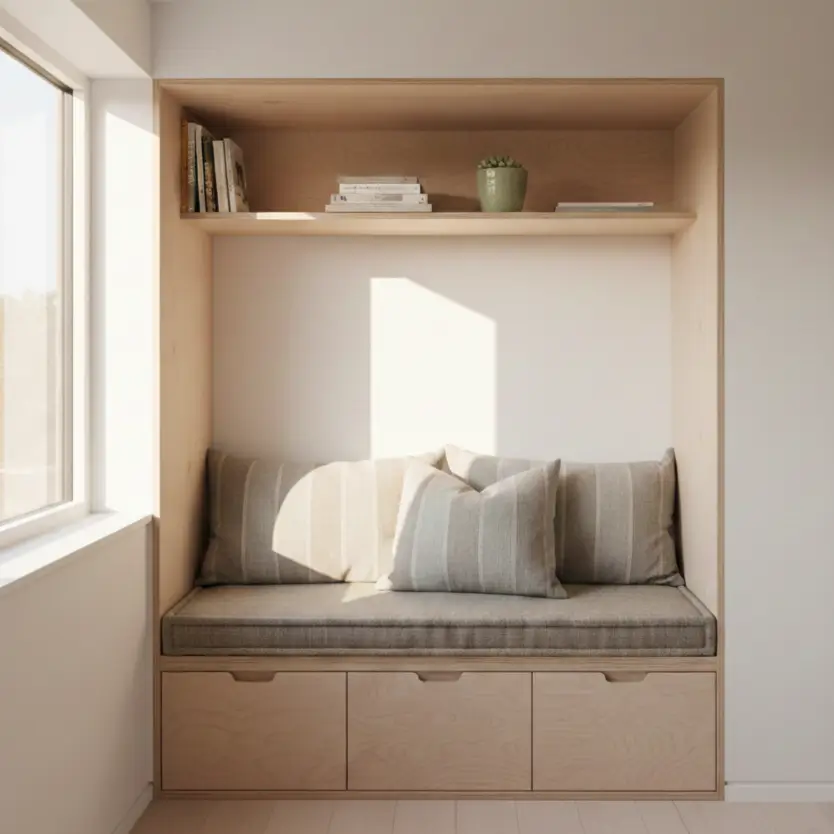
When building wood furniture for small spaces, standard 3/4″ ply is often overkill for cabinet bodies. I’ve successfully built upper cabinets using 1/2″ Baltic Birch to save 30% on weight.
Exterior Siding: The First Line of Defense
Western Red Cedar and Cypress are the gold standards for wood siding on THOWs because they naturally resist rot and insects while being incredibly light (approx. 20-25 lbs/ft³). Shou Sugi Ban (charred wood) is a popular treatment that increases fire and pest resistance without chemical sealers. Avoid untreated Pine siding, it will rot quickly in road spray.
The Maintenance Reality
I love the look of natural wood siding, but you must be realistic about maintenance. A tiny house has no eaves or very small overhangs (to stay within the 8.5-foot road width limit). This means rain hits the siding directly.
- Cedar: Expensive ($$$), but lasts decades. Silver-grays naturally if left unsealed.
- Thermally Modified Wood: Wood baked to remove sugars (food for rot/bugs). Very stable, less movement.
- SmartSide (Engineered): Not pure wood, but wood-strand based. Lighter than fiber cement, easier to install, and paints well.
If you plan to move your house frequently, verify the tiny house on wheels specifications regarding wind rating for your siding installation.
Sustainability & Indoor Air Quality
In a tight envelope (under 400 sq ft), off-gassing from glues in plywood or finishes can reach toxic levels fast. Look for NAUF (No Added Urea Formaldehyde) plywood and Low-VOC sealants. Reclaimed wood is eco-friendly but must be tested for lead paint or creosote if sourced from old barns or industrial sites.
The “New House Smell” Warning
That smell is usually VOCs. In a large house, it dissipates. In a tiny house, you are breathing it in high concentrations.
- Plywood: Look for “Soy-based” glues (like PureBond).
- Finishes: Use water-based polyurethanes or natural oils (Linseed, Tung). Check our guide on low-voc paint for tiny houses.
- Reclaimed Wood: If you use pallet wood, ensure it has the “HT” (Heat Treated) stamp, not “MB” (Methyl Bromide).
When dealing with wood problems and solutions, remember that prevention (ventilation + correct material choice) is cheaper than remediation.
Final Thoughts: Balance is Key
Building or designing a tiny space with wood is a balancing act. You are juggling aesthetic warmth, structural weight, moisture resistance, and budget.
Splurge on the “touch points.” Put your money (and weight allowance) into a beautiful solid wood countertop or a custom ladder, things you touch every day. Save money and weight on the walls by using high-grade plywood painted or stained creatively.
Start by calculating your payload if you are on wheels. If you are in an apartment, focus on modular wood furniture that can move with you.
Ready to start building? Check out our deep dive into DIY tiny house building projects to see how these materials come together in real plans.
At Veniola.com, we believe your small space should feel like a sanctuary, not a sacrifice.