
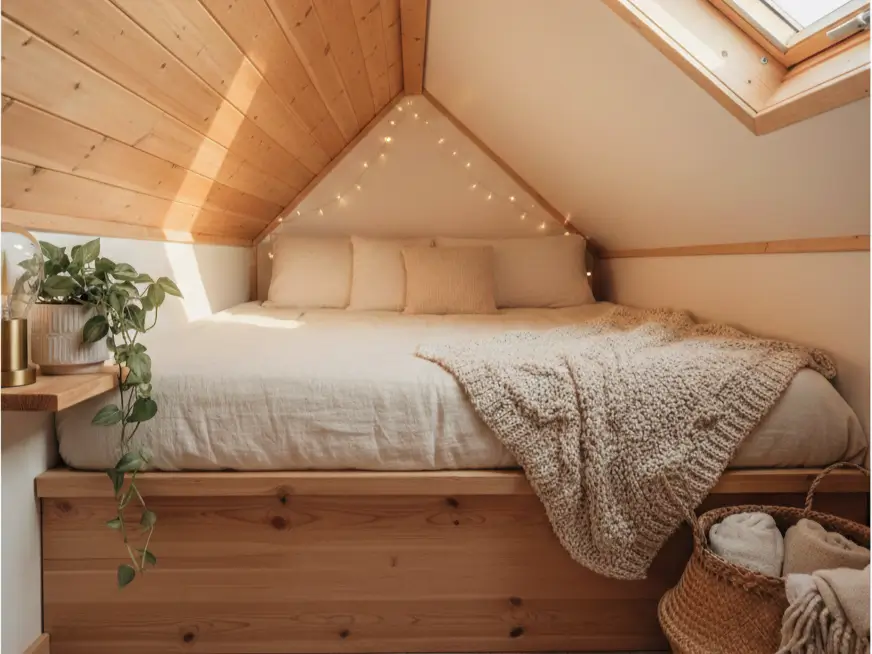
Your bedroom takes up roughly 20-30% of your tiny house, yet most people treat it as an afterthought. That’s a mistake.
The best tiny house bedroom design prioritizes sleep quality, accessible entry, temperature control, and hidden storage, all within 50-100 square feet. Whether you’re building a loft bedroom with 42 inches of headroom or a ground-level sleep zone for easier access, every inch matters.
I’ve spent years helping tiny house dwellers figure out where to sleep. The biggest surprise? Loft bedrooms aren’t always the answer. Heat rises, climbing ladders gets old, and not everyone can safely navigate stairs at 3 AM. The right bedroom design depends on your body, your climate, and honestly, how much you value a good night’s rest.
Specific layouts that work for spaces from 50-100 square feet, clear measurements for headroom and mattress sizing, and solutions ranging from $200 DIY builds to $4,000+ professional installations. Plus, storage strategies that won’t make your sleep space feel like a closet.
What Makes Tiny House Bedroom Design Different From Traditional Bedrooms?
Tiny house bedrooms require vertical thinking, multi-purpose furniture, and careful climate control. Unlike traditional bedrooms averaging 132 square feet, tiny house sleep spaces work with 50-100 square feet, meaning every design choice impacts both rest quality and daily function.
The math alone tells the story. A standard queen bed (60″ x 80″) consumes 33 square feet of floor space. In a 70-square-foot bedroom, that’s nearly half your room gone before you’ve added a nightstand. This is why tiny house furniture needs to work differently.
Three key differences from traditional bedrooms:
- Vertical real estate matters more than floor space. A 7-foot-wide loft with 38 inches of headroom offers 56 square feet of sleeping surface while leaving the ground floor completely open. That’s the trade-off most tiny house builders make.
- Temperature stratification is real. Hot air rises. In summer, loft bedrooms can run 10-15°F warmer than ground level. Without proper ventilation planning, you’ll sweat through August nights.
- Access determines long-term livability. That cute ladder looked great on Pinterest. At 2 AM with a full bladder? Less charming. Stairs take more space (typically 30-36 inches wide) but prevent falls and work better as you age.
The core measurements you need to know:
| Element | Minimum | Comfortable | Notes |
| Loft headroom | 36″ | 42-48″ | Sitting height matters |
| Mattress clearance | 3″ sides | 6″ sides | For tucking sheets |
| Aisle width | 24″ | 30″ | Beside bed access |
| Ladder footprint | 12″ | N/A | Steeper = smaller |
| Stair footprint | 30-36″ | 36-42″ | Includes storage potential |
These aren’t arbitrary numbers. They’re the difference between a bedroom you tolerate and one where you actually sleep well. Before choosing any layout, measure your specific trailer or foundation dimensions using a proper floor plan approach.
Best Tiny House Bedroom Layouts for Every Space Type
The four most practical tiny house bedroom layouts are the end-loft (most common, 56-70 sq ft sleeping area), center loft (better headroom near peak), ground-level alcove (accessibility-friendly), and convertible main floor (Murphy bed or fold-down). Your choice depends on ceiling height, mobility needs, and whether you share the space.
I’ve seen hundreds of tiny house bedrooms. Most fall into predictable patterns, because these patterns work.
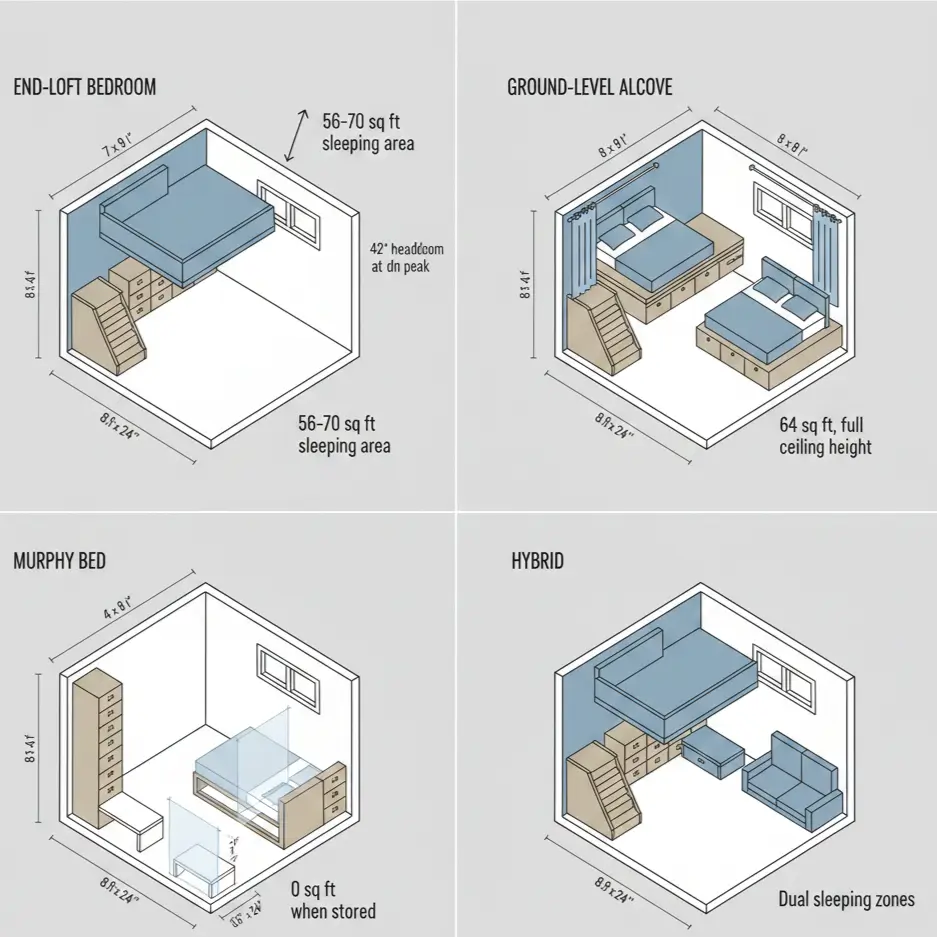
Layout 1: End-Loft Bedroom
Dimensions: Typically 7-8 ft wide × 8-10 ft deep × 3-4 ft ceiling height
Best for: Solo dwellers or couples comfortable with ladder/stair access
Budget: $200-$800 DIY framing
This is the classic tiny house setup. The bedroom sits above the bathroom, kitchen, or living area at one or both ends. You gain the entire ground floor for daytime living.
The catch? Roof slope. Most end-lofts lose headroom toward the outer wall. A king-sized bed rarely fits comfortably. Most people use an RV queen (60″ × 74″, six inches shorter than standard) or full-size mattress.
Layout 2: Ground-Level Alcove
Dimensions: 8-10 ft wide × 7-8 ft deep, full ceiling height
Best for: Anyone with mobility concerns, couples wanting easier access, hot climates
Budget: Minimal additional cost over standard build
This layout dedicates a corner or alcove to sleeping at floor level. You lose the “bonus” loft space, but you gain accessibility and better temperature control.
A Portland couple I worked with switched from a loft to ground-level after one partner developed knee problems. They installed a platform bed with 18 inches of storage underneath, recovering some of that lost square footage.
Layout 3: Convertible/Murphy Bed
Dimensions: 12-18″ depth when folded, full floor when deployed
Best for: Tiny houses under 200 sq ft, daytime workspace needs, frequent guests
Budget: $400-$1,200 DIY kit, $2,000-$5,000 professional
The Murphy bed (or wall bed) folds against the wall, completely freeing your floor during the day. This works brilliantly in ultra-small spaces or for people working from home who need that floor space during business hours.
Modern Murphy bed kits have improved dramatically. The mechanism matters, spring-loaded systems last longer than piston types in my experience. Expect to spend $600-$900 for a quality queen-size kit before mattress costs.
Layout 4: Hybrid Loft + Ground Option
Dimensions: Varies widely
Best for: Families, guests, aging-in-place planning
Budget: $500-$1,500 additional for dual sleeping areas
Some tiny houses include both a loft bedroom and a convertible ground-level option. This accommodates children, occasional guests, or future mobility needs without major renovation.
Loft Bedroom vs Ground-Level Sleeping: Which Actually Works Better?
Loft bedrooms maximize floor space but create heat, access, and intimacy challenges. Ground-level bedrooms sacrifice 50-70 square feet of living area but offer easier access, better climate control, and longer-term livability. Your climate, age, and daily routine determine which fits best.
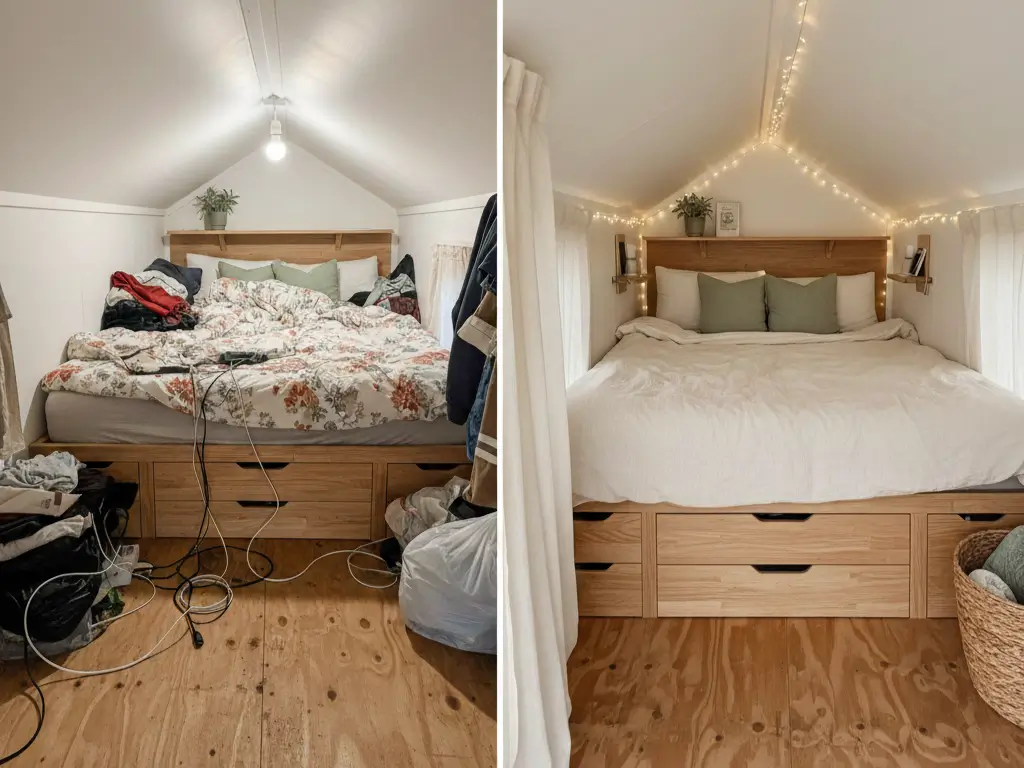
This is the debate that never ends in tiny house forums. Here’s the honest breakdown:
| Factor | Loft Bedroom | Ground-Level |
| Floor space gained | 50-70 sq ft | None |
| Summer temps | 8-15°F warmer | Same as main space |
| Access difficulty | Moderate-High | Easy |
| Privacy | Good (separate level) | Requires curtains/partition |
| Intimacy | Some feel too public | More private from entry |
| Best mattress height | 6-8″ (clearance) | Any height works |
| Long-term livability | Decreases with age | Stable |
| Cost difference | $200-800 for framing | Minimal |
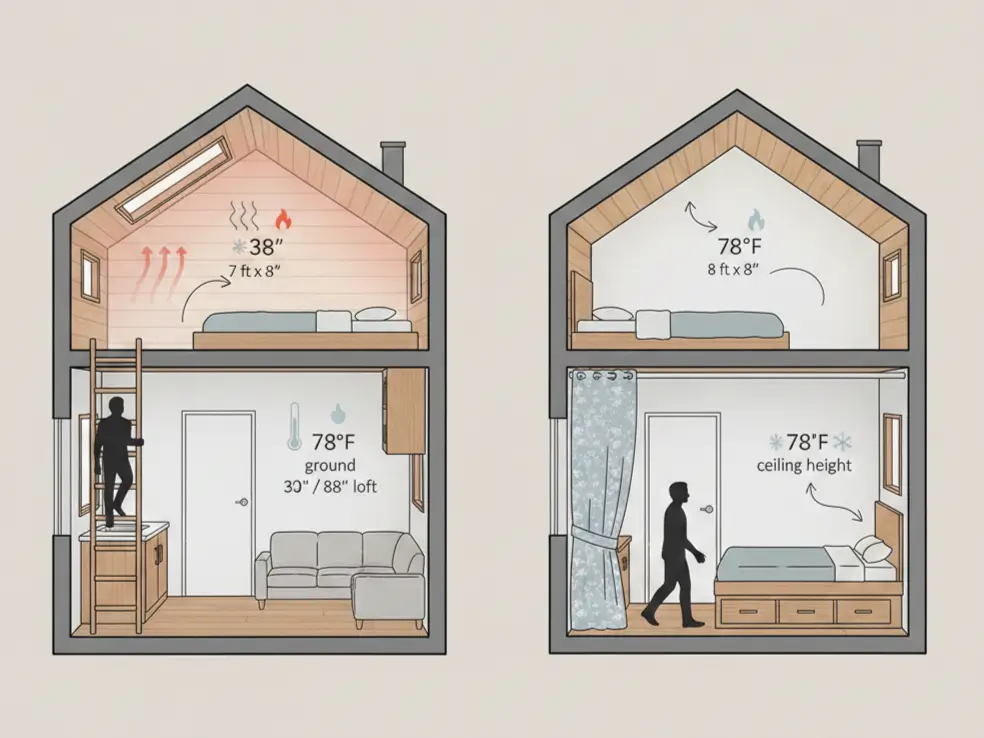
The temperature issue is real. In Texas, Arizona, or anywhere summer temps exceed 85°F regularly, loft sleeping becomes genuinely uncomfortable without significant HVAC investment. A ceiling fan directly above the sleeping area helps, but physics is physics, hot air rises.
The access issue compounds over time. I know exactly zero tiny house owners over 50 who love their ladder. Stairs with built-in storage drawers offer a compromise, though they consume 8-12 square feet of floor space.
My recommendation? If you’re under 40, healthy, and in a mild climate, lofts work fine. Everyone else should seriously consider ground-level or Murphy bed alternatives. The square footage you “save” isn’t worth chronic sleep problems.
Smart Storage Solutions That Won’t Shrink Your Sleep Space
The best tiny house bedroom storage hides within existing furniture: platform beds with 12-18 inches of drawer space below, headboard shelving for nightstand functions, and vertical wall systems for clothing. Expect to add 15-40 cubic feet of storage without reducing floor area.
Storage is where tiny house bedrooms succeed or fail. You need somewhere for clothes, bedding, books, and personal items, without cluttering your already-small sleep zone.
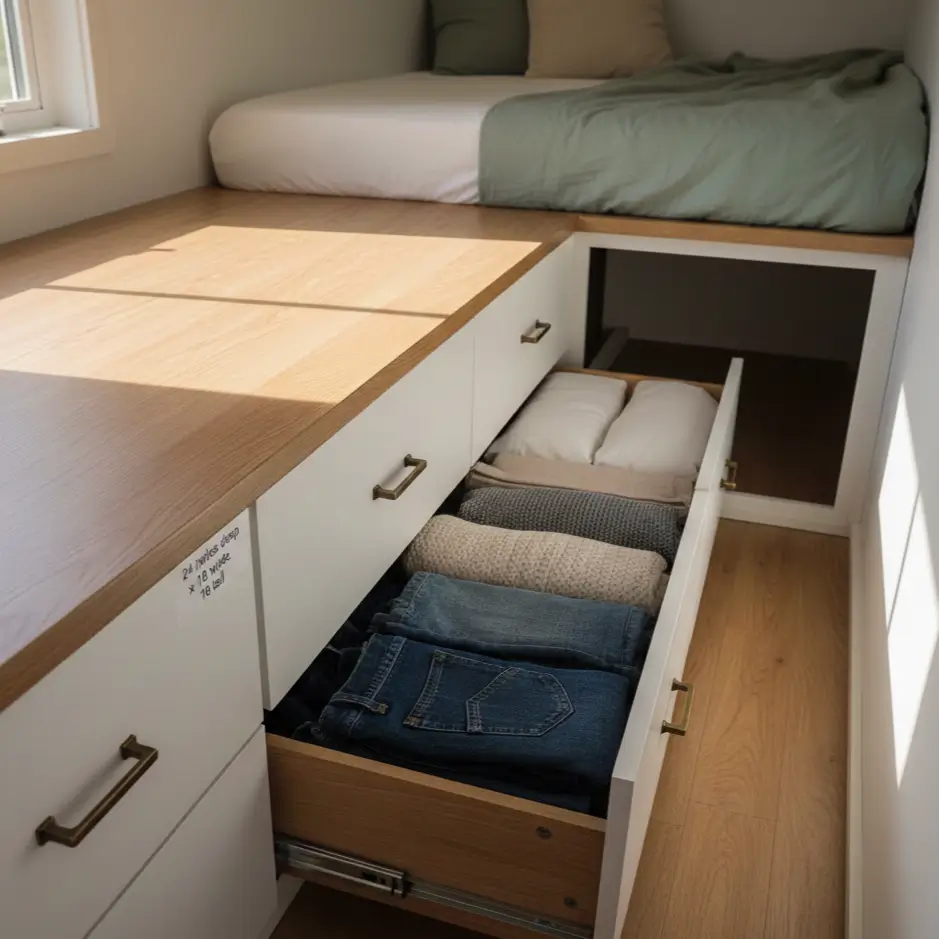
Platform Bed Storage
A platform bed with drawers underneath is the single most efficient storage solution for ground-level bedrooms. An 18-inch-high platform under a queen mattress provides approximately 40 cubic feet of accessible storage.
DIY platform builds run $150-$400 in materials. Pre-made options with drawers range from $400-$1,200 depending on quality. Either way, you’re essentially getting a dresser’s worth of storage in “dead” space.
For loft bedrooms, the space under the loft becomes your primary storage zone. Many tiny house owners install a closet system beneath the sleeping platform, with a ceiling height of 6-7 feet, perfect for hanging clothes.
Headboard Alternatives
Traditional nightstands consume 2-4 square feet of floor space each. That’s 4-8 square feet gone just to hold your phone and reading glasses.
Better options:
- Floating shelves at pillow height: $20-$60, 0 sq ft floor impact
- Headboard with built-in cubbies: $100-$300 DIY, 0 sq ft floor impact
- Wall-mounted swing-arm lamp: $30-$80, eliminates table lamp need
- Pocket organizer hanging from bed frame: $15-$40
The goal is eliminating furniture that exists only to hold other things. Every surface should serve at least two purposes. This principle applies throughout tiny house decorating, but it’s especially critical in bedrooms.
Vertical Clothing Storage
Dressers are space hogs. A standard 6-drawer dresser occupies 12-16 square feet and holds maybe 20 cubic feet of clothing. That same clothing fits in:
- Hanging rod + shelf system: 2 sq ft floor, 30+ cubic feet capacity
- Over-door organizers: 0 sq ft floor
- Under-bed drawers: 0 sq ft additional floor
- Vacuum storage bags for seasonal items: compress 3:1
One Denver tiny house owner I interviewed eliminated her dresser entirely using this combination. She estimated recovering 14 square feet of bedroom floor, enough for a small reading chair.
Creating Comfort and Privacy in 50-100 Square Feet
Tiny house bedroom comfort depends on three elements most people overlook: proper ventilation (minimum one operable window or fan), light control for quality sleep, and visual/acoustic privacy from main living areas. Budget $150-$400 for these finishing elements.
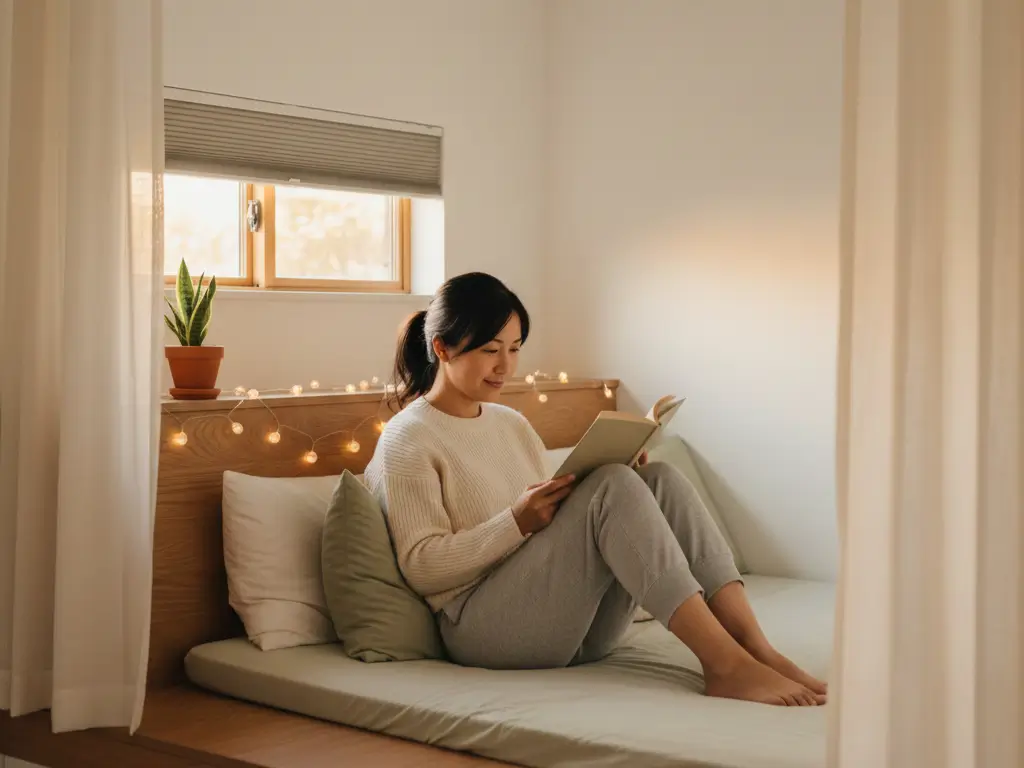
You’ve got the layout and storage figured out. Now let’s make it actually comfortable.
Ventilation Is Non-Negotiable
Loft bedrooms need dedicated airflow. Without it, you’re breathing the same stale air all night while temperatures climb.
Minimum setup:
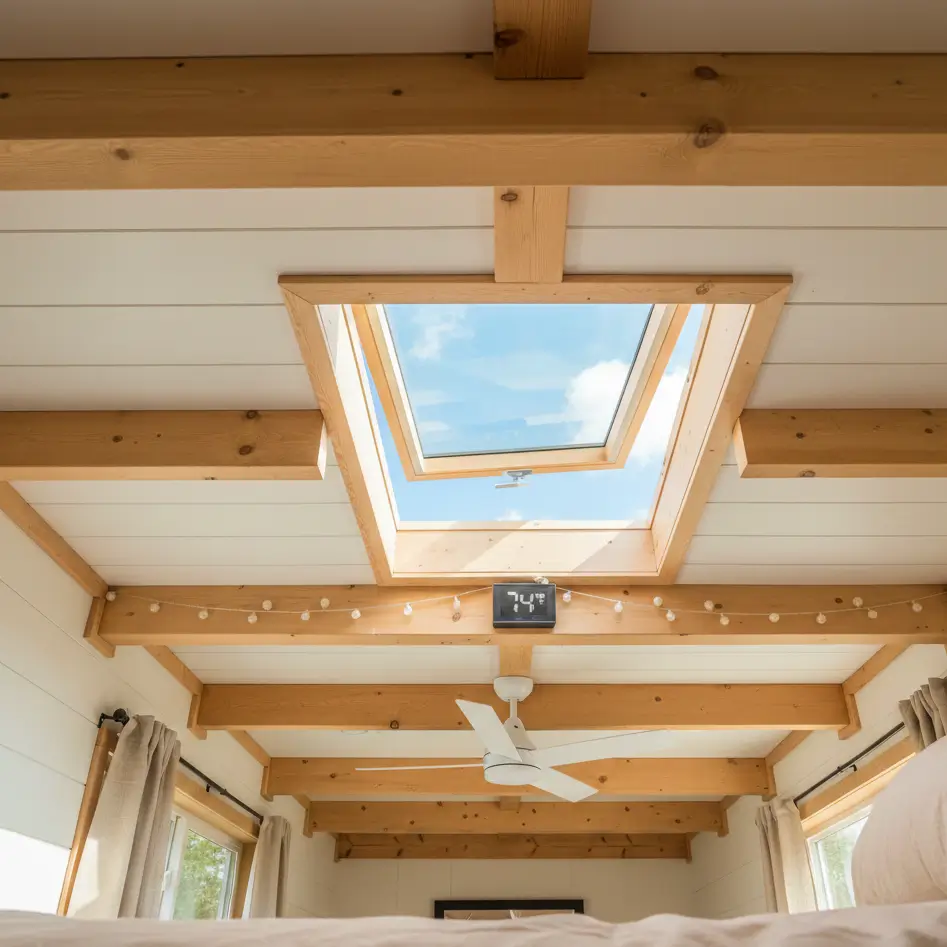
- One operable skylight or window near sleeping area
- Small exhaust fan (30-50 CFM) if no cross-ventilation: $40-$100
- Ceiling fan for lofts if height permits: $80-$200
This matters even more if you have plants in your tiny house, they’re great for air quality during the day but compete for oxygen at night in enclosed spaces.
Light Control for Better Sleep
Small windows seem like they’d let in less light. In practice, tiny house bedrooms often feel more exposed because walls are closer to your face.
Blackout solutions ranked by effectiveness:
- Exterior shutters (100% blockage): $100-$300 per window
- Blackout cellular shades (95-99%): $80-$200 per window
- Blackout curtains (90-95%): $30-$80 per window
- Sleep mask: $10-$30 (the budget option)
Lighting choices for evenings matter too. Warm, dimmable LEDs (2700K-3000K color temperature) help your brain wind down. Avoid cool white overhead lights that signal “daytime” to your circadian rhythm.
Privacy Without Walls
If your bedroom opens directly to the main living area (common in ground-level and Murphy bed setups), you need some visual separation.
Options that work:
- Ceiling-mounted curtain track: $40-$120, minimal floor impact
- Sliding barn door or panel: $150-$400, more substantial
- Tall bookshelf as room divider: $100-$300, adds storage
- Frosted glass partition: $200-$600, maintains light flow
The psychological impact of even symbolic separation is significant. You don’t need a solid wall, just something that signals “bedroom starts here.”
The Color Selection Question
Paint colors affect perceived room size and sleep quality. For tiny bedrooms, I lean toward:
- Soft, cool neutrals for walls (they recede visually)
- Warm bedding and textiles for coziness
- Minimal accent walls (they can make spaces feel choppy)
Using paint finishes appropriate for small spaces, typically eggshell or satin for easy cleaning, keeps maintenance simple.
Making Your Tiny House Bedroom Work Long-Term
The best tiny house bedroom design isn’t the one with the cleverest space tricks. It’s the one where you sleep well, night after night, for years.
Before you build or renovate, answer three questions:
- How will I access this space at age 60? (Or 70?)
- What’s my climate’s hottest month, and can I sleep through it here?
- Where does my clothing actually go?
Measure your available space and sketch two layout options, one loft, one ground-level. Compare how each handles storage, access, and ventilation before committing. You might surprise yourself with which one actually fits your life.
For the complete picture of tiny living design, Veniola covers everything from kitchen layouts to bathroom design, because your bedroom doesn’t exist in isolation.
Sleep well.