
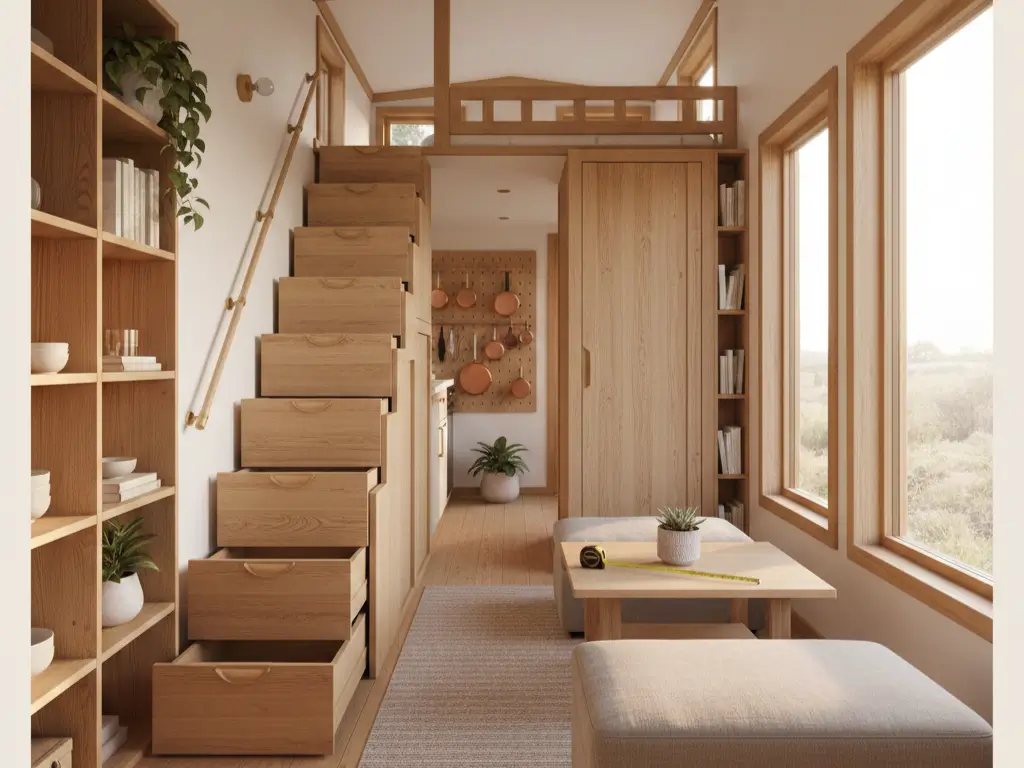
Here’s a number that surprised me: the average American home contains 300,000 items. Now imagine fitting your life into 250 square feet. That math doesn’t work, unless you rethink storage entirely.
Effective tiny house storage solutions focus on cubic feet, not square feet. By using vertical space, hidden zones, and multi-functional furniture, most tiny homes can achieve 150-250 cubic feet of storage, roughly equivalent to a walk-in closet.
I’ve spent eight years helping people organize spaces under 600 square feet. What I’ve learned? The traditional advice about “getting organized” fails spectacularly in tiny houses. Those Pinterest-perfect bins don’t help when you have 12 linear feet of wall space total.
This guide covers specific storage solutions with real measurements, actual costs (from $15 DIY fixes to $4,500 custom builds), and honest assessments of what works. You’ll find zone-by-zone breakdowns, budget comparisons, and the mistakes I see repeated constantly.
Whether you’re building a tiny house on wheels or maximizing a 450-square-foot apartment, these solutions adapt to your space and budget.
Why Tiny House Storage Requires Different Thinking
Traditional storage advice assumes abundant floor space and standard closets. Tiny houses typically lack both. Success requires calculating storage in cubic feet, using vertical height (often 10-16 feet in lofted designs), and ensuring every storage solution serves at least two purposes.
The fundamental problem? Most storage products target homes with 2,000+ square feet. A standard dresser consumes 6 square feet of floor space, that’s 2% of a 300-square-foot tiny house gone for one piece of furniture.
In my experience testing different approaches in a 380-square-foot tiny house, floor-based storage should represent less than 30% of your total storage volume. The rest needs to go vertical or hidden.
Consider this comparison. A traditional bedroom closet provides roughly 48 cubic feet of storage while consuming 12 square feet of floor space. That same 12 square feet, outfitted with floor-to-ceiling vertical solutions, can provide 85+ cubic feet, nearly double the capacity.
Your tiny house layout and floor plan should identify storage zones before you choose furniture or finishes. I’ve watched too many people select a beautiful couch, then realize they’ve eliminated their only viable storage wall.
The mindset shift matters: stop thinking about where things will “go” and start calculating how many cubic feet you actually need. Most tiny house dwellers need:
- Clothing: 25-40 cubic feet
- Kitchen items: 15-25 cubic feet
- Bathroom supplies: 8-12 cubic feet
- General/seasonal: 30-50 cubic feet
Vertical Storage Solutions That Actually Add Cubic Feet
Vertical storage in tiny houses should extend from 6 inches above floor level to within 12 inches of your ceiling. A single 24-inch-wide vertical system spanning 9 feet of height provides 18 cubic feet of storage using only 2 square feet of floor space.
This is where tiny house storage gets interesting. Most tiny homes have ceiling heights between 8 and 12 feet, with lofted designs reaching 16 feet. That’s free real estate most people ignore.
Wall-mounted track systems work exceptionally well. ELFA systems from The Container Store cost $150-400 depending on configuration. A 4-foot-wide installation provides roughly 24 cubic feet of adjustable storage. I installed one in my kitchen area, and it transformed useless wall space into functioning pantry storage.
Pegboard systems remain underrated. A 4×4-foot pegboard costs $30-50 and provides 16 square feet of tool or kitchen storage. Mount it at a comfortable height, I recommend centering it at 54 inches for average-height adults. This keeps frequently used items between 36 and 72 inches high.
When selecting tiny house furniture, prioritize pieces that maximize vertical storage. Tall, narrow cabinets outperform wide, short ones in spaces under 400 square feet.
My top vertical solutions by budget:
| Solution | Cost Range | Cubic Feet Added | Best For |
| Pegboard system | $30-75 | 8-12 | Kitchens, workshops |
| Track shelving | $150-400 | 18-30 | Closets, pantries |
| Floor-to-ceiling bookcase | $80-250 | 25-40 | Living areas |
| Ceiling-mounted racks | $100-300 | 15-25 | Garages, storage lofts |
| Custom built-ins | $800-3000 | 40-80 | Any zone |
One thing that frustrated me early on: most “vertical storage” advice ignores the top 2-3 feet near ceilings. In a 9-foot room, that’s 25% of your vertical space going unused. Ceiling-mounted storage platforms for seasonal items solve this. They’re not pretty, but they work.
Hidden Storage Ideas for Every Zone of Your Tiny House
Hidden storage transforms dead space into functional capacity. Under-stair storage adds 20-60 cubic feet. Toe-kick drawers beneath cabinets provide 3-6 cubic feet. Raised platforms create 30-50 cubic feet beneath living areas while adding visual interest to your space.
Let me walk through each zone with specific measurements.
Kitchen (typically 35-75 sq ft)
Your tiny house kitchen design probably has more hidden storage potential than any other area. Focus on:
Toe-kick drawers: The 4-inch gap beneath base cabinets typically goes empty. Installing shallow drawers here adds 3-6 cubic feet for flat items like baking sheets or cutting boards. DIY cost: $50-100. Professional installation: $200-400.
Cabinet door backs: Mount narrow shelves or racks on the inside of cabinet doors. Each door provides roughly 1.5 cubic feet of spice or container storage. Total investment: $15-45 per door.
Ceiling pot racks: A 24×12-inch ceiling rack holds 8-12 pots and pans. Cost: $40-150. This frees 4-8 cubic feet of cabinet space for other items.
Stairs and Loft Access
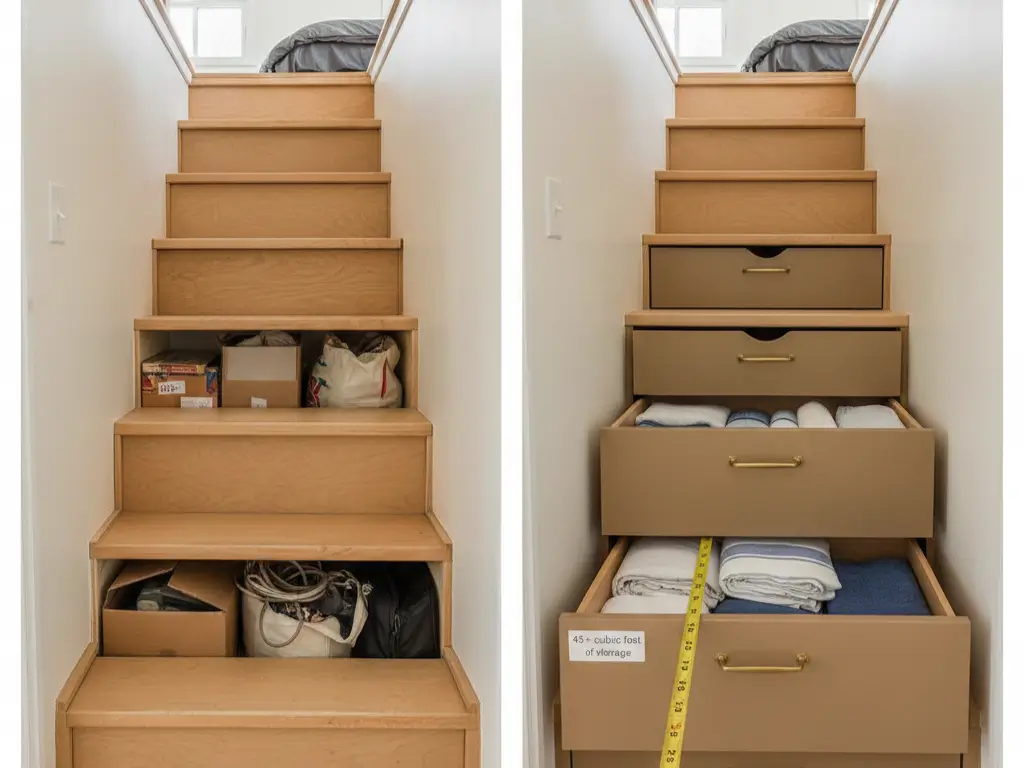
Under-stair storage is the single biggest hidden capacity in most tiny houses. Depending on stair configuration:
- Drawers in stair risers: 3-8 cubic feet per step, typically 4-6 usable steps = 18-48 cubic feet total
- Pull-out storage beneath stairs: 40-60 cubic feet for a standard lofted tiny house
- Alternating tread stairs with storage: 25-35 cubic feet
DIY under-stair drawers cost $200-800 in materials. Custom installations run $2,000-5,000 but maximize every inch. When planning your tiny house bedroom design with a loft, prioritize stair storage in your budget.
Bathroom (typically 20-40 sq ft)
Your tiny house bathroom design needs moisture-resistant storage solutions. Consider:
- Recessed wall cabinets: Fit between 16-inch studs for 6-10 cubic feet without consuming floor space
- Over-toilet shelving: 8-12 cubic feet in typically wasted vertical space
- Vanity with pull-out organizers: Doubles accessible storage compared to standard doors
Multi-Functional Furniture That Earns Its Square Footage
In spaces under 400 square feet, furniture should serve at least two functions. A storage ottoman provides seating and 4-6 cubic feet of storage. A Murphy bed with shelving frees 21 square feet during daytime while offering 15-25 cubic feet of storage in its cabinet housing.
Every piece of furniture in a tiny house needs to justify its footprint. Here’s my rule: if it doesn’t store something, hide something, or transform into something else, reconsider whether you need it.
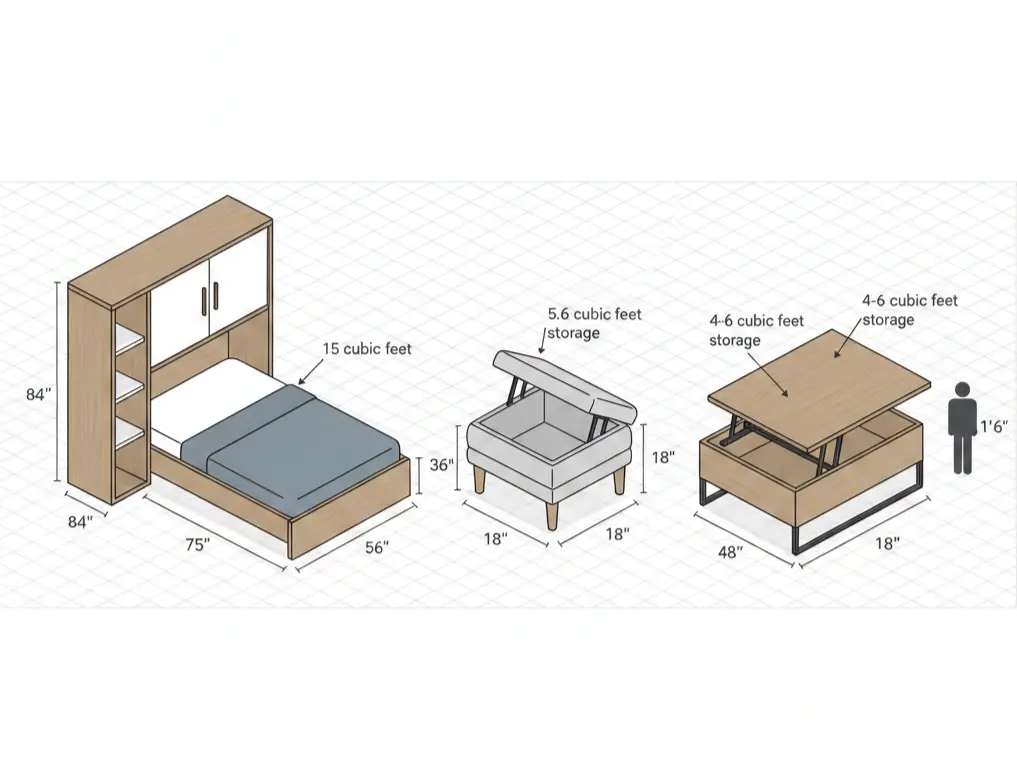
Murphy beds with storage: These save 18-24 square feet when folded. The cabinet housing typically provides 15-25 cubic feet of shelving. Quality units cost $1,500-4,500. I’ve seen cheaper options ($800-1,200) fail within two years, the hardware matters.
Storage ottomans and benches: A 36x18x18-inch storage ottoman provides 5.6 cubic feet of hidden storage plus seating. Cost: $80-300. In a 200-square-foot space, this replaces a separate footstool AND a storage bin.
Lift-top coffee tables: Standard size (48×24 inches) provides 4-6 cubic feet of storage. The lift mechanism creates a work surface for eating or laptop use. Budget options: $150-300. Quality builds: $400-800.
When working on your tiny house decorating basics, choose decorative items that also store things. Woven baskets, decorative boxes, and display cabinets combine aesthetics with function.
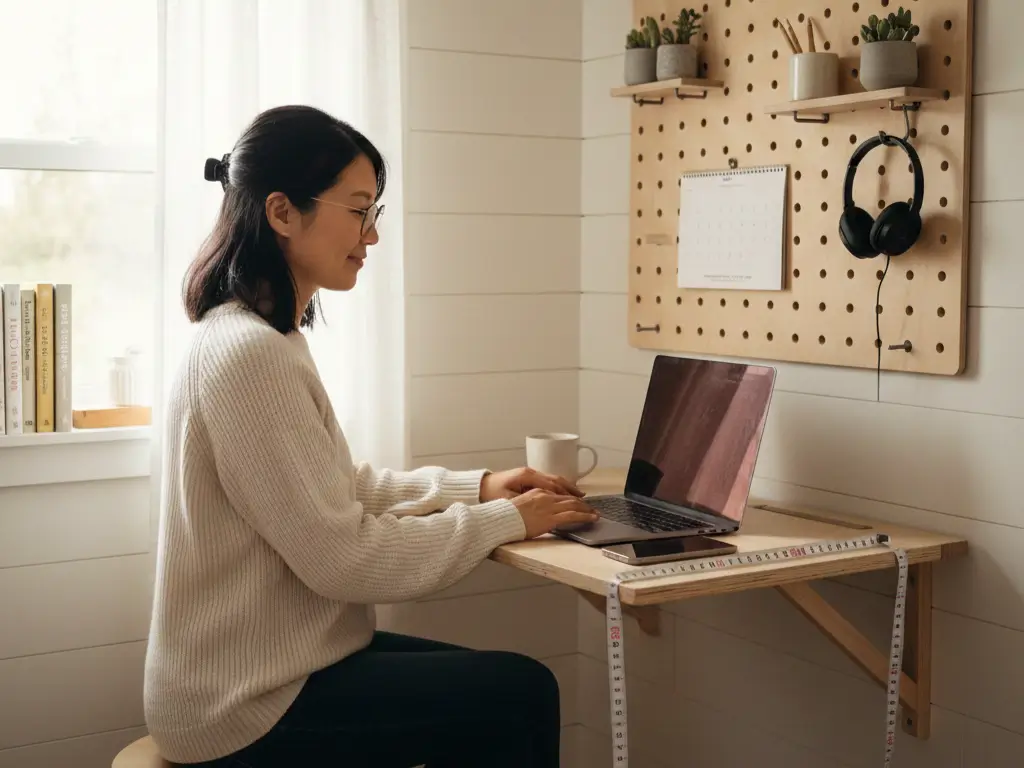
For work from home setups in tiny houses, fold-down desks with integrated storage work better than dedicated office furniture. A wall-mounted fold-down desk (24×36 inches) plus pegboard storage provides a complete workspace using zero floor space when not in use.
DIY vs. Custom Storage: Honest Budget Breakdown
DIY storage solutions cost 60-80% less than custom installations but require 10-40 hours of labor. A full tiny house storage system runs $400-800 DIY, $1,500-3,500 mid-range ready-to-assemble, or $5,000-15,000 for professional custom work.
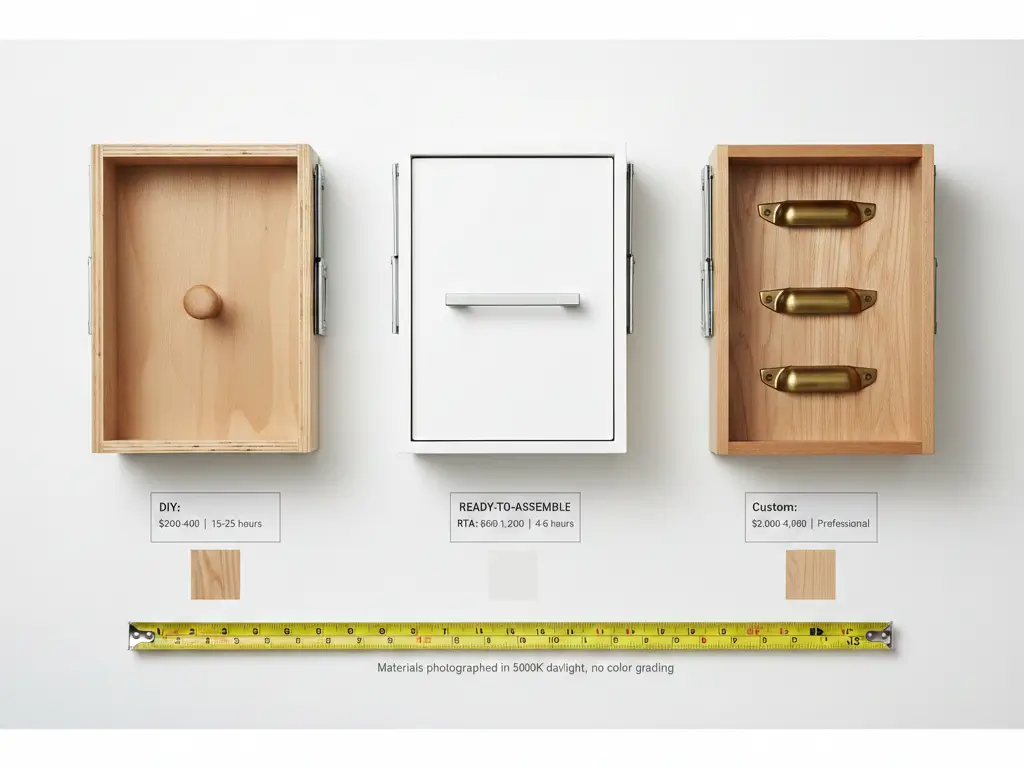
Here’s the breakdown I wish someone had given me:
| Storage Project | DIY Cost | DIY Hours | Ready-to-Assemble | Custom Built |
| Under-stair drawers (6 steps) | $200-400 | 15-25 hrs | $600-1,200 | $2,000-4,000 |
| Full closet system | $150-300 | 8-12 hrs | $400-800 | $1,500-3,500 |
| Kitchen vertical storage | $80-200 | 6-10 hrs | $250-500 | $800-2,000 |
| Murphy bed + storage | $600-1,200 | 20-40 hrs | $1,500-2,500 | $3,000-5,000 |
| Raised platform (8×8 ft) | $300-600 | 12-20 hrs | N/A | $1,500-3,000 |
When DIY makes sense:
- Simple shelving and pegboard systems
- Over-door organizers
- Basic cabinet organizers
- Raised platform beds (if you have carpentry skills)
When professional help is worth it:
- Murphy beds (safety-critical hardware)
- Electrical integration with storage
- Structural modifications
- Anything requiring permits
Your tiny house budget planning should allocate 8-15% of total build cost to storage solutions. Skimping here creates daily frustration.
If you’re renting, check the tiny house renters guide for reversible solutions that don’t damage walls.
Common Tiny House Storage Mistakes to Avoid
The top three mistakes are buying storage products before measuring (wastes 30% of purchases), ignoring vertical space above 6 feet (loses 25-40% of potential storage), and choosing beautiful but single-purpose furniture (consumes floor space without earning it).
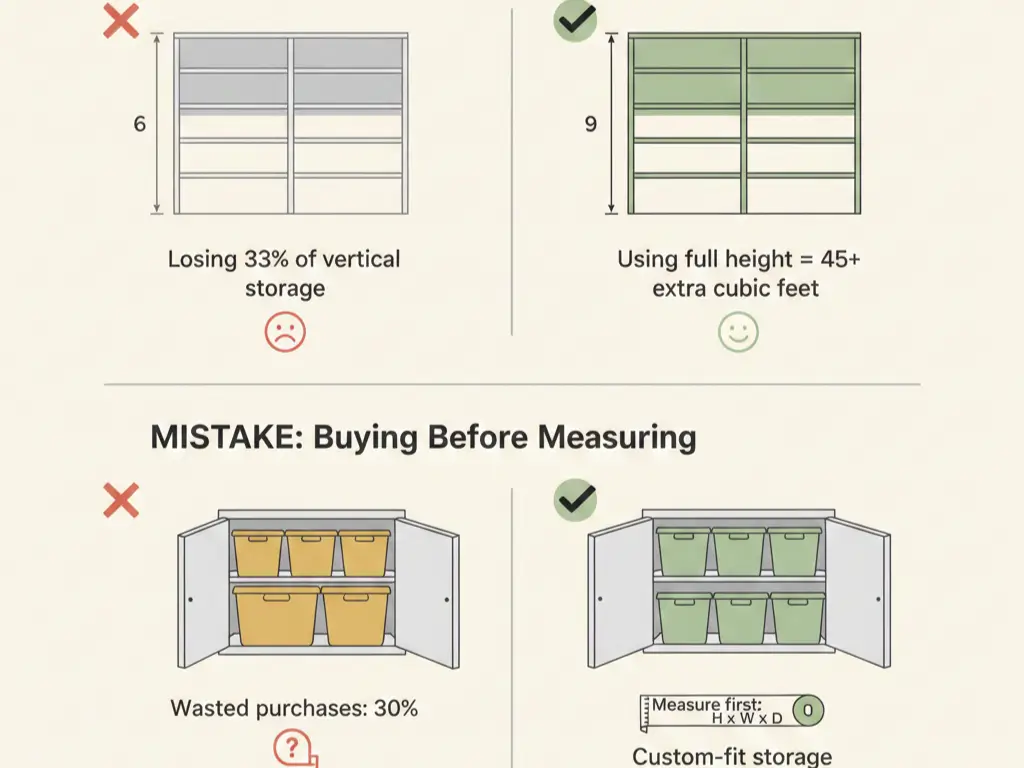
After working in this space for years, these errors appear constantly:
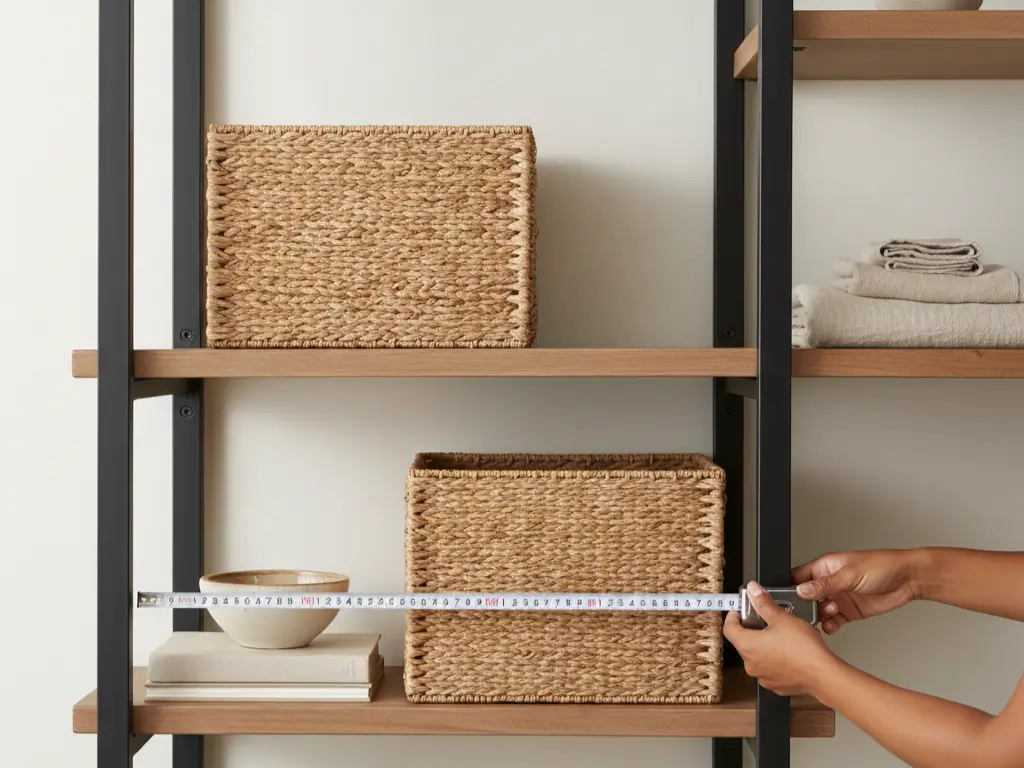
Mistake #1: Buying before measuring. I’ve done this myself. Those “perfect” bins don’t fit your cabinet depth. Always measure height, width, AND depth of every storage zone. Standard tiny house cabinet depths vary from 10-24 inches. Bring a tape measure shopping.
Mistake #2: Ignoring the top third of your walls. In a 9-foot room, the space above 6 feet provides 3 linear feet of vertical storage per wall. A 12-foot-long tiny house has 48 linear feet of wall space. That’s 144 cubic feet of storage going unused if you stop at 6 feet.
Mistake #3: Choosing form over function. That gorgeous mid-century dresser consumes 6 square feet and stores 12 cubic feet. A floor-to-ceiling wardrobe system uses 4 square feet and stores 25 cubic feet. In spaces under 400 square feet, math matters more than aesthetics.
Mistake #4: Forgetting accessibility. If you can’t reach it without a step stool, you won’t use it daily. Keep frequently accessed items between 24-72 inches. Reserve high and low zones for seasonal items. For specific needs, the tiny house accessibility design guide covers reachability standards.
Mistake #5: No decluttering first. Storage solutions don’t solve ownership problems. Before buying any organizer, apply the one-year rule: if you haven’t used it in 12 months, it probably doesn’t belong in your tiny house. The minimalist living approach helps with this mindset.
Making Your Tiny House Storage Work Long-Term
Getting storage right in a tiny house isn’t about buying clever products. It’s about calculating your actual needs in cubic feet, then finding solutions that maximize vertical and hidden space.
Start here: measure your current belongings by category. Calculate how many cubic feet you actually need. Then design storage zones before selecting furniture or finishes.
- Audit your current storage and measure everything in cubic feet
- Identify your three biggest “dead space” zones (above cabinets, under stairs, wall space above 6 feet)
- Choose one zone and implement a solution, DIY or purchased
The Veniola tiny house resource hub has additional guides for every room and system in your small space.
Tiny house storage challenges you to be intentional. That constraint? It’s actually a gift. When every item must earn its place, you end up surrounded only by things that matter.