You might think solid wood furniture is too heavy or bulky for a 500-square-foot apartment. Here is the reality: The right wood piece doesn’t just fit; it anchors a chaotic small space without consuming it.
When selecting wood furniture for small spaces, prioritize visual lightness (tapered legs, open shelving) and lighter wood species like Ash, Maple, or White Oak to reflect light. Opt for multi-functional pieces, such as drop-leaf tables or ottomans with storage. For spaces under 600 sq ft, aim for a 60/40 mix of closed vs. open storage to hide clutter while maintaining depth.
If you are living in a tiny house or a compact city apartment, you know the struggle of “furniture tetris.” You want the warmth and durability of wood, but you are terrified of making your living room look like a crowded antique shop. I’ve spent over a decade designing interiors for spaces under 800 square feet, and I can tell you that wood is actually a small space’s best friend, if you follow a few architectural rules.
From DIY pine projects costing under $100 to investment walnut pieces, wood offers versatility that plastic or metal simply cannot match. Whether you are outfitting a tiny house on wheels or a studio apartment, understanding grain, tone, and scale is critical.
The Concept of Visual Weight in Tiny Homes
How does visual weight impact wood furniture in small spaces? Visual weight refers to how heavy an object looks, not how much it weighs. In small spaces (under 800 sq ft), wood furniture with high visual weight (boxy, dark, solid bases) makes rooms feel smaller. Furniture with low visual weight (light colors, raised legs, glass inlays) exposes floor space, tricking the eye into seeing a larger room.
It’s Not Just About Dimensions
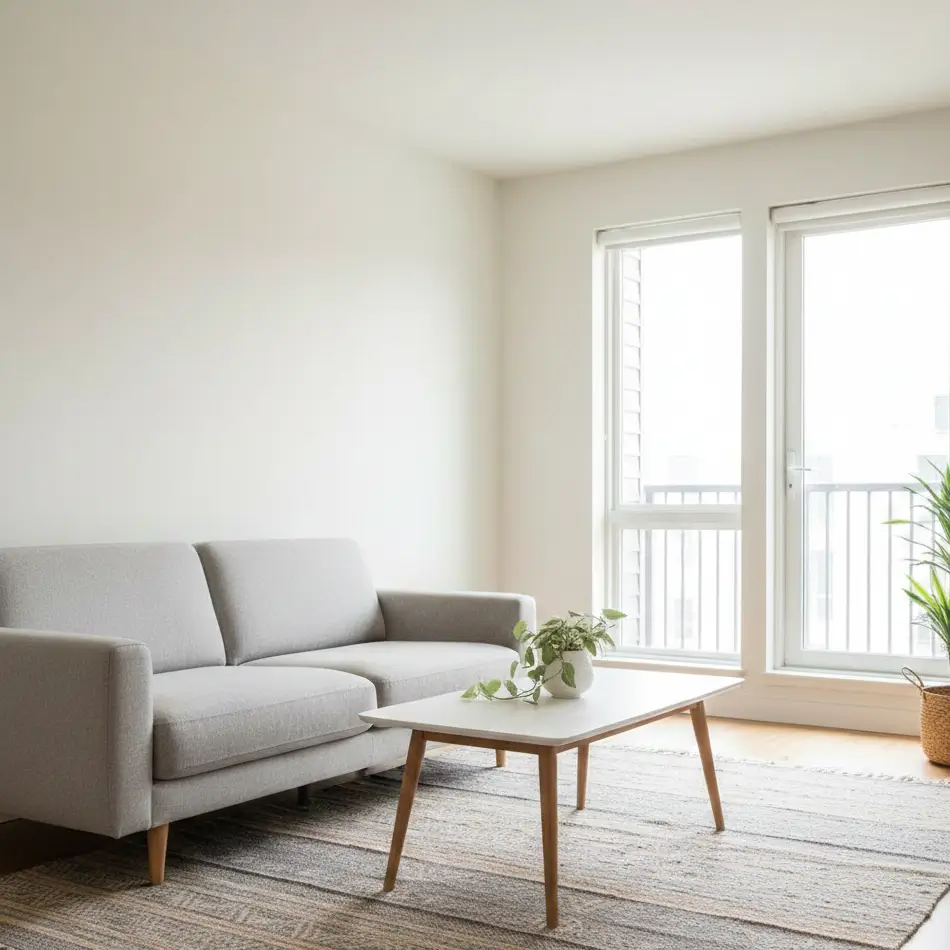
When I measured a client’s 12×12 living room recently, we realized that swapping a solid-base coffee table for one with 8-inch tapered legs exposed 4 extra square feet of flooring. That sounds minor, but in a small room, seeing the floor extend under furniture makes the footprint feel continuous.
The “Leggy” Rule
For spaces under 600 sq ft, avoid “block” furniture that sits flush against the floor. Look for:
- Mid-Century Modern styles: Known for tapered legs that elevate the bulk of the piece.
- Floating wall mounts: A floating wooden desk or nightstand has zero floor footprint.
- Open slat designs: Allows light to pass through the furniture piece itself.
If you are struggling with a layout that feels cramped, check our tiny house layout floor plan guide to see how furniture placement changes flow.
Best Wood Species for Compact Living
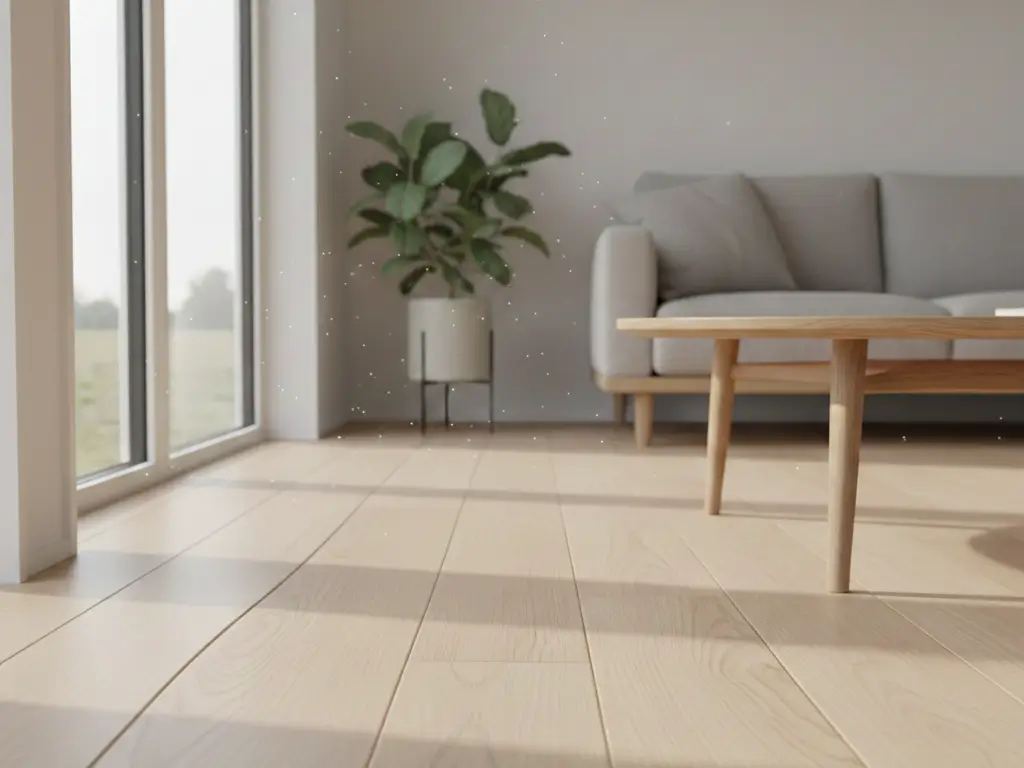
Which wood types make a small room look bigger? Light-colored hardwoods like Maple, Birch, Ash, and White Oak are superior for small spaces because they have high light reflectance, making rooms feel airy. Avoid dark woods like Mahogany or dark-stained Cherry in large quantities, as they absorb light and can make a <400 sq ft space feel cave-like.
The Light Wood Advantage
In a tiny house, lighting is often limited. Using pale woods acts almost like a mirror.
- Ash & Maple: extremely durable and pale. Great for high-traffic dining tables.
- Birch: Often used in plywood furniture; affordable and very light in tone.
- White Oak: The gold standard for modern small spaces. It has a subtle grain that adds texture without overwhelming the eye.
Using Dark Wood Strategically
You don’t have to banish walnut entirely. In fact, a single dark wood statement piece, like a side chair or a floating shelf, can create a necessary focal point. The contrast draws the eye, creating depth. However, if you have dark floors, you might want to read about tiny house flooring options to ensure you aren’t creating a “wood box” effect.
Grain Direction Matters
Here is a trick few people talk about: Vertical grain draws the eye up (good for low ceilings), while horizontal grain draws the eye across (good for narrow rooms).
Multi-Functional Wood Furniture Solutions
What are the best dual-purpose wood furniture items? For spaces under 500 sq ft, every item must serve two purposes. Top wooden multi-functional pieces include drop-leaf dining tables (saves ~6 sq ft when folded), storage ottomans with wooden trays, Murphy desks, and nesting tables (3 surfaces in the footprint of 1).
The Drop-Leaf Revolution
A standard dining table occupies about 12-15 square feet. In a tiny house, that’s huge. A gate-leg or drop-leaf table made of solid rubberwood or oak can collapse down to a 10-inch deep console. When guests arrive, it expands to seat four.
Nesting Tables
Instead of a massive coffee table that blocks your path to the kitchen, use wooden nesting tables. You can pull them apart when you have snacks or a laptop, and stack them away to clear the floor for yoga or cleaning.
Hidden Storage
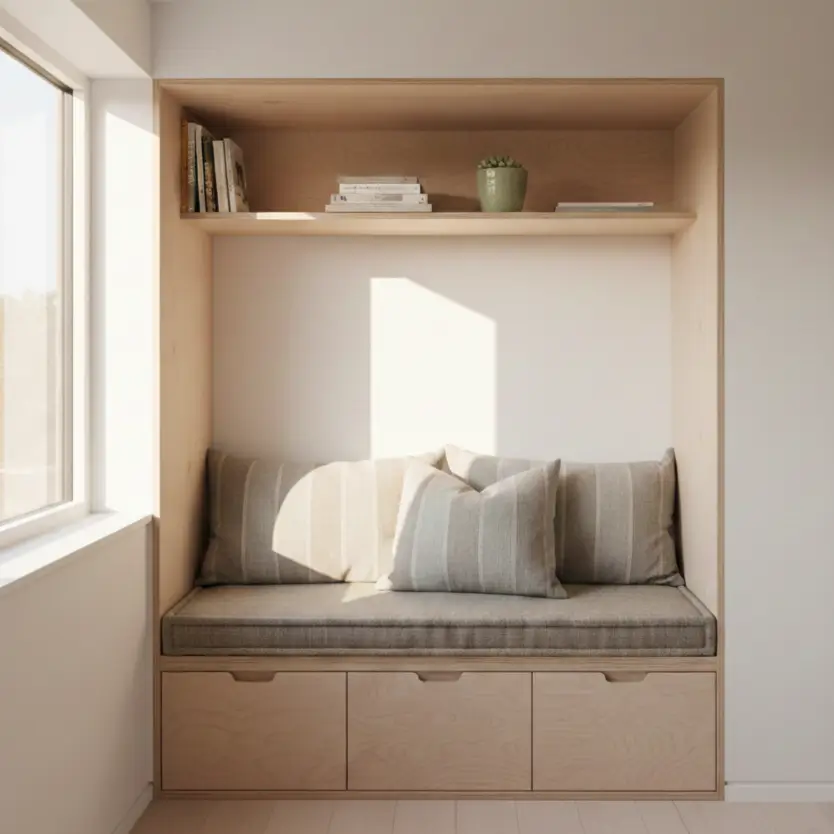
I once built a custom wooden bench for a bay window that provided 14 cubic feet of storage inside. If you are handy with tools, looking into wood joinery techniques can help you build custom storage that utilizes awkward nooks standard furniture can’t fit.
Solid Wood vs. Veneer vs. Laminate
Should I buy solid wood or veneer for a small apartment? For budget and stability in fluctuating climates (like non-climate-controlled tiny houses), high-quality wood veneer over plywood is often the smart choice. It resists warping better than solid wood and costs 30-50% less. However, for longevity and repairability, solid wood is better because it can be sanded and refinished multiple times.
| Feature | Solid Wood | Wood Veneer | Laminate (Faux Wood) | Small Space Verdict |
| Durability | High (can refinish) | Medium (cannot sand deep) | High (scratch resist) | Solid for high-touch items (tables). |
| Weight | Heavy | Moderate | Light/Moderate | Veneer is easier to move in rentals. |
| Cost | $$$ ($500+) | $$ ($200-$500) | $ (<$200) | Mix based on budget. |
| Stability | Moves with humidity | Stable | Stable | Veneer for tiny homes with temp swings. |
The Tiny House Climate Factor
If you are living in a tiny house on wheels, humidity and temperature fluctuate more than in a standard home. Solid wood expands and contracts. I’ve seen solid oak cabinet doors warp in a tiny house during a humid summer. For cabinetry and built-ins, refer to our guide on wood materials for tiny houses to choose stable options like marine-grade plywood with veneer.
Budget Maximization
If you are on a strict budget, don’t buy cheap particle board that will sag in a year. Instead, look for secondhand solid wood pieces you can refinish. A $50 thrifted pine dresser can be sanded and sealed for a custom look. Check out wood treatment and finishing for DIY tips.
Integrating Wood with Other Materials
How do I mix wood with other materials in a small room? To prevent a small room from looking like a sauna, mix wood with glass, metal, and mirrors. A glass-topped wooden coffee table allows the eye to see the rug underneath, reducing visual clutter. Mirrors positioned opposite windows reflect light onto wood surfaces, enhancing the warmth without the weight.
The Glass & Wood Combo
In a 450 sq ft studio I designed, we used a dining table with a solid walnut base but a tempered glass top. It provided the warmth of wood but “disappeared” visually from waist-height up, keeping the sightlines open.
Plants and Wood
Wood furniture and indoor plants are a natural pairing. The greenery breaks up the brown tones and adds life. For small spaces, utilize verticality. A tall, narrow wooden plant stand takes up only 12 square inches of floor space. If you are struggling with low light, read about low light plant solutions that thrive near wood furniture.
Paint Colors
The wall color behind your wood furniture changes everything.
- Light Wood + Sage Green: calming, natural (See: neutral paint colors for small apartments).
- Dark Wood + Crisp White: high contrast, modern, gallery-like.
- Red-tone Wood + Cool Gray: Balances the warmth.
Customizing and DIY for Tight Spaces
Can I build my own wood furniture for a tiny house? Yes. DIY wood furniture is often the only way to maximize oddly shaped corners in tiny homes. Simple projects like floating shelves (requires 2×10 lumber + brackets) or a fold-down desk (requires plywood + piano hinge) can be built for under $100. Always measure thrice; a 1-inch error in a tiny house is a disaster.
The “Dead Space” Opportunity
Look at the space above your door frame or the 6-inch gap between your fridge and the wall. Custom narrow rolling pantries made of wood can slide into these gaps. We cover these specific builds in DIY tiny house building projects.
Safety First
When cutting or sanding wood in a small space, ventilation is a nightmare. Do your cutting outside if possible. Also, ensure you are using low VOC paint for tiny houses and safe sealants, as fumes concentrate quickly in small volumes.
Final Thoughts
Choosing wood furniture for small spaces isn’t about compromising on quality; it’s about being smarter with geometry and physics. By selecting pieces with low visual weight, utilizing lighter wood species, and embracing multi-functionality, you can create a home that feels curated rather than cluttered.
- Measure your “heavy” pieces: Identify one piece of furniture that sits flush on the floor. Can you attach legs to it? Can you replace it with something open?
- Audit your wood tones: Are your woods clashing? If you have a mix of red cherry and yellow oak, consider refinishing one to unify the palette.
- Check the “swing”: Ensure cabinet doors and drawers have clearance. If not, consider removing doors for open wooden shelving.
For more inspiration on outfitting your compact home, explore our comprehensive tiny house furniture guide or dive into tiny house decorating basics.