Living in a tiny house is often sold as a minimalist dream, but for neurodivergent folks, those with ADHD, Autism, Sensory Processing Disorder, or high sensitivity, the reality of small spaces can go two ways. It can either be the ultimate controlled cocoon or a sensory nightmare where the hum of the refrigerator feels like it’s inside your skull.
Here is the challenge no one talks about: In a standard 2,000-square-foot home, if you get overstimulated, you leave the room. In a 250-square-foot tiny house on wheels (THOW), you are the room.
Neurodivergent tiny house design focuses on sensory regulation and executive function support within a compact footprint. It prioritizes “visual quiet” (closed storage), acoustic dampening materials to reduce echo in small volumes, variable lighting (2700K-5000K) to match energy levels, and distinct “micro-zones” for recovery. Costs range from $50 for DIY dimming solutions to $1,500+ for acoustic paneling and custom joinery.
I’ve spent years analyzing how environments impact the nervous system, and I’ve learned that standard efficiency advice often fails neurodivergent brains. For example, “open shelving” might save space, but for an ADHD brain, it creates visual static that kills productivity.
Whether you are building from scratch or retrofitting a rental studio, this guide explores how to design a home that works with your brain, not against it.
How to Create Sensory Zones in a Neurodivergent Tiny House Design
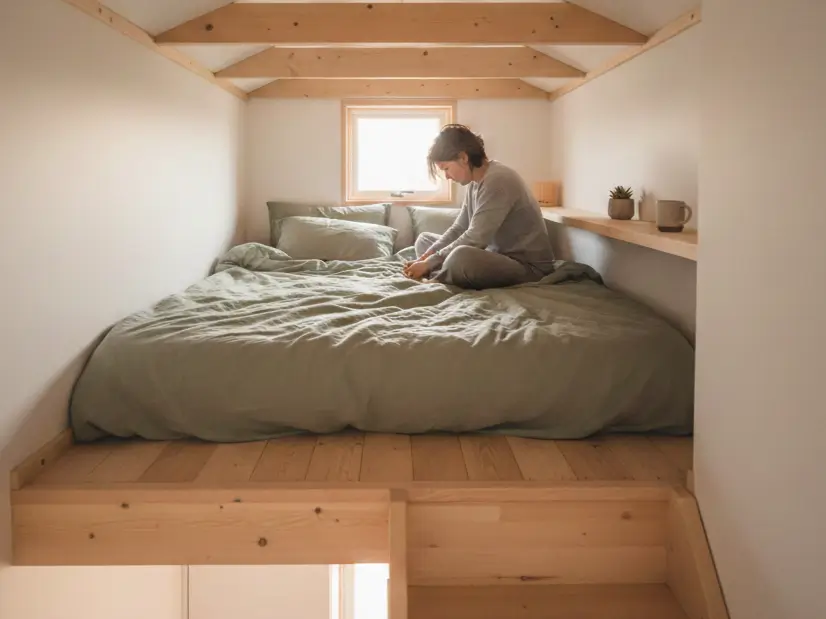
Sensory zoning divides a small open floor plan into “Active” (high stimulation) and “Recovery” (low stimulation) areas. In spaces under 400 sq ft, use changes in ceiling height, flooring texture, or lighting intensity to define these zones rather than walls. For example, a loft with a 36-inch clearance becomes a compressed “cocoon” zone, while the high-ceiling kitchen is the active zone.
The “No-Wall” Challenge
In a typical apartment, walls do the work of separating activities. In a tiny house, you have to use sensory cues. If you eat, sleep, and work in the exact same lighting and texture, your brain never gets the signal to switch modes.
Strategies for Micro-Zoning:
- Compression vs. Expansion:
Use vertical space to regulate arousal levels. High ceilings (common in tiny house living areas) encourage energy and movement. Lower ceilings, like the space under a storage loft (typically 6’4” to 6’8” clearance), naturally signal safety and grounding. Place your “recovery corner” or reading nook here. - Tactile Transitions:
Change the floor texture. If your main floor is smooth vinyl plank, place a high-pile, weighted rug (approx. 5×7 feet) in your lounge area. The physical sensation of walking from hard to soft signals your body to slow down. - The “Cocoon” Concept:
For many autistic individuals, deep pressure and containment are regulating. A standard loft bed can feel exposed. Consider creating a “sleeping pod” with heavy velvet curtains or sliding panels. Even in a 400 sq ft apartment, a dedicated enclosed space (minimum 30 inches wide) for decompressing is vital.
Refer to our guide on tiny house layout floor plans to see how structural elements can define these zones without wasting floor space.
Reducing Visual Clutter in Small Spaces for Executive Function
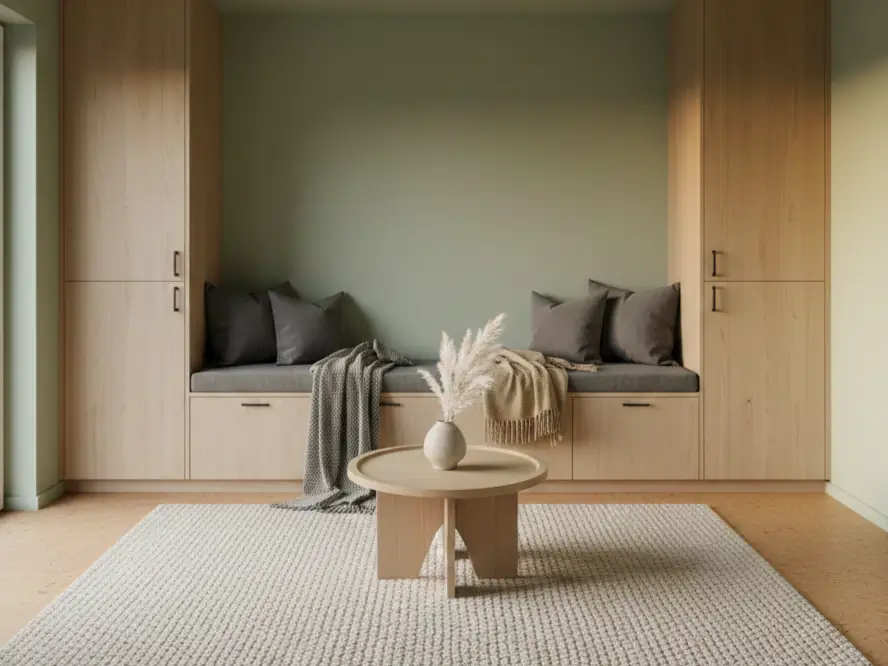
“Visual Quiet” is essential for reducing cognitive load. Replace open storage with solid doors. Use uniform opaque bins (10-12 inches high) rather than clear ones. Implement a “drop zone” within 3 feet of the door measuring at least 12×24 inches to catch keys and bags. Budget: $200-$500 for organizing systems.
The Paradox of Object Permanence
If you have ADHD, you might struggle with “out of sight, out of mind.” The standard advice is to leave things out so you remember them. In a tiny house, leaving things out makes the walls feel like they are closing in.
The Hybrid Solution:
Instead of open chaos or total concealment, try Shadow Boxing.
- Active Items: Use labeled, shallow drawers or pegboards inside cabinet doors. You open the door, and everything is visible at once, but when closed, the room is calm.
- Categories: Group items by activity (coffee kit, tech cords) in pull-out bins.
- Uniformity: If you must have visible storage, match the colors. Ten books of different colors look like clutter; ten white binders look like texture.
When selecting cabinetry, opt for matte finishes over glossy ones. High-gloss reflects light and movement, adding to visual overstimulation.
For specific cabinetry ideas, check out our tiny house storage solutions and tiny house kitchen design guides.
Best Lighting for Sensory Processing in Tiny Homes
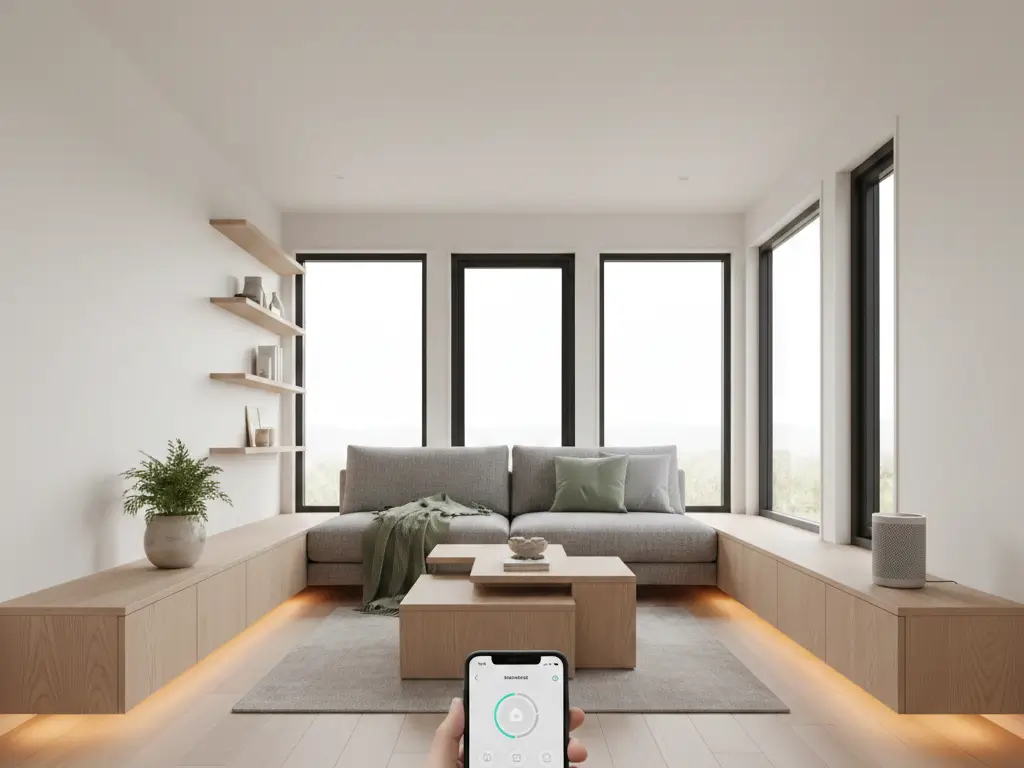
Lighting directly affects circadian rhythms and sensory regulation. Avoid single overhead fixtures. Install dimmable LEDs with adjustable color temperature (Tunable White). Use 5000K (cool blue) for focus areas like the kitchen, and 2700K (warm amber) for recovery zones. Indirect lighting strips (LED tape) hidden behind joinery prevent glare.
Why Lux Matters in Small Volumes
In a small room, a single bright bulb bounces light off all four walls, creating a “lightbox” effect that can trigger migraines or sensory overload.
The Layered Approach:
- Task Layer: Under-cabinet lights in the kitchen (200 sq ft homes usually have dark counters due to lofts above).
- Ambient Layer: Dimmable cove lighting bouncing off the ceiling. This makes the space feel larger and provides a soft glow without hot spots.
- Sensory Layer: Color-changing smart bulbs (Philips Hue or similar). Being able to turn your entire home “red” or “deep blue” at night can be a massive aid for winding down.
- Cost Insight: A full smart lighting setup for a tiny house (approx. 6-8 bulbs + strip lights) costs around $300–$400, a worthy investment for mental health.
See more technical specs in our tiny house lighting solutions article.
Soundproofing Strategies for Neurodivergent Tiny House Design
Tiny houses, especially on wheels, have thin walls compared to traditional homes. External noise (rain, traffic) and internal noise (appliances) are amplified.
Solution: Use soft materials. Cork flooring absorbs impact noise. Upholstered wall panels (NRC rating 0.8+) reduce echo. Solid core doors for bathrooms are mandatory.
Table: Acoustic Materials for Small Spaces
| Material | Application | Thickness | Budget | Sensory Benefit |
| Cork Flooring | Main Floor / Loft | 6mm – 12mm | Mid-Range | Soft underfoot, absorbs impact sound |
| Acoustic Foam | Inside closets/utility | 1 inch | DIY Budget | Dampens appliance hum |
| Wool Felt | Wall covering | 3mm – 5mm | Investment | Tactile, warm, reduces conversational echo |
| Heavy Curtains | Windows / Room Divider | N/A | Low Budget | Visual softness + sound absorption |
The “Hum” Factor
For those with high sensitivity, the refrigerator compressor turning on in a 200 sq ft space can be physically painful.
- Tip: Build a vented, insulated cabinet around your fridge.
- Tip: Choose appliances with decibel ratings under 40 dBA.
- Tip: Use rubber vibration pads under the washing machine.
Explore tiny house flooring options for more on cork and other quiet materials.
Low Arousal Color Palettes for Small Spaces
Low arousal colors reduce physiological stress. In tiny houses, avoid stark white (too much glare) or highly saturated reds/oranges (too stimulating). Opt for “murky” mid-tones: Sage Green (LRV 40-50), Dusty Blue, or Warm Greige. These colors absorb light gently rather than reflecting it aggressively.
Biophilic Connection
Nature is the ultimate regulator. Green is the color most easily processed by the human eye. Incorporating biophilic elements isn’t just aesthetic; it reduces cortisol.
- Paint: Soft sage greens blur the line between inside and outside.
- Wood: Unfinished or matte-sealed wood grain provides “fractal” patterns that are soothing to the brain.
- Plants: In a small apartment, vertical gardens maximize green exposure without losing floor space.
For specific paint codes, see tiny house color selection and biophilic design tiny homes.
Loft vs. Ground Floor Sleeping
Lofts offer containment and separation but can feel claustrophobic or present mobility hurdles. Ground floor beds offer ease of access (good for dyspraxia/coordination issues) but consume 30% of the floor plan in a tiny house.
Scenario A: The Autistic Need for Enclosure
Many autistic adults prefer the loft. The lower ceiling (often 36-40 inches) provides a “weighted blanket” feeling for the whole body. It is a distinct zone strictly for rest.
- Design Tip: Install a half-wall instead of a railing for visual privacy.
Scenario B: The ADHD Need for Ease
If you struggle with morning transitions or coordination (dyspraxia is common with neurodivergence), climbing a ladder is a barrier. A Murphy bed or a trundle bed allows for a ground-floor transition without navigating stairs.
- Design Tip: Ensure the mechanics of the bed are simple. If it takes 5 steps to set up the bed, you might end up sleeping on the couch.
Read more on layouts in tiny house bedroom design and tiny house accessibility design.
The Proprioceptive “Crash” Zone
For sensory seekers or those who experience meltdowns, having a safe place to physically release energy or receive deep pressure is vital. In a large house, this might be a sensory gym. In a tiny house, we have to be clever.
Ideas for <400 Sq Ft:
- Hammock Mounts: Install heavy-duty hooks (rated 300lbs+) into the structural framing. A hammock takes up zero space when packed away but provides essential vestibular input (swinging) when needed.
- The “Squish” Corner: Use a convertible bean bag chair (like CordaRoy’s) that doubles as a guest bed. It provides deep pressure sitting during the day.
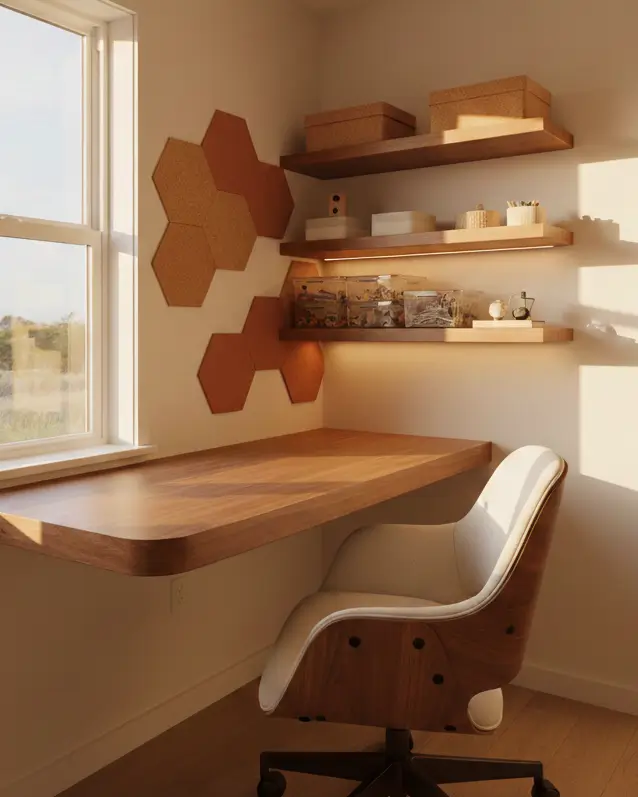
- Texture Walls: A section of wall with tactile inputs, sequin fabric, smooth wood slats, or rough cork, can provide a “fidget” zone that doesn’t look like a therapy clinic.
Check tiny house wall materials to ensure your walls can support swinging hardware.
Conclusion
Designing a neurodivergent tiny house isn’t about following a minimalist trend; it’s about engineering a life support system for your unique brain. Whether you need the deep silence of acoustic felt or the organized calm of shadow-boxed storage, the constraints of a small footprint can actually be liberating. You have less to manage, less to clean, and less to process.
- Audit your sensory triggers: Sit in your current space. What sounds, lights, or textures annoy you? Write them down.
- Start with lighting: Swap your bright white bulbs for warm, dimmable smart bulbs (2700K). This is the fastest, cheapest change (under $50) with the biggest impact.
- Create one “Quiet Box”: dedicate one drawer or bin to hold your “visual noise” (mail, keys, chargers) and keep it closed.
For more on sustainable materials that improve indoor air quality (another sensory trigger!), explore our guide on tiny house sustainability.