When you live in 350 square feet, a hobby isn’t just a pastime, it’s a claim on valuable real estate. But for individuals with special needs, hobbies are often more than just fun; they are essential for sensory regulation, motor skill maintenance, or mental health management. The challenge isn’t just storing the gear; it’s making it accessible without creating a cluttered obstacle course.
To integrate special needs hobbies into a tiny house, prioritize vertical accessibility zones (storage between 15″ and 48″ high), utilize dampening materials for sensory sound control, and install multi-functional distinct stations (like a drop-down desk that serves as a sensory calm-down corner). Budget for this transformation ranges from $100 for DIY organization to $2,000+ for hydraulic adjustable surfaces.
In my experience designing adaptive small spaces, I’ve found that standard “minimalist” advice often fails neurodivergent folks or those with mobility aids. You can’t just “own less” if you need specific tactile tools for autism regulation or a bulky easel for therapeutic art.
This guide focuses on merging accessibility with extreme efficiency. We are looking at creating a “Regulation Station”, a space that serves your hobby and your specific needs, all within a compact footprint.
How do I create a sensory-safe hobby space in a tiny house?
Create a sensory-safe zone by controlling acoustics and lighting. Use acoustic foam panels (NRC rating 0.8+) inside hobby cabinets to dampen noise. Install dimmable LED strips (2700K-3000K warm white) under shelves for task lighting without overhead glare. Cost: Approx. $150-$300.
Managing Acoustics in Tight Quarters
In a tiny house, sound travels instantly. If your hobby involves repetitive noise (like sewing, woodworking, or gaming) or if you are sensitive to sound, acoustic management is non-negotiable.
Hard surfaces bounce sound. In a 200 sq ft room with wood walls and floors, this creates an echo chamber that can trigger sensory overload.
- The Soften-Up Strategy: Use heavy textiles. A thick wool rug (minimum 0.5-inch pile) can reduce impact noise by 20 decibels.
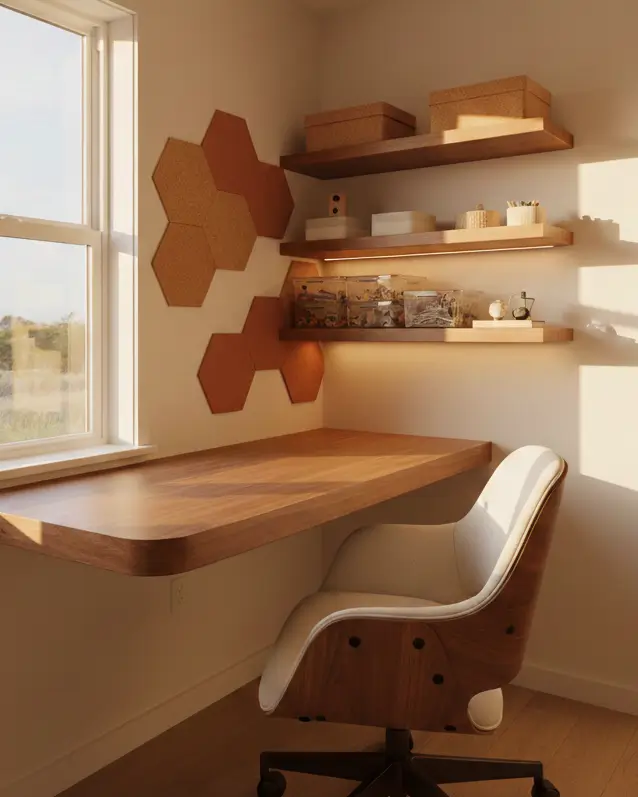
- Wall Treatments: You don’t need professional studio foam. Cork tiles (12×12 inches) are sustainable, pin-friendly for displaying art, and excellent sound absorbers.
- Hollow Core Doors: If your hobby gear is in a closet, replace standard hollow doors with solid core options or hang a heavy curtain behind the door to muffle sound.
For more on selecting the right materials for noise and temperature control, check our guide on tiny house insulation.
Lighting for Focus and Calm
Fluorescent overhead lighting is the enemy of many neurodivergent individuals. In small spaces, shadows are also more pronounced.
- CRI Matters: Look for LEDs with a Color Rendering Index (CRI) above 90. This shows true colors, crucial for art therapy or detailed crafts, without the harsh flicker.
- Zone Lighting: Instead of one big light, use three distinct sources. A clamp lamp for the work surface, a warm ambient strip light (2700K) behind the monitor or desk for low-contrast bias lighting, and general dimmable overheads.
Wheelchair Accessible Hobby Stations in Small Spaces
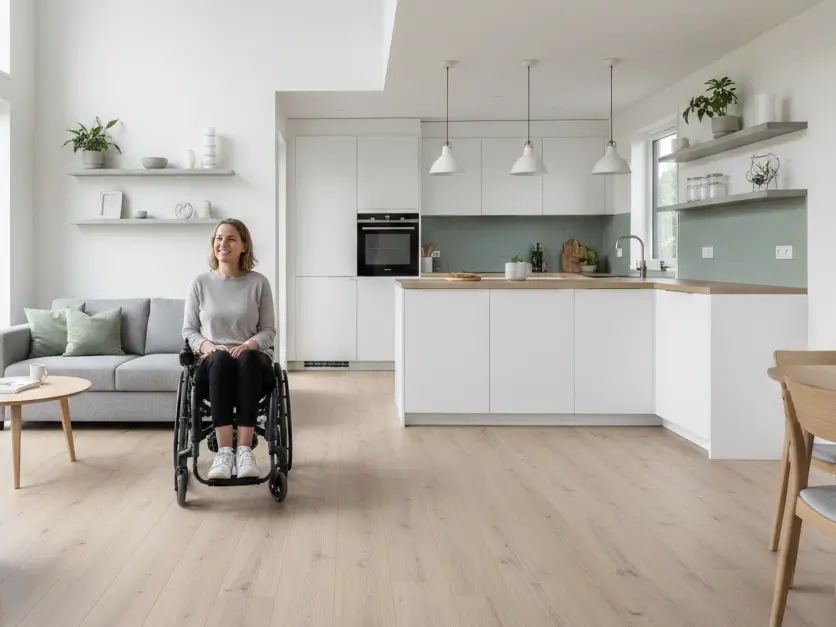
Ensure a T-turn space of 60 inches or a minimum aisle width of 36 inches for wheelchair clearance. Desks must have knee clearance of at least 27 inches high and 19 inches deep. Keep frequently used tools within the “common reach zone” of 15 to 48 inches off the floor.
The “Golden Zone” of Storage
When accessibility is the priority, vertical storage up to the ceiling (a common tiny house hack) isn’t always practical. If you have limited range of motion or use a wheelchair, the “Golden Zone” is between 15 inches and 48 inches off the finished floor.
- Avoid the Floor: Don’t store heavy bins on the floor. It requires bending and lifting.
- Avoid the Ladder: High shelves are for seasonal items only.
- The Solution: Use pull-down shelving hardware (often used in kitchen cabinets). These mechanisms bring high shelves down to a seated eye level. They cost around $150-$300 per unit but double your accessible storage cubic footage.
For wider layout planning, specifically regarding movement flow, review our tiny house layout and floor plan resources.
The Hover Desk Concept
A standard desk has legs that block wheelchair turning radius. In a tiny home, every inch of floor space matters.
- Cantilevered Desks: Mount the desktop directly to the wall studs using heavy-duty brackets (rated for 300+ lbs). This eliminates legs entirely, allowing for a full 180-degree swing in a chair.
- Fold-Down Brackets: If the space serves as a living room and a hobby station, use heavy-duty folding brackets. The table disappears when not in use, leaving the floor clear for mobility.
Organizing Hobbies for ADHD and Autism in Tiny Homes
Combat “out of sight, out of mind” using transparent bins or visual labels (photos/icons) on opaque containers. Limit open shelving to active projects to reduce visual noise. Implement a “doom box” system: one designated 12×12 inch basket for rapid cleanup that gets sorted weekly.
The Conflict of Clutter
For many with ADHD, if a hobby tool is put away in a solid box, it effectively ceases to exist. However, leaving everything out in a 400 sq ft space creates visual chaos that causes anxiety.
The Hybrid System:
- Active Project Tray: A dedicated 18×24 inch tray that holds the current project. When you need the table for dinner, the entire tray moves to a shelf, keeping the project intact.
- Clear Front Drawers: Use drawers with clear acrylic fronts. You see the category of items (yarn, paint, circuits) without seeing the mess of individual pieces.
- Color Coding: Assign colors to categories. This reduces the cognitive load of searching.
If you are dealing with paints or chemicals, ensure you consult our guide on paint storage conditions to keep them safe and viable in small, potentially fluctuating climates.
Visual Anchoring
Use “visual anchors” to define the hobby zone. A change in wall color or a specific piece of art can signal to the brain, “This is the creative zone,” helping with task initiation.
See how color psychology works in compact areas in our article on neurodivergent tiny house design.
Adapting Furniture for Special Needs Hobbies
Select furniture that serves dual purposes: sensory regulation and daily function. Examples include a sensory swing mounted to a structural beam (requires 500lb weight rating), a balance board that slides under a sofa, or a dining table with a puzzle/Lego vault hidden underneath.
The Hidden Vault Table
For hobbies involving hundreds of small pieces (Lego, puzzles, jewelry making), a “vault table” is a lifesaver.
- Design: A dining table with a removable top. Underneath is a recessed felt-lined area (usually 2-3 inches deep).
- Benefit: You can work on a complex project, put the lid on for dinner, and the project remains undisturbed. No cat interference, no lost pieces.
- DIY Option: You can modify an existing table by adding a raised border and a secondary top, costing roughly $60 in lumber and felt.
Structural Integration
If your hobby or therapy needs involve suspension (like a sensory swing or resistance bands), you must plan this during the build or renovation framing.
- Beam Requirements: Standard tiny house framing (2×4) may need reinforcement. Look for a triple stud pack or a 4×6 header beam.
- Hardware: Use heavy-duty swivel hangers bolted through the beam, not just screwed into it.
Read more about the structural requirements in our tiny house wood materials guide to ensure safety.
Should I build a separate hobby room in a tiny house?
For most <400 sq ft homes, a dedicated room consumes too much space (min 50 sq ft). An integrated zone using room dividers or fold-down furniture is more efficient. However, if the hobby involves hazardous fumes or extreme noise, a separate, ventilated vestibule or shed is safer.
| Feature | Dedicated Room (50+ sq ft) | Integrated Zone (Shared Space) | Small Space Impact |
| Space Cost | High (12-15% of total home) | Low (Uses vertical/existing space) | Integrated saves ~40 sq ft for living/kitchen. |
| Noise Control | Excellent (with door) | Low (requires headphones/curtains) | Dedicated is better for sensory sensitivity. |
| Ventilation | Can be isolated | Shared with living air | Integrated requires active exhaust for fumes. |
| Accessibility | Harder (doorways narrow space) | Easier (open floor plan) | Integrated offers better turning radius. |
| Cost | +$3,000 (walls, door, electric) | +$500 (cabinetry/furniture) | Integrated is significantly cheaper. |
The Recommendation
For mobility needs, the Integrated Zone wins. Doorways are the enemy of wheelchair flow in tiny houses. An open plan allows for a larger turning circle.
For severe sensory processing disorder, a Dedicated Room (even a tiny 4×6 ft “womb room” or sensory closet) might be worth the square footage sacrifice to provide a total escape.
Air Quality and Chemical Safety in Small Volumes
Small air volumes concentrate fumes rapidly. If your hobby involves glues, paints, or soldering, install a source-capture ventilation system (like a solder fume extractor) or an HRV (Heat Recovery Ventilator). Aim for 0.35 air changes per hour (ACH) minimum.
Ventilation is Critical
In a 2,000 sq ft house, painting a model car in the living room dissipates smells quickly. In a 300 sq ft tiny house, those VOCs (Volatile Organic Compounds) accumulate to dangerous levels in minutes.
- Low VOC Materials: Always choose low-VOC paint for tiny houses and hobby supplies.
- Active Exhaust: Don’t rely on opening a window. Use a bathroom fan or a dedicated range hood vented to the outside near your workstation.
Floor Surfaces
For wheelchair users or those with gait instability, high-pile carpet is a tripping hazard and difficult to roll on.
- Best Choice: Luxury Vinyl Plank (LVP) or cork. Cork provides a slight cushion for falls but is firm enough for wheels. It is also warmer than tile.
- Rug Safety: If you use rugs for sound dampening, tape all edges down with heavy-duty carpet tape to prevent curling.
Check out our specific recommendations for tiny house accessibility design regarding flooring transitions.
Closing Thoughts
Designing a tiny house for special needs hobbies isn’t about compromising; it’s about prioritizing. It forces you to decide what tools truly aid your life and regulation. By focusing on the “Golden Zone” of reach, controlling the sensory environment, and choosing furniture that works double-duty, you can create a space that supports both your passion and your well-being.
- Sit or stand in your comfortable working position and measure how high and low you can comfortably reach. Tape these lines on your wall.
- Separate items into “Daily Use” (Golden Zone) and “Occasional” (High/Low storage).
- Before building permanent walls, hang blankets to test how sound dampening changes the feel of the room.
For more inspiration on making small spaces work for everyone, explore veniola.com.