
I remember standing in my first 350-square-foot studio apartment, feeling like the walls were closing in. It wasn’t the lack of floor space, it was the heavy, dark mahogany dresser and the black laminate bookshelf I’d inherited. They felt like black holes absorbing all the light in the room.
If you are living in a tiny house or a compact apartment, you know that every square inch counts. But here is the secret most designers charge thousands to tell you: Square footage is physical, but spaciousness is visual.
By painting furniture and home decor, you aren’t just changing a color. You are manipulating “visual weight.” You can make a bulky cabinet disappear into a wall or turn a thrifted chair into a statement piece that defines your living zone.
Painting furniture in small spaces requires specific low-VOC products (to prevent fume buildup in tight quarters), self-leveling paints (to minimize sanding dust), and a strategic color palette to reduce visual clutter. For under $150, you can visually expand a room by 20% simply by matching large furniture pieces to your wall color.
From budget-friendly DIY makeovers to selecting the right finishes that won’t show scuffs in high-traffic tiny homes, this guide covers the specifics of painting when you don’t have a garage or a backyard to work in.
The “Visual Weight” Theory: Why Paint Matters in <600 Sq Ft
Visual weight refers to how heavy an object looks to the eye, not how much it weighs on a scale. In spaces under 600 sq ft, high-contrast furniture (like dark wood on light walls) stops the eye, shrinking the perceived space. Painting large pieces to match walls reduces visual weight, making the room feel larger.
The Camouflage Technique
In a standard 2,000-square-foot home, a contrasting oak armoire is a focal point. In a 12×12 tiny house living room, it’s an obstacle.
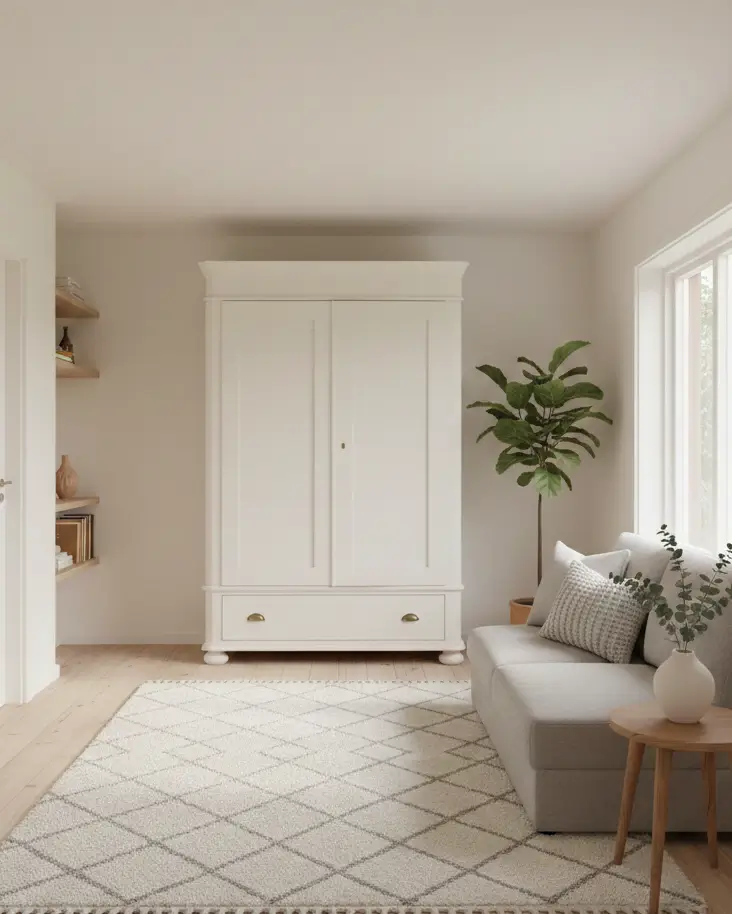
I tested this in a client’s 400 sq ft accessory dwelling unit (ADU). We took a floor-to-ceiling wardrobe, vital for storage but visually massive, and painted it the exact same creamy white (LRV 82) as the walls behind it.
The result: The wardrobe visually “melted” away. The room immediately felt deeper. When you paint furniture to match your neutral paint colors for small apartments, you eliminate the visual boundaries that chop up a room.
High-Traffic Durability
In small spaces, you interact with your furniture more often. You brush past the credenza to get to the kitchen; you bump the coffee table to sit on the sofa. The paint you choose for furniture must be durable. Standard wall latex won’t cut it on a dining chair. You need enamels or urethanes that cure hard.
Safety First: Air Quality in Small Volumes
Painting in small volumes concentrates fumes significantly faster than in large homes. Always choose Zero-VOC or Low-VOC (<50g/L) paints. If you cannot move furniture outside, use water-based alkyds or chalk paints. Avoid oil-based primers and spray paints indoors, as they linger in fabrics and bedding for weeks.
The Ventilation Challenge
If you live in a tiny house on wheels or a studio, your bedroom is likely in the same room as your painting project. Sleeping in paint fumes isn’t just unpleasant; it’s dangerous.
When choosing low VOC paint for tiny houses, look for the “Green Guard Gold” certification. This standard is specifically designed for environments with vulnerable populations (like schools) and is ideal for small living spaces.
My Rule of Thumb for Indoor Painting:
- Open Windows: Create a cross-draft.
- Box Fans: Position one fan blowing out of a window to exhaust fumes.
- Timing: Paint early in the day so the piece has 8-10 hours to off-gas before you sleep.
For detailed safety protocols, check our guide on paint safety regulations.
Prep Work Without a Workshop: The Dust Issue
Sanding creates dust that settles everywhere in a small apartment. To minimize this, use “bonding primers” that chemically adhere to shiny surfaces without heavy sanding. Alternatively, “liquid sander” (deglosser) wipes can prep surfaces chemically. If you must sand, use wet-sanding techniques or a vacuum attachment.
The “No-Sand” Approach
Let’s be real: sanding a dresser in a 500 sq ft apartment is a nightmare. You’ll find dust in your toaster three weeks later.
For painting specific surfaces like laminate or varnished wood found in rental furniture, I recommend a high-quality bonding primer. Brands like STIX or Zinsser BIN (shellac-based) stick to almost anything.
The Apartment-Friendly Workflow:
- Clean: Scrub with TSP substitute (essential for kitchen grease).
- Degloss: Use a liquid sander/deglosser wipe. It dulls the finish chemically.
- Prime: Apply one coat of bonding primer.
- Paint: Apply two coats of high-quality furniture enamel.
Zoning Open Floor Plans with Color Blocking
In studio apartments or lofts, color blocking furniture helps define “rooms” without physical dividers. Painting a desk and shelf unit a distinct color (e.g., sage green) visually separates the “office” from the “sleeping” area. This psychological zoning organizes the space and reduces the feeling of living in a single cluttered box.
Visual Separation Strategy
A common mistake in tiny house design is having a “furniture store” look where nothing matches, or conversely, where everything is the same wood tone.
Instead, use paint to create zones.
- The Kitchenette: Paint the island base a grounding charcoal to separate it from the living area.
- The Office: In a corner of a 120 sq ft bedroom, paint the desk and the wall behind it the same accent color. This creates an “architectural niche” effect.
I recommend looking into tiny house style aesthetics to choose a palette that flows. If you have a lofted bed, painting the ladder a fun accent color can turn a utility item into a piece of home decor.
Choosing the Right Paint for the Surface
Not all furniture material is wood. For laminate (IKEA style), use a shellac-based primer. For metal, use a rust-inhibitive primer. For plastic, use a plastic-adhesion spray paint (outdoors only). Using the wrong primer is the #1 reason for paint peeling within six months.
1. Wood (Stained or Raw)
If you are painting wood, you have the most options. Chalk paint is popular for a matte, farmhouse look and requires little prep. However, it requires waxing, which needs re-application. For high-traffic tiny homes, I prefer a water-based alkyd enamel which cures hard without a topcoat.
2. Metal
Many tiny houses use metal cabinets or lockers for industrial-style storage. When painting metal surfaces, rust prevention is key. Even indoor humidity from a shower can cause rust spots to bleed through paint. Use a specific metal primer.
3. Plastic & Laminate
Cheap storage bins or laminate bookcases are common budget savers. Painting plastic requires a specialized spray paint that bonds to flexible surfaces. Warning: Do this outside. The overspray from aerosol cans is impossible to control in a small room.
See our comparison on spray vs. brush vs. roller to decide which tool fits your space constraints.
Budget Breakdown: The ROI of Paint vs. New Furniture
Replacing a solid wood dresser costs $400-$1,000+. Refinishing it costs approximately $60-$90. This includes: Quart of high-quality paint ($25-30), Primer ($15), Brushes/Rollers ($15), and Deglosser ($10). For renters, painting furniture is a reversible way to add color when you can’t paint the walls.
Cost Analysis Table (2024 Estimates)
| Item | Est. Cost | Small Space Note |
| Furniture Paint (Quart) | $25 – $35 | One quart covers ~100 sq ft (enough for 2 dressers). |
| Bonding Primer (Quart) | $15 – $22 | Essential for laminate/IKEA hacks. |
| Microfiber Rollers | $8 – $12 | Best for smooth finish without brush marks. |
| Drop Cloths | $5 – $10 | Use plastic with tape edges to protect tight floors. |
| Total DIY Cost | $53 – $79 | Vs. New Furniture: $500+ |
For a deeper dive into costs, review our paint budget cost analysis.
The Best Finishes for Tight Spaces
Sheen affects how large a piece looks. Matte/Flat finishes absorb light, making pieces look smaller and hiding imperfections, but they are harder to clean. Satin or Semigloss reflects light, making a piece “pop” but highlighting surface dings. For small spaces, Satin is the golden mean: scrubbable but not overly shiny.
Why Satin Reigns Supreme
In a tiny house, you will touch walls and furniture constantly. Matte paint creates “burnish” marks (shiny spots) where you rub against it.
- Matte/Chalk: Best for decorative items, mirror frames, or low-touch areas.
- Satin: Best for dressers, bookshelves, and kitchen cabinets.
- Semigloss: Best for chairs and table legs (easiest to wipe down).
Choosing the right brand matters. Some budget brands have “blockings” issues, meaning painted doors stick to the frame even after drying. Check our guide on paint brands for small spaces for non-blocking recommendations.
Steps to Success: The “Weekender” Workflow
Since you likely don’t have a spare room to leave a project drying for days, you need a tight schedule.
- Friday Night: Clean and apply liquid deglosser. Remove hardware. Tape off drawer sides.
- Saturday Morning: Apply bonding primer. Go have coffee outside for 2 hours.
- Saturday Noon: Lightly sand primer if rough. Apply Paint Coat #1.
- Saturday Night: Apply Paint Coat #2.
- Sunday: Let it cure. Do not put heavy objects on top yet!
Pro Tip: If you are tackling a large project like kitchen cabinets, break it down. Do the uppers one weekend and the lowers the next to keep your paint preparation in a small apartment manageable.
Conclusion
Painting furniture is the single most effective way to change the architecture of a small space without knocking down walls. By matching bulky items to your walls, you create breathing room. By color-blocking specific pieces, you create order in an open plan.
Remember, in a tiny home, your furniture isn’t just functional; it is your primary decor. Investing a weekend and $70 into refinishing a piece doesn’t just save money, it customizes your home to your exact spatial needs.
- Identify the “black hole” furniture piece in your room.
- Clean it thoroughly with a degreaser.
- Pick a low-VOC paint that matches your wall color to make it disappear, or a bold accent to make it sing.
For more inspiration on finishing touches, explore tiny house decorating basics or check out veniola.com for our full library of small-space solutions.