
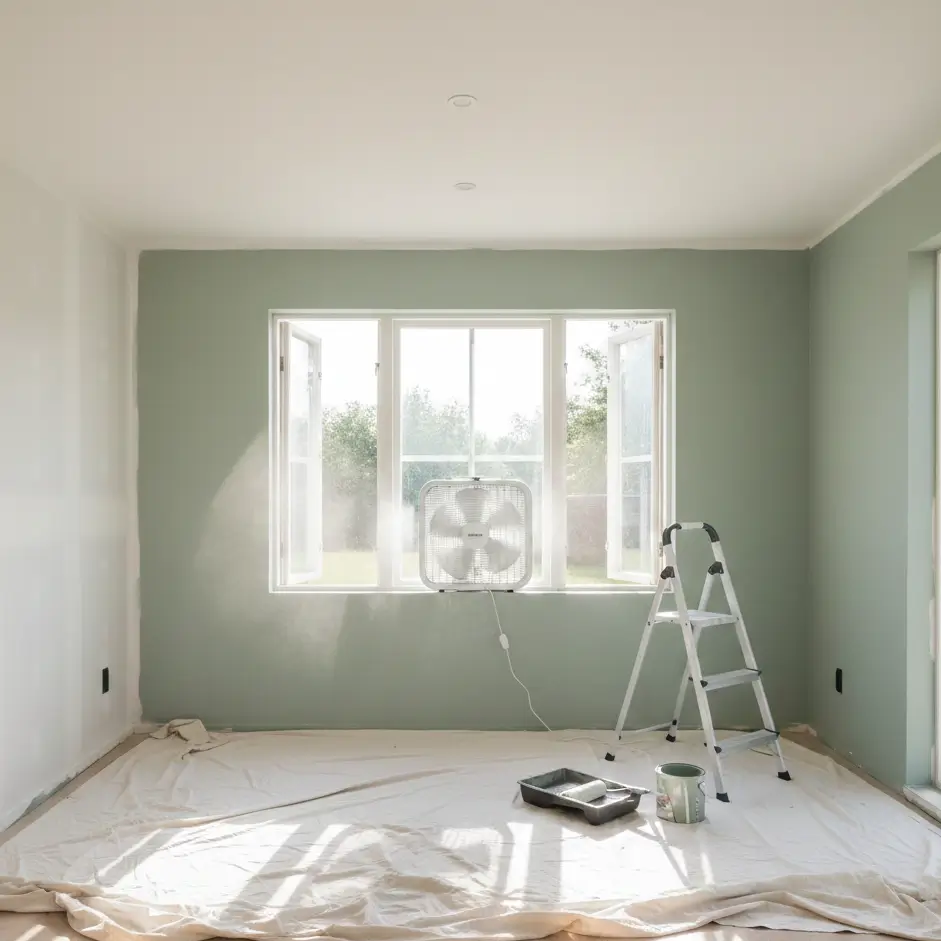
When you paint a 2,500-square-foot suburban home, fumes have plenty of places to disperse. But when you crack open a can of semi-gloss in a 400-square-foot tiny house or a studio apartment, the physics change immediately. You aren’t just decorating; you are rapidly altering the chemistry of your entire breathing zone.
Paint safety regulations exist to limit hazardous emissions, but in small spaces, compliance isn’t enough, you need strategy. For spaces under 800 sq ft, strictly use Zero-VOC paints (under 5g/L), maintain active cross-ventilation (minimum 200 CFM airflow), and store leftovers in climate-controlled areas between 50°F and 85°F. Standard safety advice assumes large air volumes; tiny living requires stricter adherence to health codes.
In my years designing for compact living, I’ve seen DIYers treat painting as a casual weekend task, only to end up with a headache that lasts three days because the fumes had nowhere to go. In a tiny home, the “Concentration Effect” is real. A standard amount of off-gassing becomes exponentially more potent when the air volume is reduced by 80%.
Whether you are renovating a vintage Airstream or freshening up a rental studio, understanding the safety rules is about more than compliance, it’s about survival in a small box. From $40 respirators to specific storage laws, here is how to handle paint safely when you don’t have a garage or a spare wing to sleep in.
The “Concentration Effect”: Why Size Matters
In small spaces, the concentration of airborne pollutants accumulates faster than in standard homes due to reduced air volume. Paint safety regulations regarding Volatile Organic Compounds (VOCs) are critical here because a “safe” level of off-gassing in a large room can reach toxic concentrations in a 10×10 ft sealed bedroom.
When we talk about paint safety, we are primarily talking about Volatile Organic Compounds (VOCs). These are carbon-containing chemicals that turn into vapors at room temperature.
In a large house, VOCs dilute into the hallway, the upstairs landing, and the dining room. In a tiny house, your kitchen is your living room, which is often three feet from your sleeping loft.
The Math of Toxicity in Small Spaces:
- Standard Room: A gallon of paint releasing VOCs in a 20×20 ft room (3,200 cubic feet of air) dilutes fairly quickly.
- Tiny Home: That same gallon used in a tiny house (often less than 2,500 cubic feet of total air volume) creates a “gas chamber” effect.
If you are painting interior walls in a tiny house, you cannot rely on the “open a window” advice meant for suburban homeowners. You need to actively manage the air.
Decoding the Labels: VOCs and EPA Standards
Federal paint safety regulations limit VOCs to 250 g/L for flat coatings and 380 g/L for others. However, for small apartments, you should look for third-party certifications like GreenGuard Gold, which tests for over 10,000 chemicals. Aim for “Zero VOC” paints, which legally contain less than 5 grams per liter.
Navigating the hardware store aisle can be confusing. Here is the breakdown of what the regulations actually mean for your health.
Federal vs. Voluntary Standards
The EPA sets the legal maximums, but the “healthy home” industry sets the bar higher. In a small apartment, you want the strictest standard possible.
| Certification Level | VOC Limit (grams/liter) | Small Space Suitability |
| Federal Limit (Flat) | < 250 g/L | ❌ Avoid indoors |
| Low-VOC | < 50 g/L | ⚠️ Use with caution |
| Zero-VOC | < 5 g/L | ✅ Recommended |
| GreenGuard Gold | Strict Emission Limits | 🌟 Best for Tiny Homes |
The “Low-Odor” Trap
Do not confuse “Low-Odor” with “Low-VOC.” Some manufacturers use masking agents to hide the chemical smell, but the toxins are still there. Always check the data sheet for the VOC number.
If you are looking for specific recommendations, check out our guide on low VOC paint for tiny houses to find brands that actually perform in tight quarters.
Safe Painting Ventilation in Apartments and Tiny Homes
Proper ventilation requires Cross-Draft Airflow. In a single-room apartment, place a box fan (approx. $25) in one window blowing out (exhaust), and crack a window on the opposite side to pull fresh air in. If you only have one window, use two fans: one pulling in at the bottom, one pushing out at the top.
When you live in a space that is 400 square feet or less, you often don’t have cross-ventilation. You might have windows on only one wall, or a sleeping loft that traps heat and fumes.
The Positive Pressure Technique
If you are painting a bathroom with no window (common in apartments), you need to push air out.
- Open the bathroom door.
- Open the nearest window in the main living area.
- Place a fan in the window blowing IN.
- This pressurizes the apartment and forces air into the bathroom and up the exhaust fan vent (ensure your bathroom fan is actually venting outside, not just recirculating).
Protecting the HVAC
Turn off your heating or cooling system while painting. If you leave a mini-split running in a tiny house while painting, you risk sucking paint particulates into the filters, permanently embedding the smell into the unit.
For more on managing air and temperature, read about tiny house heating and cooling, which includes filter maintenance tips essential after a renovation.
Essential Safety Gear for Small Space Painting
In confined spaces, a standard dust mask is insufficient. Use a half-face respirator with organic vapor cartridges (NIOSH rating OV/P95). This costs roughly $40-$60 but is vital for protecting your lungs from concentrated fumes in small square footage.
I used to think respirators were overkill for rolling a wall. Then I painted a 60 sq ft hallway with the doors closed. The dizziness hit me in ten minutes. In small spaces, PPE isn’t optional.
Your Safety Kit Checklist:
- Respirator: Look for pink or yellow cartridges marked “Organic Vapor.”
- Goggles: Paint splatter in the eye is common when working in tight corners where the roller is inches from your face.
- Skin Protection: Latex or nitrile gloves. Many solvents can be absorbed through the skin.
This is especially critical if you are painting wood interior elements that require oil-based primers or sealers, which have much higher solvent contents than latex paint.
Paint Storage Conditions and Fire Safety Regulations
Paint safety regulations strictly dictate storage for flammables. Oil-based paints are combustible and should not be stored in living areas. In apartments without garages, store latex paint in cool, dry closets (temp 50°F-85°F). Never store paint near water heaters, furnaces, or stoves, a common risk in tiny house layouts.
Where do you put the leftover gallon when you don’t have a garage?
Temperature Control is Safety
Paint spoils if it freezes (expands and bursts the can) or overheats (builds pressure).
- The Risk: In a tiny house on wheels, floor-level cupboards can freeze in winter, while loft storage can reach 100°F+ in summer.
- The Solution: Store paint in the “middle zone”, a bottom shelf of a coat closet or under a bed that stays conditioned.
The “Decant” Trick for Small Spaces
Don’t keep the massive gallon can for touch-ups.
- Pour leftover paint into a clean, wide-mouth mason jar or a specialized plastic touch-up cup (approx. 1 pint).
- Label it with the Brand, Color Code, and Date.
- Properly dispose of the big metal can.
This saves precious cubic feet of storage and keeps the seal tight.
For more ideas on organizing utility items, check our guide on tiny house storage solutions.
RRP Rule and Lead Safety for Apartment Renters
If your apartment or building was built before 1978, it likely contains lead paint. Under the EPA’s RRP Rule (Renovation, Repair, and Painting), landlords and contractors must follow specific lead-safe practices. As a DIY renter, never dry sand old paint. Test chips with an EPA-recognized lead test kit ($15) before disturbing any surface.
If you live in a charming vintage apartment or are restoring an older movable structure, lead is a silent hazard. In a 500 sq ft apartment, lead dust from sanding a single windowsill can contaminate the entire living space, landing on your bed, your kitchen counters, and your sofa.
Safe Prep for Old Surfaces:
- Wet Sanding Only: Keep dust out of the air.
- HEPA Vacuum: Standard vacuums just blow lead dust back into the room.
- Encapsulation: Sometimes the safest regulations-compliant method is to paint over the lead with a specialized encapsulant rather than removing it.
If you are renting, review our tiny house renters guide to understand what you are allowed to modify and your landlord’s legal obligations regarding safety.
Protecting Vulnerable Occupants in Compact Homes
Small bodies (children) and pets breathe faster and are closer to the ground, where heavier-than-air fumes can settle.
- Birds: Extremely sensitive. Paint fumes that are undetectable to humans can be fatal to birds instantly. Move them out of the unit completely for 48 hours.
- Cats/Dogs: If you are in a studio, you cannot effectively separate them from the wet walls. You need a “pet hotel” plan for painting weekend.
Read more about designing and maintaining a safe tiny house with pets to ensure your renovation doesn’t harm your furry roommates.
Hazardous Waste Disposal for Apartment Dwellers
You cannot throw liquid paint in the apartment dumpster, it is illegal and creates environmental hazards.
The Hardener Hack:
If you have less than an inch of latex paint left:
- Buy “waste paint hardener” (about $3/packet) or use kitty litter.
- Mix it into the can.
- Wait for it to turn solid.
- Once solid, it is often legal to trash (check local municipal codes).
Oil-based paints are always hazardous waste and must go to a drop-off facility. This is part of responsible paint budget and cost analysis, factoring in the time and cost of disposal.
Bottom Line
Paint safety regulations aren’t just bureaucratic red tape; they are the dosage instructions for the chemicals we bring into our homes. In a tiny house or small apartment, the margin for error is razor-thin. By choosing Zero-VOC products, investing in a respirator, and creating active ventilation, you can transform your space without compromising your health.
- Check your current paint cans, are they stored safely away from heat?
- Order a lead test kit if your building is pre-1978.
- Map out your ventilation plan (fan placement) before you buy the first gallon.
For more technical details on the application process, visit our guide on painting conditions, safety, and best practices.