
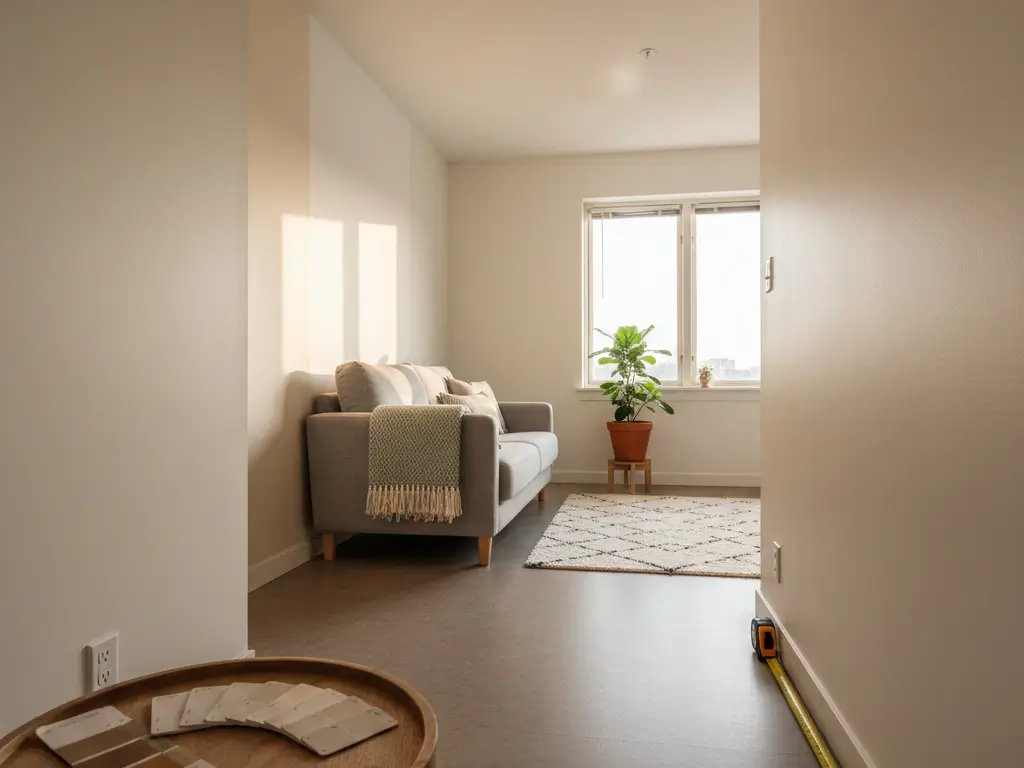
The wrong paint finish can shrink a 450-square-foot apartment by what feels like 100 square feet. I learned this the hard way when I painted my studio bedroom in flat black, an Instagram-inspired disaster that turned a cozy retreat into a cave.
The sheen level of your paint affects perceived room size just as much as color choice. In spaces under 800 square feet, that finish decision becomes even more critical because every surface is closer to your eye line.
Paint finishes range from zero-sheen flat to mirror-like high-gloss, and each bounces light differently off your walls. When you’re working with limited square footage, understanding this light-bounce factor helps you make choices that genuinely expand your space, not just in theory, but in daily experience.
I’ve tested seven different finishes across three tiny houses and two small apartments over the past four years. This guide shares what actually worked, what bombed spectacularly, and why the “best” finish depends entirely on which room you’re painting. Expect to spend between $30 and $95 per gallon depending on brand and finish type, with most small-space projects requiring just 2-3 gallons total.
What Paint Finish Makes Small Rooms Look Bigger?
Eggshell and satin finishes make small rooms appear larger because they reflect 10-35% of light back into the space without creating harsh glare. Pair these finishes with colors that have an LRV (Light Reflectance Value) of 60 or higher for maximum space-expanding effect in rooms under 600 square feet.
The science here is straightforward. Light hits your wall and bounces back at you. How much bounces back, and how diffusely, determines whether your room feels open or cramped.
Flat and matte finishes absorb light. They create a velvety, sophisticated look that photographs beautifully but can make a 350-square-foot tiny house feel like a shadowy box. I’ve measured light levels in identically-sized rooms with different finishes, and flat-painted walls showed 15-20% less ambient light than eggshell walls with the same color.
Here’s what’s interesting: the relationship between sheen and perceived space isn’t linear. You’d think high-gloss would be the obvious winner for bouncing light around. But in compact living situations, glossy walls create distracting reflections of every lamp, window, and moving object. Your eye gets overwhelmed, and the space feels chaotic rather than expansive.
The sweet spot for most small apartments sits in the eggshell-to-satin range. These finishes provide gentle light reflection without the funhouse-mirror effect.
When you’re selecting colors to complement your finish choice, understanding color selection principles for tiny houses helps you maximize that light-bounce potential. Finish and color work together, a high-LRV white in flat finish might actually appear smaller than a medium-LRV gray in satin.
Paint Finish Types Explained for Compact Living
The six main paint finishes, flat, matte, eggshell, satin, semi-gloss, and high-gloss, each serve specific purposes in small spaces. Eggshell (10-25% sheen) offers the best balance of durability and light reflection for living areas under 800 square feet, while satin (25-35% sheen) handles high-touch zones better.
Let me break down what each finish actually does in a compact home:
| Finish | Sheen Level | Light Reflection | Best Small-Space Use | Durability | Price Range |
| Flat | 0-5% | Minimal | Low ceilings only | Poor | $30-45/gal |
| Matte | 5-10% | Low | Bedroom accent walls | Fair | $35-55/gal |
| Eggshell | 10-25% | Moderate | Living rooms, bedrooms | Good | $40-65/gal |
| Satin | 25-35% | Good | Kitchens, hallways | Very Good | $45-70/gal |
| Semi-Gloss | 35-70% | High | Trim, bathrooms | Excellent | $45-75/gal |
| High-Gloss | 70-85% | Very High | Doors, cabinets only | Excellent | $50-95/gal |
In tiny houses and small apartments, walls get touched more frequently. You’re brushing past surfaces, leaning against walls, and everything exists within arm’s reach. This reality makes durability matter more than it would in a sprawling home.
Flat paint shows every fingerprint, scuff, and shoulder brush. After six months in a 400-square-foot apartment, flat-painted walls near doorways looked visibly grimy, even with careful living. Cleaning them damaged the finish.
I now recommend eggshell as the default for tiny house wall materials because it cleans with a damp cloth while still hiding minor imperfections. The slight sheen helps bounce natural light deeper into rooms that often have just one or two windows.
For walls with existing texture or imperfections, lower sheens hide flaws better. This matters if you’re dealing with older plaster in a rental apartment painting situation where you can’t repair every dent and crack.
Best Paint Finishes by Room in Your Tiny Home
Different rooms in compact homes need different finishes based on moisture, traffic, and function. Use satin or semi-gloss in bathrooms (35%+ sheen for moisture resistance), satin in kitchens, eggshell in bedrooms and living areas, and consider matte only for ceilings in spaces with 9-foot-plus ceiling heights.
Here’s my room-by-room breakdown after testing finishes in spaces from 280 to 750 square feet:
Tiny House Bathrooms (typically 25-45 square feet):
Moisture is your enemy. Bathroom paint moisture solutions require semi-gloss or satin finishes that resist humidity and wipe clean easily. In a typical 35-square-foot tiny house bathroom, you’ll need about half a gallon, roughly $25-40 invested in proper moisture-resistant finish.
Compact Kitchens (50-80 square feet):
Cooking splatters hit walls more often when your stovetop sits 18 inches from the nearest surface. Satin finish handles grease and cleaning products without breaking down. For tiny house kitchen design, I’ve found satin with a 65+ LRV color helps reflect light from typically limited window space.
Small Bedrooms (80-120 square feet):
Eggshell creates the restful atmosphere you want for sleep without sacrificing durability. In tiny house bedroom design, walls often serve as headboard backdrops, so fingerprint resistance matters. A 100-square-foot bedroom needs about 1.5 gallons, budget $60-100 for mid-range eggshell.
Multi-Purpose Living Areas:
This is where small-space living gets tricky. Your living room might also be your home office, dining room, and guest sleeping space. I lean toward satin here because it handles the varied wear patterns of working from home in a tiny house while still looking refined.
Ceilings:
Here’s where flat finish actually shines. Ceilings receive zero touch traffic, and the light-absorbing quality prevents that stark, sterile feeling. But there’s a catch, only use flat on ceilings if you have at least 8.5 feet of height. In lower-ceiling spaces, a subtle eggshell finish helps bounce light and creates the illusion of more headroom. Check out low ceiling paint solutions for specific height recommendations.
Eggshell vs Satin vs Matte: The Small Space Showdown
For most small apartments and tiny houses, eggshell wins as the default choice, it reflects enough light to expand perceived space while hiding wall imperfections. Choose satin for high-traffic corridors and kitchens, and reserve matte for accent walls where you want a sophisticated, Instagram-worthy look and don’t mind more maintenance.
I ran a direct comparison test in a 420-square-foot studio apartment. Same color (Benjamin Moore Simply White, LRV 89), three different finishes on three walls.
The matte wall looked absolutely stunning in photos. Soft, velvety, modern. After three months? It showed every touch mark near the light switch, and cleaning attempts left visible patches where the finish wore differently.
The eggshell wall photographed almost identically to matte but cleaned beautifully with just water and a microfiber cloth. Light from the single window bounced further into the room during morning hours.
The satin wall reflected noticeably more light, great for the back of the space that needed brightness, but highlighted every tiny bump and imperfection in the drywall. In a freshly-finished tiny house with perfect walls, this wouldn’t matter. In a rental with 1970s texture, it was too revealing.
My verdict after four years of testing: Start with eggshell. Upgrade to satin in moisture-prone areas. Use matte strategically and only if you’re comfortable with higher maintenance.
For application technique differences between these finishes, spray vs brush vs roller methods affect final appearance significantly. Eggshell is forgiving of brush marks; satin and higher sheens show application flaws more readily.
DIY Tips for Applying Paint Finishes in Tight Spaces
Painting in spaces under 600 square feet requires specialized tools, 4-inch rollers for behind toilets, angled brushes for tight corners, and proper ventilation strategies. Budget $150-250 for supplies plus paint in a typical 400-square-foot apartment, and allow 48 hours for full cure time before heavy use.
Small spaces create unique painting challenges. Furniture can’t move far, ventilation is limited, and every corner feels like a tight squeeze.
Essential tools for compact space painting:
- 4-inch mini rollers for behind toilets and radiators
- 2-inch angled brush for cutting in corners
- Extension pole (even for 8-foot ceilings, saves your back)
- Painter’s tape for the 47 edges you can’t avoid
- Drop cloths that won’t slip when you inevitably step on them
For detailed tool recommendations, painting tools for tight spaces covers specialty equipment that makes cramped-quarters painting manageable.
Ventilation matters more in small spaces. When I painted a 300-square-foot tiny house without adequate airflow, the fumes were overwhelming despite using low-VOC paint. Open windows on opposite walls if possible, run a box fan pointed outward, and take breaks outside every 30 minutes.
Calculate your paint needs carefully. Use the formula: (wall height × wall width × number of walls) ÷ 350 = gallons needed. A typical 450-square-foot apartment with 8-foot ceilings has roughly 1,200 square feet of wall surface, but subtract 15-20% for windows and doors. That’s about 3 gallons for walls, or around $135-210 depending on finish choice. Paint coverage calculation provides room-by-room estimates.
Prep makes or breaks your finish. Higher-sheen finishes reveal every imperfection you skip during prep. Paint preparation for small apartments covers the critical steps: fill holes with spackle, sand smooth, prime bare patches, and clean all surfaces of dust and grease.
Making Your Small Space Feel Bigger Through Finish Selection
Choosing the right paint finish for compact living comes down to three factors: light reflection, durability, and your specific room’s function.
Start with eggshell for most walls. Upgrade to satin where moisture or heavy traffic demands more durability. Use flat sparingly, ceilings in taller spaces and perhaps one accent wall where the aesthetic payoff justifies the maintenance. Reserve semi-gloss and high-gloss for trim, doors, and cabinets where the shine complements rather than overwhelms.
- Identify your space’s natural light patterns. Which walls catch direct sunlight? Those can handle matte. Which sit in shadow? Consider satin.
- Gather paint samples in your chosen colors and test them on poster board. View each sample in morning, afternoon, and evening light before committing.
- Calculate exact coverage needs and buy 10% extra. Running out mid-wall with a satin finish creates visible lap marks that are nearly impossible to fix.
The finish you choose shapes how your space feels every single day. In a tiny house or small apartment, there’s no room for the walls to fade into the background, they’re always within touching distance, always affecting your perception. Take the time to choose deliberately, and your 400 square feet will feel surprisingly spacious.
For more guidance on creating a cohesive small-space aesthetic, visit Veniola for comprehensive guides on decorating basics and style aesthetic development.