
I once ruined $150 worth of premium latex paint because I stored it in the “gear box” on the tongue of my tiny house on wheels. One frosty night was all it took. When I opened the can months later for a touch-up, it looked like cottage cheese, completely separated and unusable.
If you live in a standard 2,500 sq ft home, you toss leftover paint in the basement and forget about it. But when you are living in 400 or 600 sq ft, you don’t have a basement. You barely have a closet. Storing five half-empty gallon cans takes up about 3 cubic feet of prime real estate, space that should be for clothes or kitchen gear.
Here is the reality: You do not need to keep the whole can.
This guide focuses on paint storage conditions specifically for small spaces. We are going to look at how to shrink your paint footprint by 80%, keep dangerous fumes out of your living zone, and ensure your investment lasts for years.
The “Goldilocks Zone”: Ideal Paint Storage Conditions
Latex and acrylic paints require storage temperatures between 60°F and 80°F (15°C – 27°C). Never allow paint to freeze (below 32°F) or overheat (above 95°F). In small spaces, store paint in airtight glass or HDPE plastic containers, keeping them off the floor to avoid temperature fluctuations.
Why Tiny Homes Face Higher Risks
In a large house, internal temperatures are stable. In a tiny house or a top-floor apartment, temperature swings can be drastic.
- The Freeze Risk: Water-based paints (latex, acrylic) contain water. If it freezes, the emulsion breaks permanently. Even an insulated shed can drop below freezing.
- The Heat Risk: Storing paint in a loft or near a wood stove can cook the chemical bonds, creating a skin that never reintegrates.
The Moisture Factor
Rust is the enemy of the traditional paint can. If you store metal cans in a tiny house bathroom or under a kitchen sink (high humidity zones), the rim will rust. When you eventually pry that lid off, rust flakes fall into the paint, ruining the smooth finish you need for painting furniture and home decor.
My recommendation: If your space is prone to humidity (above 60% RH), transfer paint to plastic or glass immediately.
The Decanting Strategy: Saving Cubic Feet
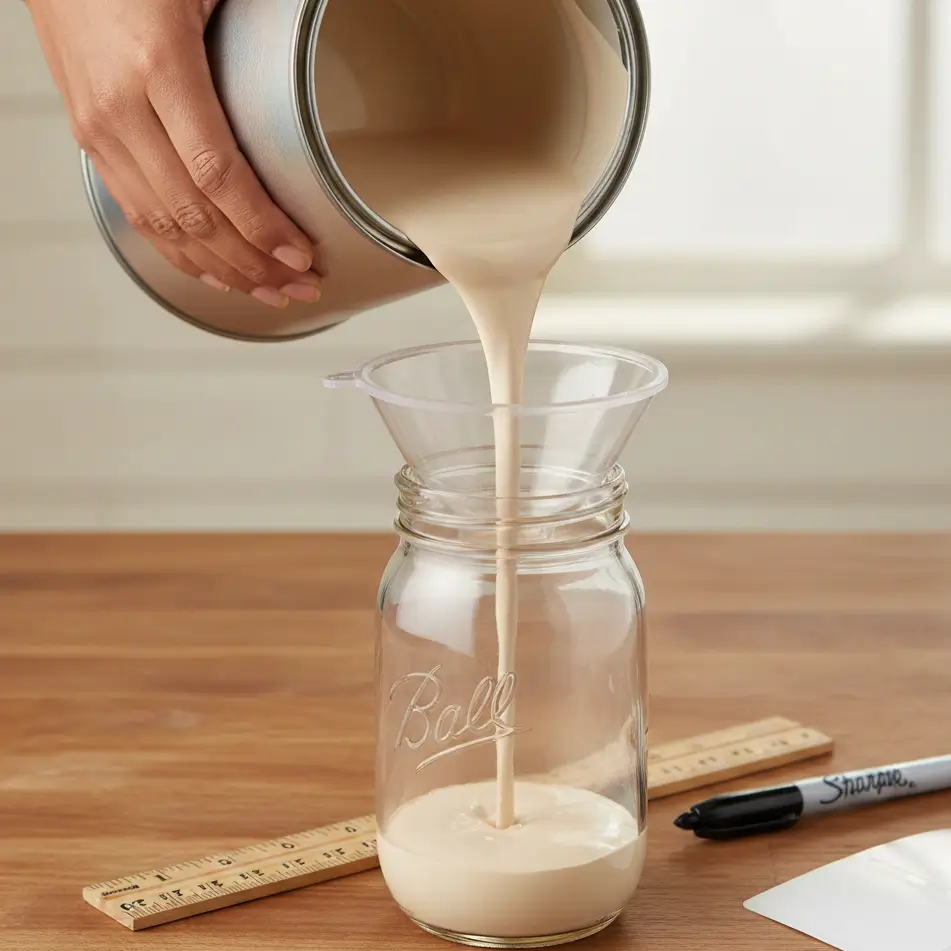
“Decanting” means transferring leftover paint from large metal cans into smaller, airtight jars (16oz or 8oz). This reduces air exposure (which dries out paint) and recovers approximately 0.5 sq ft of floor space per gallon. Cost is roughly $2-$4 per jar.
The Problem with Gallons
A standard gallon can is roughly 6.6 inches in diameter and 7.5 inches tall. If you use half the paint, you are storing 50% air. That air reacts with the paint surface, creating a thick, rubbery skin. By the time you need it, you have lost product and wasted shelf space.
How to Decant Safely (Step-by-Step)
I have used this method to fit leftovers from an entire house painting project into a single shoebox.
- Stir Thoroughly: Mix the original can for 2-3 minutes. You want the solids perfectly suspended.
- Clean the Rim: Use a rag to wipe the rim so the pour is clean.
- Choose Your Vessel:
- Mason Jars (Wide Mouth): Best for 8oz – 16oz leftovers. Glass is non-reactive.
- Touch-Up Pens: Best for tiny amounts (1-2oz). Great for scratches.
- HDPE Plastic Bottles: Good if you are worried about breakage during travel (crucial for tiny houses on wheels).
- Seal It: Place a layer of plastic wrap over the jar opening before screwing on the lid. This creates an extra gasket.
Pro Tip: Always label the lid, not the side. When looking down into a drawer, you want to see “Kitchen Trim – Chantilly Lace – 2024” immediately.
Storage Locations: Where to Put It?
Avoid uninsulated lofts, exterior storage boxes, or under-sink cabinets with plumbing leaks. The best spots: Top shelves of interior closets (stable heat), conditioned utility drawers, or under-bed rolling storage. Ensure the location is dark, as UV light degrades pigments in clear jars.
The Climate Control Challenge
If you are managing tiny house heating and cooling, you know heat rises.
- The Loft: Often 10-15 degrees hotter than the floor. Verdict: Too hot.
- ** The Floor:** Often 10 degrees cooler. Verdict: Okay, but keep off direct concrete.
Accessibility vs. Safety
Since you won’t need these paints daily, they belong in “Deep Storage.” However, because small spaces often lack ventilation, you must ensure the seal is perfect.
Safety Check:
Does your paint smell? If you can smell it when the jar is closed, the seal is failed. This contributes to indoor air pollution. For sensitive sleepers, switching to low VOC paint for tiny houses is critical, but proper storage seals are the second line of defense.
Container Comparison for Small Spaces
Glass Mason jars are superior for longevity and visibility but fragile. Original cans are space-hogs and prone to rust. Plastic touch-up bottles are the most space-efficient for minor repairs but harder to clean for reuse.
| Container Type | Space Efficiency | Air Tightness | Durability | Best Use Case |
| Original Gallon | Poor (Requires 7″ x 7″ footprint) | Low (Lids deform) | High | Large repainting jobs (>50% full) |
| Glass Mason Jar (16oz) | Excellent (Fits in drawers) | High (Rubber gasket) | Low (Breakable) | Trim & Accent leftovers |
| Plastic Container (HDPE) | Good | Medium | High | Mobile tiny homes |
| Touch-Up Pen | Superior (Fits in silverware tray) | High | Medium | Scratches & Nail holes |
The Cost Analysis
Keeping a half-empty gallon costs you nothing upfront, but costs you space.
Buying a 12-pack of 16oz wide-mouth jars costs about $18-$25.
If that frees up an entire cabinet shelf in a 400 sq ft home, the ROI is massive.
If you are dealing with specialty finishes, check our guide on paint products and sealers to see if they react with plastic. Generally, water-based latex is fine in plastic; oil-based requires glass or metal.
Safety & Disposal in Compact Living
Never store flammable oil-based paints near heat sources like propane heaters or wood stoves, common in tiny homes. If paint has hardened or smells like rotten eggs (bacterial growth), dispose of it immediately. Use a paint hardener product to solidify latex paint before trash disposal.
The “Rotten Egg” Test
Paint can go bad. If you open a jar and it smells rancid, bacteria has grown in the milk solids/resins.
Do not use this paint. It will make your entire apartment smell sour for weeks after drying. This usually happens when paint safety regulations regarding temperature weren’t followed, or organic matter (from a dirty brush) was introduced to the can.
Fire Safety
In a studio apartment, you are likely sleeping within 15 feet of your storage.
- Flammability: Oil-based paints, thinners, and wood treatment finishes are combustible.
- Distance: Keep these at least 4 feet away from any ignition source (stove, heater, electrical panel).
- Rags: Never pile up oily rags; they can spontaneously combust. Hang them outside to dry flat before disposal.
When to Purge
If you haven’t used the paint in 3 years, or if you have repainted the wall a different color, toss it.
- Solidify: Add kitty litter or a commercial paint hardener to the jar.
- Disposal: Once solid, latex paint can usually go in household trash (check local laws). Oil paint is hazardous waste, take it to a collection facility.
Organization Hacks for the Minimalist
Use the “Dot Method.” Put a dot of the actual paint on the lid of the jar. Write the room name, date, and sheen (e.g., “Eggshell”) with a sharpie. Store jars in a single layer in a rolling under-bed bin or a dedicated “utility shoebox” on a high shelf.
The “Dot Method”
I learned this from a professional organizer. Don’t just write “Blue.”
- Paint a 1-inch circle on the lid.
- Let it dry.
- Cover it with a piece of clear packing tape.
Now you have an exact color swatch. When you are standing at the hardware store trying to match a pillow, you can just bring the lid with you.
Integrating with Other Supplies
Don’t just store the paint. Store the painting tools for tight spaces with it. Keep a small foam brush or a “sash brush” rubber-banded to the jar. This creates a “Repair Kit” ready for action.
If you are renting, this system is a lifesaver. When you move out, you can easily do the required touch-ups to get your security deposit back. See our full guide on rental apartment painting for more deposit-saving tips.
Final Thoughts
The difference between a cluttered closet and a functional tiny home often comes down to how you handle the “messy” stuff. Paint storage conditions aren’t just about temperature; they are about respecting the limited space you have.
By decanting your gallons into pints, keeping them in the 60-80°F sweet spot, and labeling them clearly, you turn a bulky burden into a compact maintenance kit.
- Gather: Pull all old paint cans out of your closet/shed.
- Smell Test: Open them. If it smells rancid or is hard, toss it.
- Decant: Buy a 12-pack of Mason jars and transfer the good paint this weekend.
- Label: Date them. Paint doesn’t last forever (typically 2-5 years opened).
For more on outfitting your space efficiently, check out our tiny house storage solutions guide.