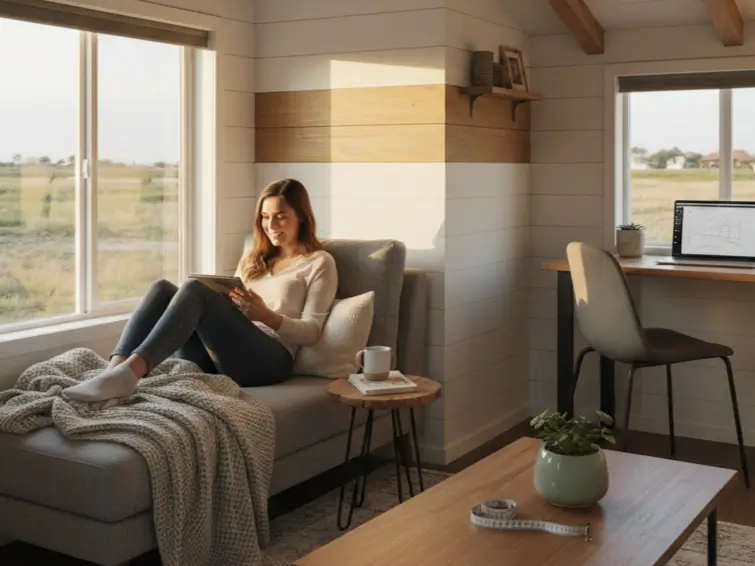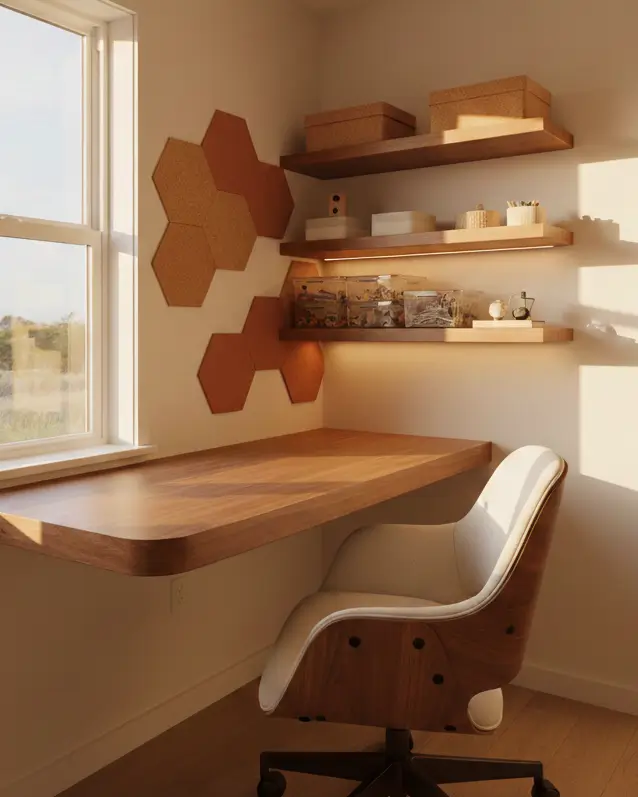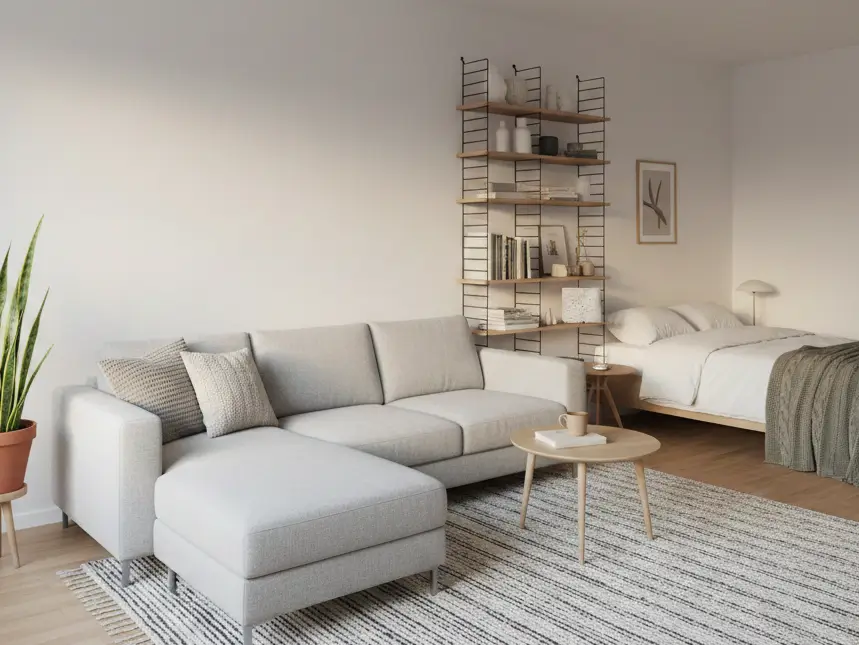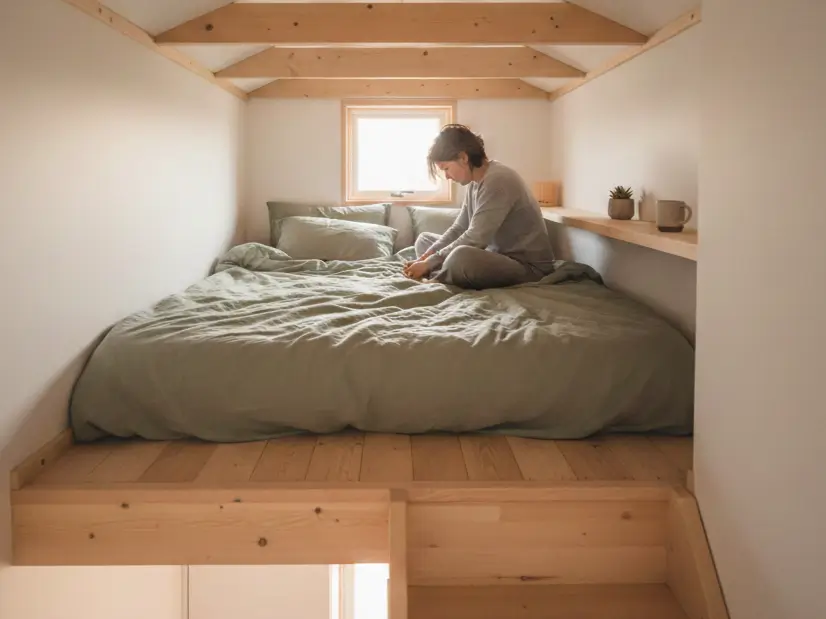
I recently stared at a spreadsheet for a client’s 240-square-foot build, realizing we were $4,000 over budget before we’d even bought the trailer. It’s a sinking feeling familiar to almost everyone who attempts to downsize. Whether you are building from scratch or renovating a studio apartment, small spaces have a way of hiding big costs.
A tiny house often costs more per square foot than a traditional home, even if the total price tag is lower. A DIY build typically lands between $25,000 and $45,000, while a professional build ranges from $65,000 to $120,000+. If you are renovating a rental, a comprehensive refresh usually runs $1,500 to $5,000.
This guide moves beyond generic “save money” tips. We are going to use the Square-Foot ROI Method, a strategy I’ve developed to ensure every dollar you spend contributes directly to livability in spaces under 600 square feet.
What Are the Hidden Costs in Tiny House Budget Planning?
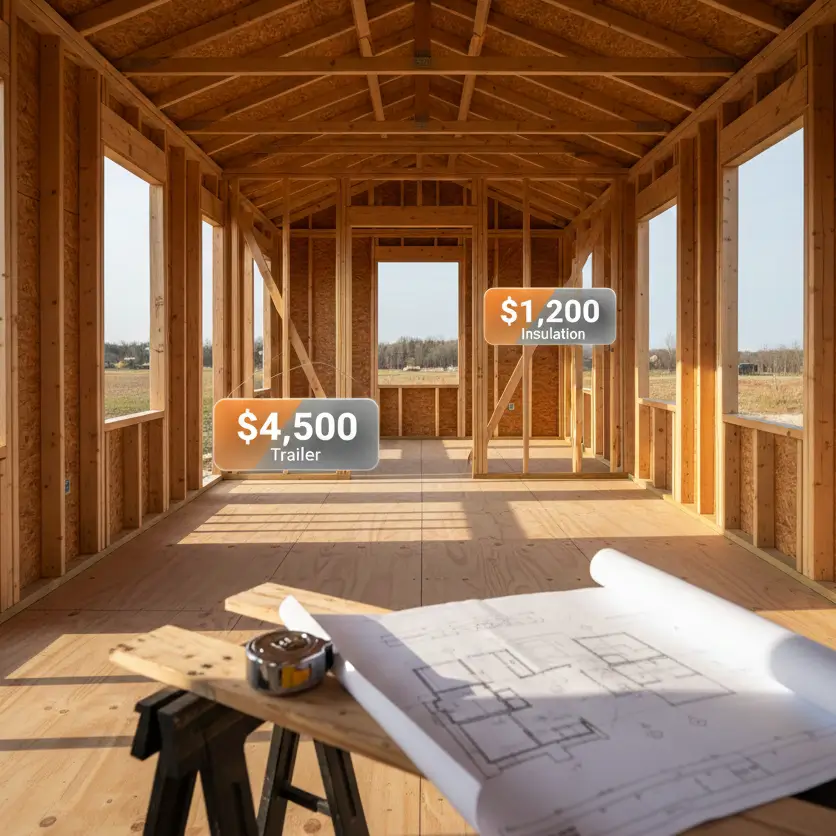
Beyond materials, hidden costs often consume 30-40% of a tiny house budget. Key invisible expenses include trailer chassis ($4,500–$8,000), permits and zoning variances ($500–$3,000), specialized insurance ($1,000/year), and heavy-duty tool rentals ($1,500+). For apartments, “invisible” costs include security deposits and temporary storage during renovation.
The Trailer Chassis Trap
If you are building a Tiny House on Wheels (THOW), your foundation is a trailer. Do not try to save money here by buying a used camper trailer. I’ve seen projects fail because a $500 rusty trailer couldn’t handle the 10,000+ lbs of a finished wood-framed house.
- Budget Requirement: Allocate $5,000 – $8,500 for a custom dual-axle trailer rated for tiny homes.
- Dimensions: For a 24-foot house, you need a trailer with a GVWR (Gross Vehicle Weight Rating) of at least 14,000 lbs.
Systems Over Structure
In a 2,000 sq ft house, plumbing and electrical are spread out. In 300 sq ft, they are condensed. You aren’t buying less complexity; you’re buying the same complexity squeezed into a smaller box.
- Electrical: $1,500 (DIY rough-in) to $4,500 (Pro).
- Plumbing: $1,000 (DIY PEX) to $3,500 (Pro).
If you are planning an off-grid setup, your budget needs to double for these systems. Solar setups capable of running a modern life (fridge, laptop, lights) start at $4,000 for a basic 1.5kW system and batteries.
Note: For deep dives on specific system costs, check our guide on tiny house electrical systems and off-grid tiny house systems.
How to Allocate Funds for Maximum Livability?
The Square-Foot ROI Strategy assigns a dollar value to zones based on usage hours. High-traffic zones (Kitchen/Bathroom) justify $150+/sq ft investments for durability. Low-traffic zones (Sleeping Lofts/Storage) should be capped at $50/sq ft. This prevents overspending on areas you rarely see while underfunding areas you use daily.
The High-ROI Zones (Spend Money Here)
In a small footprint, your kitchen is likely your office, dining room, and entry way. Cheap laminate countertops will peel within two years of heavy use.
- Kitchen Cabinetry: Don’t buy standard 24-inch deep cabinets; they eat too much floor space. Custom or modified 18-inch cabinets cost more upfront (approx. $200 per linear foot) but gain you 6 square feet of walking room in a 20-foot long house. That floor space is priceless.
- Multi-Functional Furniture: A Murphy bed or a lift-top coffee table isn’t furniture; it’s square footage expansion. A $2,000 investment in a quality wall bed system effectively adds a “bedroom” to your living room.
The Low-ROI Zones (Save Money Here)
- Wall Cladding: You don’t need expensive shiplap everywhere. For walls that are mostly covered by shelving or lofts, use standard ¼ inch plywood painted well.
- Flooring: In a 200 sq ft space, you only need about 150 sq ft of flooring. However, because the area is small, you can actually afford better materials. But if the budget is tight, high-quality sheet vinyl ($2/sq ft) is durable and waterproof.
For more on maximizing these investments, look at tiny house storage solutions where functionality meets budget.
Small Apartment Renovation Cost Breakdown
Renovating a 500 sq ft apartment typically costs between $10 and $50 per square foot depending on finishes. A cosmetic refresh (paint, hardware, lighting) averages $2,500. A full kitchen/bath update averages $12,000. Renters should focus on reversible upgrades like peel-and-stick tile and lighting, capping budgets at 5% of annual rent.
The Renter’s Dilemma
If you don’t own the walls, your ROI is purely emotional, you won’t get financial payback.
- Paint: This is the highest ROI for renters. For $150, you can transform a dark 400 sq ft studio. Use high-quality paint that covers in one coat to save on volume.
- Lighting: Bad lighting makes small spaces feel like caves. Swapping out boob lights for track lighting or pendants costs roughly $80-$150 per fixture and changes the perceived size of the room.
Budget Paint Analysis
I’ve painted dozens of small rooms. Cheap paint ($25/gallon) requires three coats and looks flat. Premium paint ($60/gallon) covers in one coat and bounces light, making the room feel larger. When you only need two gallons for the whole apartment, spend the extra $70.
Read more about paint budget cost analysis to see the math on coverage versus price.
Cost Comparison of Tiny House Interior Materials
Reclaimed materials save money but cost time (labor). New materials cost money but save time.
- Pine Tongue & Groove: $1.50/linear ft (Labor intensive to finish).
- Pre-finished Plywood panels: $50/sheet (Fast install, modern look).
- Drywall: Cheapest material ($12/sheet) but prone to cracking in mobile tiny houses.
Table: Material Cost vs. Durability in <400 Sq Ft
| Material Category | Budget Option (Cost) | Mid-Range (Cost) | Small Space Verdict |
| Flooring | Peel & Stick Vinyl ($1.20/sq ft) | LVP – Luxury Vinyl Plank ($3.50/sq ft) | LVP wins. It handles moisture and flexes with trailer movement. |
| Countertops | Laminate ($15/linear ft) | Butcher Block ($40/linear ft) | Butcher Block. It can be refinished and cut to custom shallow depths. |
| Insulation | Fiberglass Batts ($0.80/sq ft) | Closed Cell Spray Foam ($3.00/sq ft) | Spray Foam. Adds structural rigidity and highest R-value per inch. |
| Siding | T1-11 Plywood ($45/sheet) | Cedar/Metal Mix ($4/linear ft) | Metal. Lighter weight and zero maintenance. |
The Weight Factor
In a tiny house on wheels, weight is a budget constraint. Heavy materials (tile, granite, drywall) require heavier axles and more fuel to tow.
- Tile: Limit to the shower floor. Use acrylic surrounds or metal sheets elsewhere.
- Granite: Skip it. It’s too heavy and risks cracking during transit.
For structural decisions, reviewing tiny house wall materials is essential before buying lumber.
Is DIY Really Cheaper for Tiny House Building?
DIY saves 40-50% of the total cost but extends the timeline by 6-12 months. A professional tiny house builder charges $75-$120 per hour for labor. However, DIY mistakes (like poor waterproofing) can cost $5,000+ to fix later. The “Hybrid Approach”, hiring pros for the shell and systems, doing finishes yourself, often balances cost and safety best.
The “Mistake Tax”
I always tell first-time builders to add a 15% “Mistake Tax” to their materials budget. You will cut a board too short. You will buy the wrong screws. In a 250 sq ft build, this usually amounts to an extra $1,500.
Where to Hire a Pro
- The Shell: Getting the house weathertight is hard. Paying a pro $15,000 for a dried-in shell ensures you don’t have leaks.
- Electrical/Gas: Faulty wiring burns houses down. In a small space, a fire is catastrophic in seconds. Pay the $2,500 for a licensed electrician.
- Insulation: Spray foam is messy and toxic if applied wrong. It’s worth the $2,000 to have it sprayed professionally.
If you are determined to do it yourself, start by studying tiny house plumbing systems and tiny house measurements standards to avoid code violations.
Furnishing a Tiny Home Without Breaking the Bank
Furnishing a tiny home typically costs $2,000 to $5,000. Custom built-ins maximize space but cost 3x more than retail furniture. To save money, modify IKEA furniture (“IKEA hacking”) to fit specific dimensions. Focus spending on the mattress and the primary seating; everything else can be thrifted or DIYed.
The “Inch-Pinch”
In a standard home, a sofa that is 84 inches long is fine. In a tiny house, that extra 4 inches might block your front door.
- Sofa Strategy: Look for “apartment size” sofas (typically <75 inches). Or, build a platform with storage underneath and buy high-quality foam cushions (approx. $300).
- Dining: Fold-down tables are cheap to build ($50 lumber + $30 hardware). Check out wood furniture small spaces for DIY ideas.
Decorating Logic
Small spaces get cluttered fast.
- Vertical Decor: Use wall space for storage that looks like decor. A magnetic knife strip ($20) clears a drawer.
- Plants: Indoor plants for small apartments add life without bulk. Snake plants and Pothos are cheap ($15-$30) and thrive in low light corners.
Does Eco-Friendly Design Cost More?
Initially, yes. Sustainable materials often carry a 20% premium. However, in a tiny space (<400 sq ft), high-efficiency design pays off faster. Investing in Low-E windows ($300/window) and high R-value insulation significantly drops heating/cooling costs. A tiny house utility bill often runs under $40/month if built tight.
Salvaged Materials
You can save thousands using reclaimed windows and doors, but you must design the framing around the materials.
- Example: A new entry door costs $600. A Habitat for Humanity ReStore door costs $50.
- Warning: Ensure reclaimed windows are double-paned. Single-pane windows will cause condensation issues in winter, leading to mold.
See tiny house sustainability for a deeper look at green building materials.
Final Thoughts
Building or renovating a tiny space is an exercise in compromise. You can have high-end finishes, a low budget, or a fast timeline, pick two.
By applying the Square-Foot ROI Method, you stop looking at the total scary number and start making micro-decisions that add value. Spending $300 on a high-quality kitchen faucet in a tiny house isn’t a luxury; it’s a necessity because you will touch it 20 times a day. Conversely, spending $1,000 on fancy trim when simple pine would do is a budget leak.
- Download a specialized spreadsheet. Don’t use a napkin.
- Price your “Big Three”: Trailer (or rent), Windows, and Lumber/Insulation. These will dictate 50% of your build cost.
- Start a “Sink Fund”: Save 20% more than you think you need.
It’s possible to build a beautiful life in 400 square feet without going broke, but it requires measuring twice and buying once.
For more inspiration on making it look good, browse our guide on tiny house style aesthetic.