
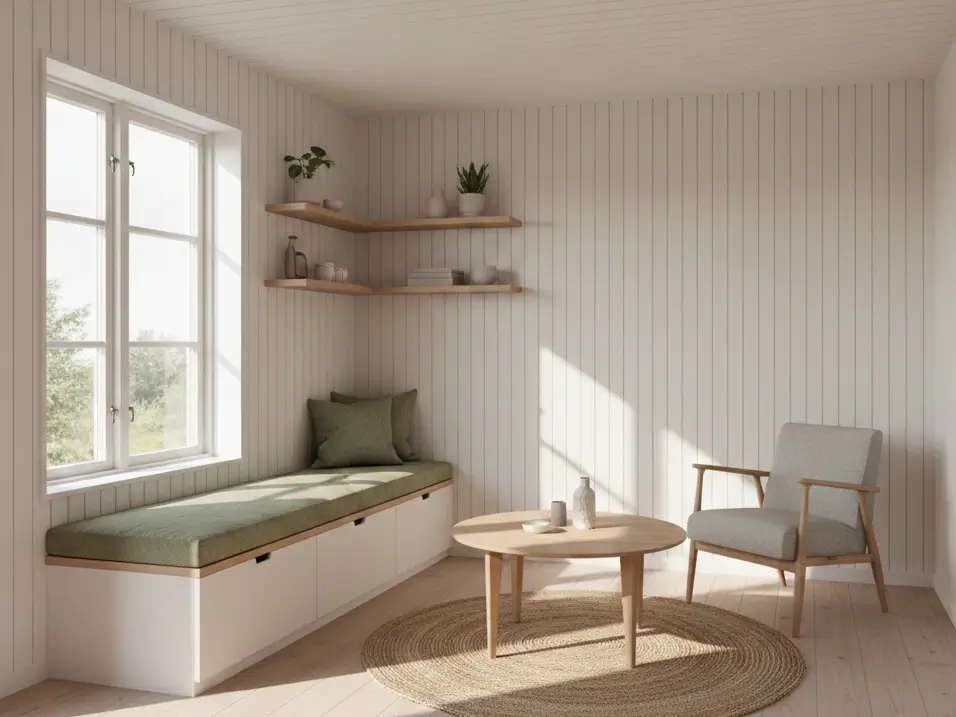
Demolishing a wall in a 2,500-square-foot house is a messy weekend project. Demolishing a wall in a 300-square-foot tiny house? That’s a livability crisis. You effectively lose your kitchen, bedroom, and living room simultaneously to dust and debris.
There is a common misconception that you must strip walls down to the studs to get a fresh, modern look. That is false. In fact, keeping existing wall treatments and painting over them acts as a sound barrier and insulation layer, crucial elements in thin-walled tiny homes.
Yes, you can paint over almost any wall treatment, including paneling, vinyl wallpaper, and textured paint, if you use a high-bond primer. For small spaces, you must use a high-adhesion water-based primer (like Kilz Adhesion or Zinsser Bullseye 1-2-3) rather than oil-based options to prevent dangerous fume buildup in limited air volumes.
I’ll show you how to transform your compact space without the demolition crew. We are looking at a budget range of $150 to $400 for a typical 400-square-foot renovation, depending on the quality of paint you choose.
Can You Paint Over Wood Paneling and Vinyl in Tiny Spaces?
Yes. For wood paneling or vinyl surfaces in spaces under 600 sq ft, cleaning with TSP (Trisodium Phosphate) substitute is mandatory. Apply one coat of bonding primer ($40–$60/gallon) specifically designed for glossy surfaces. Do not skip this step, or the paint will peel within 6 months due to humidity fluctuations common in small homes.
The “No-Demo” Advantage
When I first bought a used tiny house on wheels, the interior was covered in dark, faux-wood paneling from the late 90s. It felt like a cave. My first instinct was to rip it out. Then I realized that paneling was actually providing structural rigidity to the frame.
In small apartments and tiny houses, painting over paint and wall treatments offers three specific benefits over replacement:
- Debris Management: A 10-foot section of drywall creates about 40 lbs of waste. In a third-floor walk-up or a tiny house parked on land, disposal is a nightmare.
- Sound Dampening: Layers add mass. Painting over wallpaper or paneling keeps that extra millimeter of thickness, which helps dampen noise from noisy neighbors or rain on a metal roof.
- Cost Efficiency: You save approximately $2.50 per square foot by painting rather than re-drywalling.
If you are dealing with specific mobile home materials, check our guide on tiny house wall materials to identify exactly what substrate you have.
How to Handle Glossy Surfaces Without Toxic Dust
Use a “Liquid Sandpaper” (deglosser) instead of mechanical sanding. In spaces under 800 sq ft, sanding dust infiltrates bedding, electronics, and HVAC filters instantly. Liquid deglosser ($12-$15/quart) chemically etches the old paint or varnish, creating a grippy surface for new paint without generating any particulate matter.
The Dust Problem in Compact Living
In a standard home, you can seal off a room to sand the walls. In a studio apartment or tiny house, the “room” is your entire house. Sanding lead-based paint or even standard varnish creates fine dust that is hazardous to inhale.
The Liquid Sandpaper Method
- Ventilate: Open all tiny house windows and doors. Even low-odor chemicals need airflow.
- Apply: Wipe the deglosser onto the glossy trim or wall treatment using a coarse rag.
- Wait: Let it sit for the manufacturer’s recommended time (usually 10-15 minutes).
- Test: The surface should feel tacky or matte, not slick.
This method is essential when painting over protective coatings that are designed to repel dirt and moisture.
Dealing with Textured Walls and Popcorn Ceilings
Textured walls shrink a room visually by creating shadows. In spaces with low ceilings (<8 ft), skim coating is the best option but requires skill. A DIY-friendly alternative is using a “high-build” primer or flat matte paint which absorbs light and minimizes the appearance of texture, making the room feel larger.
Benefits of Minimizing Texture
Heavy texture catches dust, a major allergen trigger in small spaces. Smoothing it out or burying it under paint improves air quality and cleanability.
Method A: The Skim Coat (Hard Mode)
This involves applying a thin layer of joint compound over the texture. It’s messy and requires sanding. I honestly don’t recommend this for occupied tiny homes unless you can move out for three days.
Method B: The Matte Paint Trick (Smart Mode)
If you can’t remove the texture, hide it.
- Sheen Matters: Glossy paint highlights every bump. Flat or Matte paint hides them.
- Color Selection: Lighter colors reflect light and soften the shadows cast by the texture. Check out our guide on neutral paint colors for small apartments to find shades that expand your space.
If you are dealing specifically with vertical space issues, look at low ceiling paint solutions for tricks on gradient painting.
Primers: The Safety Barrier for Small Spaces
For painting over paint and wall treatments in small spaces, Water-Based Bonding Primer is the winner. While Shellac blocks smells better, its high fume content is dangerous in small volumes. High-quality water-based bonding primers offer 90% of the performance with 10% of the odor.
The Volume-to-Toxicity Ratio
This is the most critical concept for small space dwellers. A gallon of oil-based primer off-gassing in a 2,000 sq ft house is annoying. In a 300 sq ft tiny house, the concentration of VOCs (Volatile Organic Compounds) in the air is nearly 7 times higher.
| Primer Type | Adhesion | Odor/VOCs | Clean Up | Verdict for Small Spaces |
| Shellac-Based | Extreme | Very High | Alcohol | ❌ Only for spot treating stains |
| Oil-Based | High | High | Mineral Spirits | ❌ Avoid if living in the unit |
| Water-Based Bonding | High | Low | Water | ✅ Best balance for safety/performance |
For detailed specs on safe products, read about low VOC paint for tiny houses.
Application Tips for Bonding Primer
- Cure Time: Water-based primers take longer to cure (harden) than oil. In a humid bathroom or tiny house, wait 24 hours before top-coating, even if the can says “1 hour.”
- Coverage: You usually need about 1 gallon per 350 sq ft of wall surface. Always calculate carefully to avoid storing leftover chemicals. See paint coverage calculation to save money and storage space.
Wallpaper and Moisture
Painting Over Wallpaper in a Rental
Many older apartments have layers of wallpaper. If you are a renter, you might not be allowed to remove it.
- Secure Edges: Use super glue or wall adhesive to glue down any peeling seams.
- Seal It: You must use an oil-based primer (Keep windows open!) or a specific shellac-based sealer just for the paper. Water-based paints can reactivate the wallpaper glue, causing it to bubble and slide off the wall.
- Paint: Once the sealer is 100% dry, you can topcoat with standard latex paint.
For more on tenant-friendly updates, see our rental apartment painting guide.
The Bathroom Challenge
Tiny house bathrooms are moisture traps. If you are painting over tile or glossy surrounds:
- Use a 2-part epoxy paint for tiles (Tub & Tile kits).
- Ensure humidity is under 50% during application. You might need a dehumidifier running.
- Consult bathroom paint moisture solutions for preventing mildew under your new paint job.
Painting Wood and Trim
Often, small spaces have heavy wood trim that chops up the visual flow. Painting the trim the same color as the walls (monochromatic look) makes the ceiling feel higher and the room wider.
If you are painting over stained wood:
- Clean: Remove all furniture polish or wax.
- Prime: Use a stain-blocking primer to prevent tannins (wood oils) from bleeding through and turning your white paint yellow.
- Finish: Semi-gloss is durable for trim, but satin is more forgiving of imperfections.
For a deep dive into wood surfaces, refer to painting wood guide.
Final Thoughts: The ROI of Cover-Up
painting over paint and wall treatments is the single highest ROI (Return on Investment) project for a small space dweller. For a total cost of roughly $200 (primer + paint + supplies), you can modernize a space that would cost $2,000 to re-drywall.
- Buy a $5 sample pot of bonding primer and test it on a small, hidden patch of your wall treatment.
- Calculate your square footage to avoid buying excess paint you can’t store.
- Plan your painting for a day when you can leave windows open for at least 8 hours.
By skipping the demolition, you save landfill space, keep your home habitable during the process, and get to the fun part, decorating, much faster.
Before you start buying brushes, make sure you have the right gear for tight corners by checking our list of painting tools for tight spaces.