When you are designing a home under 400 square feet, inches aren’t just units of measurement, they are the difference between a functional sanctuary and a claustrophobic box. A standard home hallway is 36 inches wide, but in a tiny house on wheels (THOW), giving up those 36 inches might cost you your kitchen counter.
I remember measuring my first tiny house layout on the floor of a warehouse. I realized that the standard 24-inch deep kitchen cabinets I planned to use would leave me with an aisle so narrow I’d have to walk sideways. That was my wake-up call.
Designing small isn’t about scaling everything down; it’s about prioritizing the human body’s movement. While standard building codes rely on International Residential Code (IRC) specifics, tiny houses operate in a unique zone often governed by IRC Appendix Q or RV standards. This guide bridges the gap between what is legally required and what is actually comfortable.
Budget Indicator: Adjusting dimensions costs $0 during the design phase (DIY), but retrofitting framing errors can cost $2,000+ in labor and materials.
The Golden Rules of Tiny Space
What are the Standard Dimensions for a Tiny House? Tiny house measurements standards generally follow IRC Appendix Q for foundation builds. Habitable rooms must be at least 70 square feet. Ceilings in habitable spaces need a minimum height of 6 feet 8 inches, while bathrooms and kitchens can be lower (6 feet 4 inches). Tiny houses on wheels are restricted by road limits: 8.5 feet wide and 13.5 feet high.
The Envelope Constraints
Before mapping the interior, you must respect the exterior limits. For a tiny house on wheels, your “box” is rigid.
- Max Width: 8 feet 6 inches (including roof overhangs and hardware).
- Max Height: 13 feet 6 inches (from the ground, not the trailer deck).
- Max Length: Typically 40 feet (usually limited by trailer weight ratings).
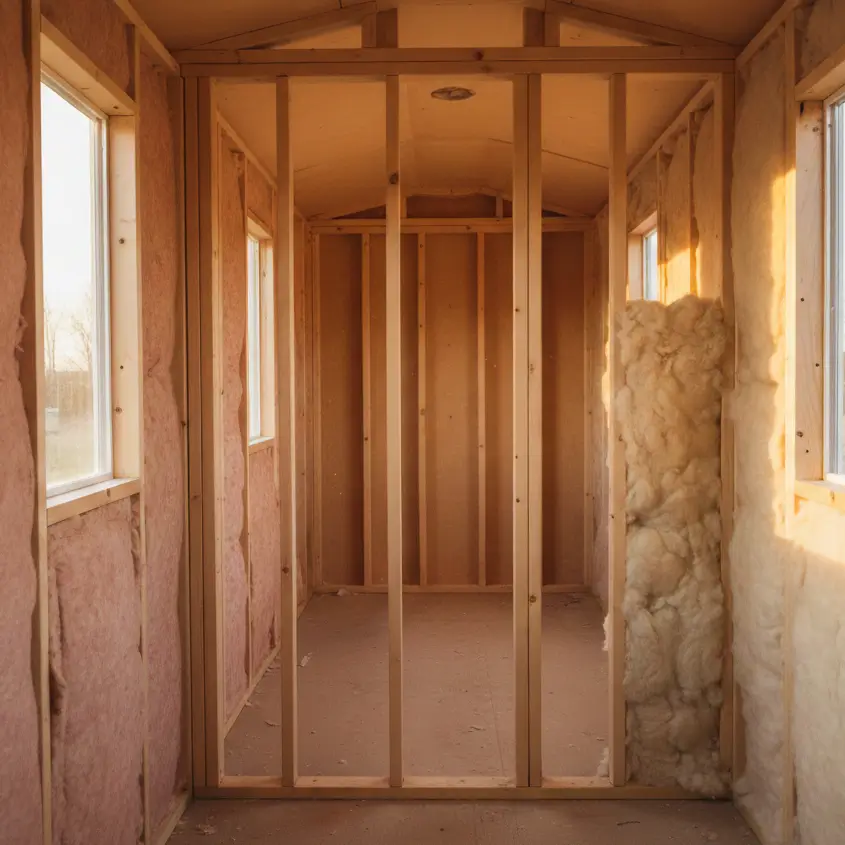
After insulating your walls (usually 3.5 to 4 inches thick per wall), your interior width shrinks to roughly 7 feet 5 inches. This is your canvas. Every piece of furniture you choose must bow to this number.
Minimum Kitchen Dimensions for Tiny Homes
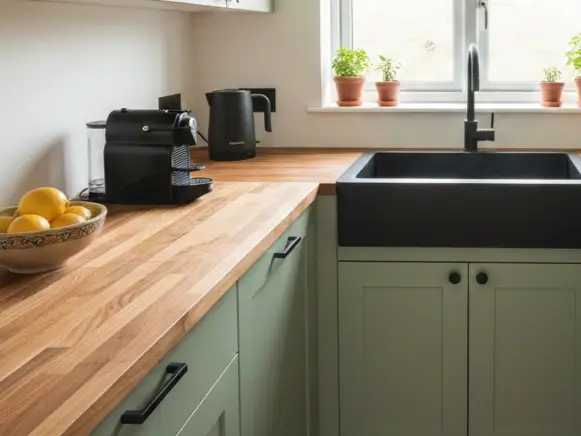
For functionality, aim for a minimum walkway width of 30 to 36 inches. Counter depths can be reduced from the standard 24 inches to 20 or 22 inches to save floor space. Allow at least 15 to 18 inches of vertical clearance between the countertop and upper cabinets (or shelving).
The Counter Depth Dilemma
In a traditional home, countertops are 24 inches deep (25 inches with overhang). In a tiny house, that depth eats valuable floor space.
- The Hack: Custom build your cabinets or modify IKEA units to be 20 to 22 inches deep. You gain 2-4 inches of walkway, which feels massive in a 7-foot wide room.
- The Trade-off: You will need a specialized sink and a cooktop rather than a standard slide-in range.
The Triangle and The Aisle
The “kitchen work triangle” (sink, stove, fridge) still applies, but it’s often a straight line in tiny homes.
- Aisle Width: 36 inches is standard. 30 inches is the “butt-rub” minimum (two people cannot pass). 24 inches is accessible only for one person and feels tight.
- Appliance Clearance: Ensure your fridge door swing doesn’t hit the opposite wall. A 24-inch wide fridge usually requires 30+ inches of swing clearance.
If you are planning your kitchen design, mapping these swing radiuses on the floor with tape is mandatory before buying materials.
How Small Can a Tiny House Bathroom Be?
A functional tiny house bathroom requires a minimum footprint of roughly 24 to 30 square feet. A standard toilet needs 30 inches of width (15 inches from center to side) and 21 inches of clearance in front. Showers should be no smaller than 30×30 inches, though 32×32 inches is significantly more comfortable.
The Toilet Zone
This is where code meets comfort.
- Code: IRC requires 15 inches from the toilet’s centerline to the nearest wall (30-inch total span).
- Reality: If you are broad-shouldered, 30 inches feels like an airplane lavatory. Aim for 32-34 inches width if space allows.
- Knee Room: You need 21 inches of clear space in front of the toilet. Don’t place a vanity cabinet directly in this zone.
The Shower Factor
Pre-fabricated shower pans come in standard sizes: 32×32, 34×34, and 36×36.
- 30×30: Usable, but you will hit your elbows washing your hair.
- 32×32: The sweet spot for tiny living.
- Wet Bath: By waterproofing the entire room (tile or FRP panels) and adding a floor drain, you can overlap the shower and toilet usage space, compressing the bathroom into a 20-square-foot footprint. This requires specialized plumbing systems.
See our full breakdown on bathroom design for layout templates.
Standard Heights for Tiny House Lofts
IRC Appendix Q requires lofts to have a minimum floor area of 35 square feet and a horizontal dimension of at least 5 feet. Loft ceilings must be less than 6 feet 8 inches (otherwise it’s a room), but practically, aim for 38 to 42 inches of head clearance to allow sitting up in bed without hitting your head.
The “Sit-Up” Test
The most common regret in tiny house design is a loft that is too short.
- Mattress Math: If your loft platform is 40 inches from the ceiling, and you have a 10-inch thick mattress, you only have 30 inches of headroom. You will hit your head.
- Solution: Use a 6-inch foam mattress or recess the mattress into the floor joists. Aim for 40 to 44 inches of clear sitting height.
Access Dimensions
- Stairs: If you use stairs, Appendix Q allows them to be steeper than standard homes. Risers can be up to 12 inches high (normally 7.75 inches). Width needs to be at least 20 inches (standard is 36).
- Ladders: Must have a rung spacing of 10 to 14 inches and be capable of supporting 200 lbs. The slope should be between 70 and 80 degrees.
- Egress: Every sleeping loft requires an egress window. The sill height must be no more than 44 inches off the loft floor, and the opening must be at least 5.7 square feet for escape.
Proper bedroom design in a loft is a game of millimeters.
Door Widths and Hallway Standards
Tiny house hallway widths can go as low as 28 inches, compared to the standard 36 inches. Interior doors are often scaled down to 24 or 28 inches. Pocket doors or barn doors are preferred as they eliminate the 8 to 10 square feet of “dead space” required for a traditional door swing.
The Door Swing Problem
A standard 30-inch door needs a 32-inch arc to open. In a layout and floor plan of 200 square feet, that arc is precious real estate.
- Pocket Doors: The gold standard. They vanish into the wall. Wall thickness must be at least 3.5 inches to accommodate hardware.
- Barn Doors: Easier to install (DIY friendly) but require wall space to slide over, meaning you can’t hang art or shelves there.
- Bifold: Good for closets or storage solutions, requiring only half the swing space.
Standard Home vs. Tiny House
How Do Tiny House Dimensions Compare to Standard Homes? Tiny houses generally reduce standard dimensions by 15-25%. While ceiling heights are maximized to 10+ feet in main areas to compensate, functional zones like bathrooms and walkways are compressed. Understanding these ratios helps in modifying stock plans.
| Feature | Standard Home | Tiny House (Typical) | Space Impact |
| Hallway Width | 36″ – 42″ | 28″ – 30″ | Saves 3-5 sq ft |
| Counter Depth | 24″ – 25.5″ | 20″ – 22″ | Adds 4″ to aisle |
| Kitchen Aisle | 42″ – 48″ | 30″ – 36″ | Essential for width |
| Bathroom Door | 28″ – 30″ | 24″ | Minor flow impact |
| Ceiling (Main) | 8′ – 9′ | 10′ – 11′ (Great Room) | Adds volume |
| Ceiling (Bath) | 8′ | 6’4″ – 6’8″ | Allows loft above |
| Stair Width | 36″ | 20″ – 24″ | Massive floor savings |
When to Stick to Standards
Do not shrink everything.
- Door Height: Keep main doors at 80 inches (6’8″) if possible. Ducking to enter a room makes the whole house feel small.
- Shower Head Height: Install at 78-80 inches. A low shower head is a daily annoyance.
- Bed Length: A Queen mattress is 80 inches long. Ensure your loft is at least 84 inches long to allow for bedding and avoid touching the wall with your toes.
Proper windows and doors selection is crucial here; custom sizes often cost double, so framing for standard window sizes (e.g., 24×36) is a smart budget move.
Clearances for Utilities and Systems
Reserve roughly 24×24 inches for a tiny house mechanical closet (water heater, breaker box). If using an on-demand water heater, ensure 12 inches top clearance for venting. For wheel wells in THOWs, account for boxes roughly 10-12 inches high and 32-36 inches long encroaching into your floor plan.
The Wheel Well Obstacle
If building on a trailer, the wheel wells protrude into the house.
- Don’t fight them: Incorporate them into cabinetry, the base of a sofa, or the bottom of a storage closet.
- Measurement: They typically extend 6 to 10 inches inward from the wall.
- Insulation: Don’t forget to insulate over the metal wheel well, adding another 1-2 inches to the box size. See our insulation guide for material thickness options.
Electrical Panels
The National Electrical Code (NEC) usually requires a clear working space of 30 inches wide and 36 inches deep in front of an electrical panel. Do not put this in a bathroom or clothes closet. It is often placed near the door or in the kitchen area. Check out electrical systems for safety specifics.
Summary and Next Steps
Measurements are the skeleton of your tiny house. If the bones are wrong, the house will never function comfortably. By adhering to IRC Appendix Q where required, but prioritizing ergonomic measurements (like the 32-inch shower and 40-inch loft clearance), you create a space that feels livable, not limited.
- Tape it out: Before building, use painter’s tape to mark your floor plan on a large open floor (garage or driveway). Walk through it.
- Mock it up: Use cardboard boxes to simulate counter heights and aisle widths.
- Check your code: Determine if your local zoning requires strict IRC adherence or if you have flexibility as a temporary structure.
If you are ready to start building, looking into DIY building projects is a great next step to test your skills on smaller scales before tackling the full frame.
Visit Veniola.com for more guides on optimizing your compact life.