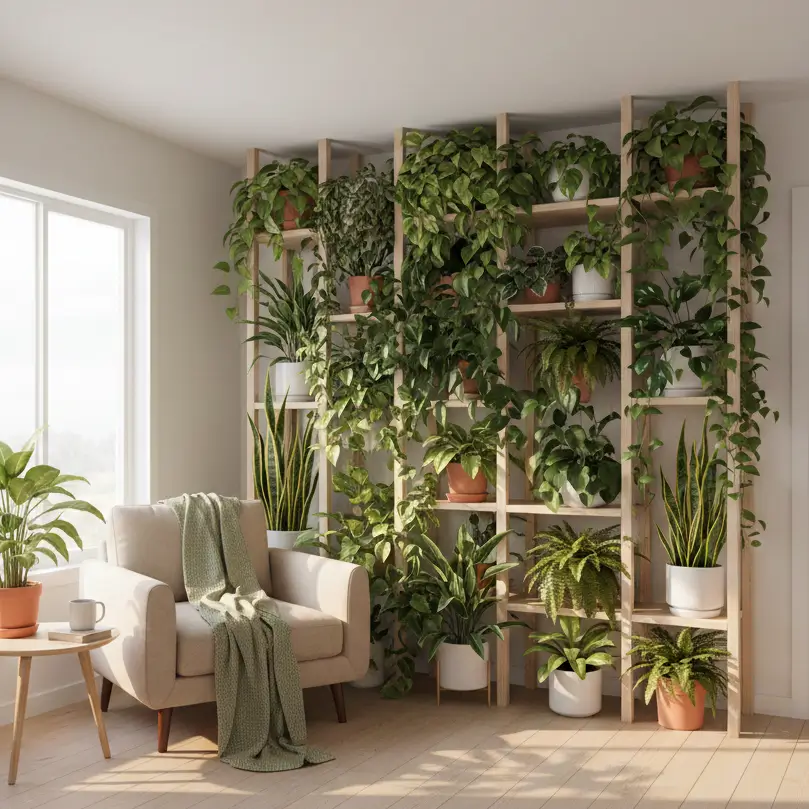
There is a specific kind of panic that sets in when you spot a spider mite web in a 300-square-foot tiny house. In a large home, you might banish the infested plant to a garage or a spare guest room. But here? That plant is probably three feet from your bed and two feet from your coffee maker.
Plant problems pest control changes entirely when you shrink the square footage. You can’t just unleash a cloud of strong chemical pesticides, you’re breathing that air five minutes later.
This guide tackles the “closed-loop” reality of small-space gardening. We aren’t just killing bugs; we’re doing it without making your tiny home uninhabitable or toxic. From DIY mixtures costing under $5 to the “plastic bag quarantine” method, here is how to reclaim your space.
Why Small Space Pest Control is Different
In spaces under 600 sq ft, airflow is shared across all “zones.” Chemical sprays concentrate faster, posing respiratory risks. Furthermore, pests spread rapidly between plants due to tight clustering (often <6 inches apart). You need treatments that are low-odor, non-toxic, and act fast.
In my experience living in a 400 sq ft accessory dwelling unit (ADU), I learned quickly that standard advice doesn’t apply. Most guides tell you to “isolate the plant immediately.” Where? The bathroom? That’s my only other room.
When your indoor plants in small apartments are arranged on vertical shelves, one infested pothos can drop mites onto the fern below it in hours. The density of biophilic design in tiny homes acts as a superhighway for pests.
- Proximity: You sleep near these plants. Toxicity matters.
- Density: Plants touch each other, allowing pests to bridge gaps.
- Ventilation: Strong smells (like Neem oil) linger for days in small volumes.
Identify Your Enemy: The “Big Four” in Tiny Homes
- Fungus Gnats: Tiny flying black specks. Thrives in moist soil.
- Spider Mites: Microscopic moving dots; leaves look dusty or have fine webbing.
- Scale/Mealybugs: White cottony fluff or brown bumps on stems. sticky residue (honeydew).
- Thrips: Tiny slender insects; leaves look silver/scraped.
The Fungus Gnat: The Tiny House Menace
If you have low light plant solutions in your corners, you likely have fungus gnats. In a studio apartment, these aren’t just plant problems; they are lifestyle problems. They fly into your nose while you work and land in your water glass.
The Test: Tap the rim of your pot. If bugs fly up, you have gnats.
The Fix: They live in the top 1-2 inches of soil. Let your soil dry out completely.
Spider Mites: The Heater Huggers
Tiny homes often rely on efficient, dry heat sources. This is tiny house heating at its finest, but it creates the hot, dry environment spider mites love.
The Test: Hold a sheet of white paper under a leaf and tap the leaf. If little “dust” specks fall onto the paper and start walking, you have mites.
The “No-Spare-Room” Quarantine Strategy
When you lack a separate room, use the Bag Method. Place the infested plant and its pot inside a clear trash bag or large clear storage bin (min 15-gallon). Seal it. This creates a physical barrier preventing spread while keeping humidity high (which kills spider mites) and containing smells.
This was a game-changer for me. I used to panic-throw plants onto my front porch, only to have them die from cold shock.
The Clear Bin ICU
For smaller plants (pots under 6 inches diameter), buy a clear plastic storage tote with a latching lid.
- Cost: ~$8 – $12.
- Dimensions: Look for at least 12″ H x 18″ W.
- Method: Place the treated plant inside. The pests are trapped. The clear plastic allows light in. It’s a greenhouse ICU.
The Trash Bag Tent
For larger floor plants, like a Monstera standing 3 feet tall:
- Get a clear recycling bag (30-gallon size).
- Water the plant.
- Mist the leaves.
- Bag it and tie the top loosely.
Note: Do not keep it in direct hot sun while bagged, or you will cook the plant.
This strategy allows you to keep an infested plant in your living room without risking the plant placement arrangement of your healthy greenery.
Safe Treatments for Shared Air (Low Odor)
Avoid heavy chemical sprays indoors.
- Hydrogen Peroxide (3%): Kills gnat larvae. Mix 1 part peroxide to 4 parts water.
- Castile Soap: Contact killer for soft-bodied bugs. 1 tsp per quart of water.
- Rubbing Alcohol: For spot treatment. Dip a Q-tip and touch the bug directly.
- Sticky Traps: Passive reduction for flying pests.
The Smell Factor
Standard Neem Oil is organic, but it smells like rotten garlic and sulfur. In a 200 sq ft space, spraying a whole plant with Neem oil is miserable. I did this once in winter and had to sleep with the windows open.
Cold Pressed Neem has less odor, but Horticultural Oil or Insecticidal Soap (pre-mixed) usually has a neutral scent. Always check the label. If you are sensitive to smells, stick to Castile soap mixtures.
The Shower Blast
If you have a handheld sprayer in your tiny house bathroom fixtures, use it.
- Wrap the pot in a plastic bag to stop soil from washing out.
- Turn the water to lukewarm (not hot!).
- Blast the leaves, undersides, and stems.
This physically knocks off 80% of aphids and spider mites without using a single drop of chemical.
Soil and Prevention: The Root of the Issue
Healthy soil prevents pests. Use “Bottom Watering” to keep the topsoil dry (starving gnats). Top-dress your soil with 0.5 inches of sand or fine gravel to create a barrier pests cannot burrow through.
The Bottom Watering Technique
Instead of pouring water on top:
- Fill a bowl or your sink with 2 inches of water.
- Set the pot in it for 20 minutes.
- The soil absorbs water through the drainage holes.
- The top layer remains bone dry.
This is essential for plant care fundamentals in small spaces where evaporation is lower due to limited airflow.
Airflow is Critical
Stagnant air encourages fungal issues and pests. In a tiny house, air quality can degrade fast.
- Tool: A small USB desk fan or clip-on fan.
- Action: Aim it near your plant shelf (not directly blasting the leaves) to keep air moving.
- Cost: ~$15.
Biological vs. Chemical vs. DIY
- DIY (Soap/Alcohol): Best for spot treatment, cheap (<$2), labor-intensive.
- Chemical (Systemics): Highly effective, toxic. Use only if you have no pets/kids and good ventilation.
- Biological (Predators): Best for infestations. Zero toxicity.
| Method | Best For | Small Space Safety | Cost | Speed |
| Isopropyl Alcohol | Mealybugs/Scale | High (evaporates fast) | <$3 | Instant (contact) |
| Beneficial Nematodes | Fungus Gnats | High (invisible/odorless) | $25-35 | 1-2 Weeks |
| Systemic Granules | Thrips/Severe Mites | Low (Toxic to pets) | $15-20 | 2-4 Weeks |
| Dead Bug Brew (Spinosad) | Thrips/Caterpillars | Medium (Safe once dry) | $15 | 2-3 Days |
For tiny house sustainability, I strongly recommend Beneficial Nematodes for soil pests. You dissolve a microscopic powder in water and water your plants. These microscopic worms hunt down gnat larvae. They are invisible, odorless, and completely safe for humans and pets.
(Image #5: Lifestyle shot of applying treatment)
When to Give Up (The “Trash It” Rule)
Sometimes, keeping a sick plant threatens your entire biophilic design.
If more than 50% of the plant is yellow, covered in webs, or dropping leaves, trash it.
In a small apartment, you do not have the space to run a plant hospital for six months. A $15 replacement plant is cheaper than buying $40 in sprays and fighting a losing battle for weeks.
Do not compost pest-ridden plants unless your compost pile gets very hot. Bag it, tie it tight, and put it in the outdoor trash immediately.
Final Thoughts
Dealing with plant problems pest control in a compact living situation is about acting fast and keeping the air clean. You are the steward of a very small ecosystem.
Don’t let one bug infestation discourage you from keeping wood plant styling tips alive in your home. Plants scrub your air and lower stress, bugs are just a temporary invader.
- Check your plants. Tap the pots. Look under the leaves.
- Buy a small bag of sand for top-dressing or a bottle of castile soap to have on hand.
- If you have high-humidity pests, check your tiny house heating and cooling systems to ensure you aren’t creating a damp environment.
For more on optimizing your compact life, visit Veniola.com.