You might think square footage is the defining factor of a tiny house. It isn’t. The number of people breathing the air inside, and what they do all day, is what actually dictates the design. A 300-square-foot trailer works perfectly for a 25-year-old solo travel nurse but can become a pressure cooker for a couple working from home.
We aren’t just seeing college graduates looking for cheap rent anymore. We are seeing retirees effectively downsizing to avoid property taxes, and families of four choosing experiences over mortgages.
Most generic floor plans treat every resident the same.
This guide breaks down tiny house demographics lifestyle realities. We will look at how to map your specific household needs, whether you are solo, partnered, raising kids, or retiring, to a layout that actually functions.
Adapting a space to your demographic can range from $150 for privacy curtains to $4,000+ for custom joinery and loft modifications.
The Solo Nomad: Efficiency and The Work-From-Home Reality
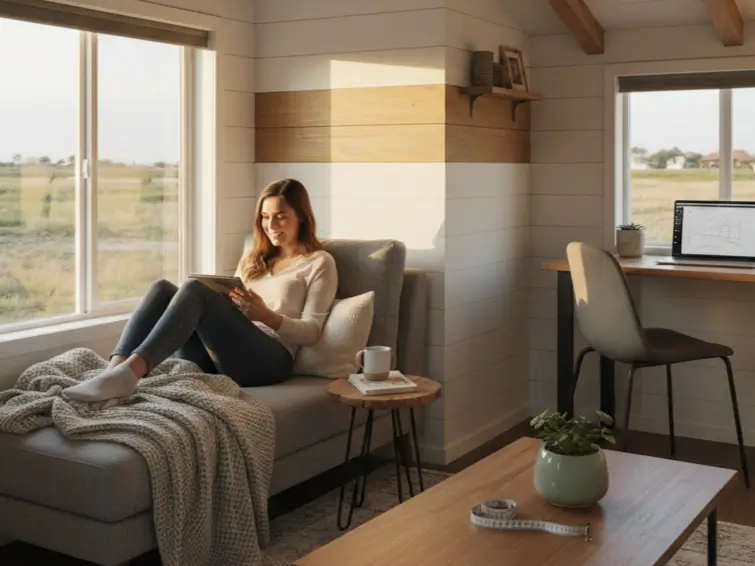
For the 63% of tiny house dwellers who identify as female and the significant portion of solo owners, the priority is often a high-performance workspace. In a 200–300 sq ft space, this means a dedicated desk (min 24″ depth) that doesn’t require “unpacking” daily, often sacrificing a permanent dining table for a multifunctional workstation.
The Layout Shift: The “Permanent” Office
If you live alone, you have the luxury of dictating the flow. However, the biggest mistake I see solo dwellers make is underestimating the psychological need to separate “work” from “rest.”
In a standard apartment, you walk from the bedroom to the living room. In a tiny house, you might just swivel your chair. To combat burnout, your layout needs a visual break.
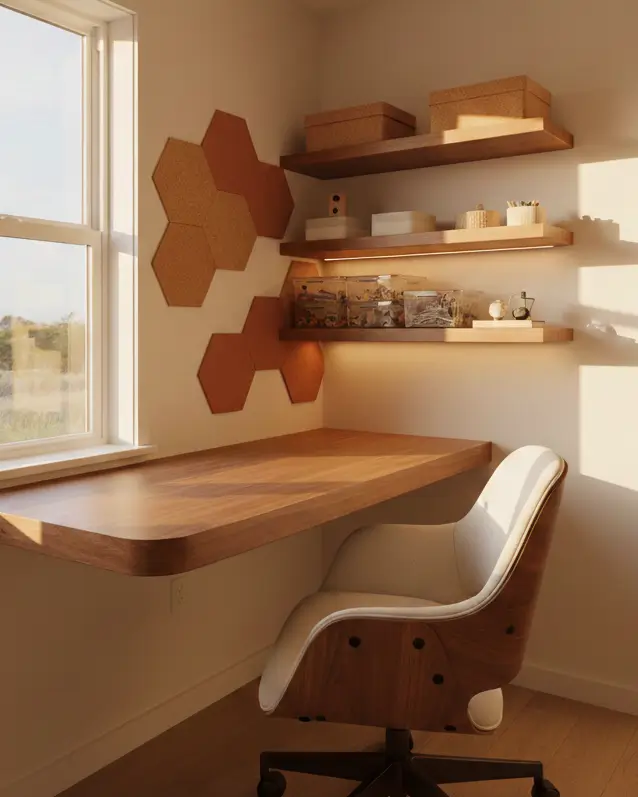
- The Convertible Desk: Instead of a dining table, install a 4-foot floating desk.
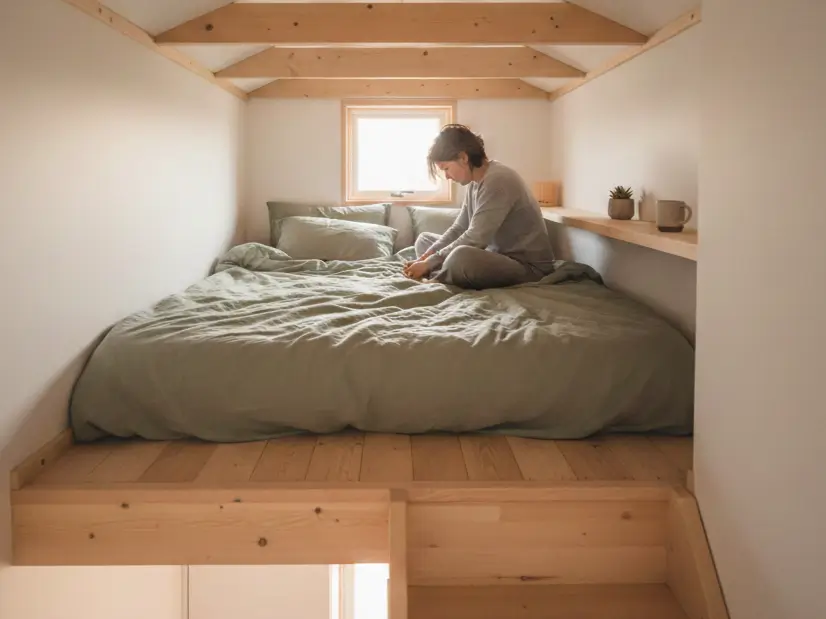
- The Sleeping Loft: Solo dwellers tolerate ladders better than any other demographic. A loft separates sleep from the “office” downstairs.
- Tech Integration: You need robust electrical planning. A solo digital nomad uses more outlets per square foot than a retired couple.
I helped a freelance graphic designer reconfigure her 240 sq ft THOW (Tiny House on Wheels). We moved her kitchen to a single wall to create a dedicated 5-foot workspace. It cost about $600 in materials, but it saved her sanity.
For more on setting up a productive corner, look at our guide to work from home setups in tiny houses.
The Couples Dynamic: Privacy in 350 Square Feet
Couples make up roughly 40-50% of the tiny house market. The design challenge isn’t storage; it’s acoustic and visual privacy. A functional layout for two requires “away spaces”, separate zones (like a reading nook vs. loft) where you can’t see each other. Budget roughly $500 for sound-dampening textiles and solid-core pocket doors.
The “We” Space vs. The “Me” Space
Living with a partner in under 400 sq ft is a relationship accelerator. You figure out what works fast, or you move out. The primary friction point in tiny house demographics lifestyle data for couples is noise transfer.
If one person wakes up at 6 AM and the other sleeps until 8 AM, a studio layout is a disaster.
Strategic Separation Tactics:
- Soundproofing: Use acoustic foam or heavy velvet curtains (minimum 12 oz weight) to separate the sleeping area.
- Dual Egress: If possible, design the bathroom so it’s accessible without waking the sleeping partner.
- The “Argument Corner”: You need a spot to go when you are annoyed. A window seat or a separate outdoor deck is vital.
Storage Wars
You effectively have half the closet space of a solo dweller. You cannot rely on standard dressers. You need vertical integration.
- Measurement Tip: Each person needs roughly 3 linear feet of hanging space and 4 cubic feet of drawer space minimum.
If you are struggling to fit two wardrobes, check out our storage solutions specifically for tiny houses.
Young Families: Safety and Verticality (400–800 Sq Ft)
Families with children represent a growing 15-20% of the movement. Safety and distinct bedrooms take precedence over open floor plans. In spaces under 800 sq ft, this usually requires a “Park Model” or ADU footprint (10-12 ft width) rather than a standard 8.5 ft trailer width, allowing for a separate bunk room or partitioned sleeping alcove.
Designing for Durability
Kids are hard on houses. In a tiny house, walls and floors take double the abuse because there is less surface area to spread the wear.
Material Choices for Families:
- Flooring: Avoid soft woods. Go for high-grade luxury vinyl plank (LVP) or rigid core vinyl. It handles spills and toy scratches better. See our flooring options comparison.
- Wall Finishes: Flat paint is a nightmare here. Use Eggshell or Satin finishes that are scrubbable.
The Bedroom Puzzle
The loft lifestyle that works for solo adults is often dangerous or illegal for young children due to egress codes.
- The Gooseneck Split: Many families use the “gooseneck” area of a trailer (the raised section over the hitch) as a kids’ room because it allows for 4-5 feet of headroom, enough for a toddler to stand, but safe from high falls.
- Murphy Bunks: For school-aged kids, fold-down bunk beds can reclaim 15 sq ft of play space during the day.
If you are navigating this transition, read our detailed breakdown of living in a tiny house with kids.
Retirees and Downsizers: Accessibility First
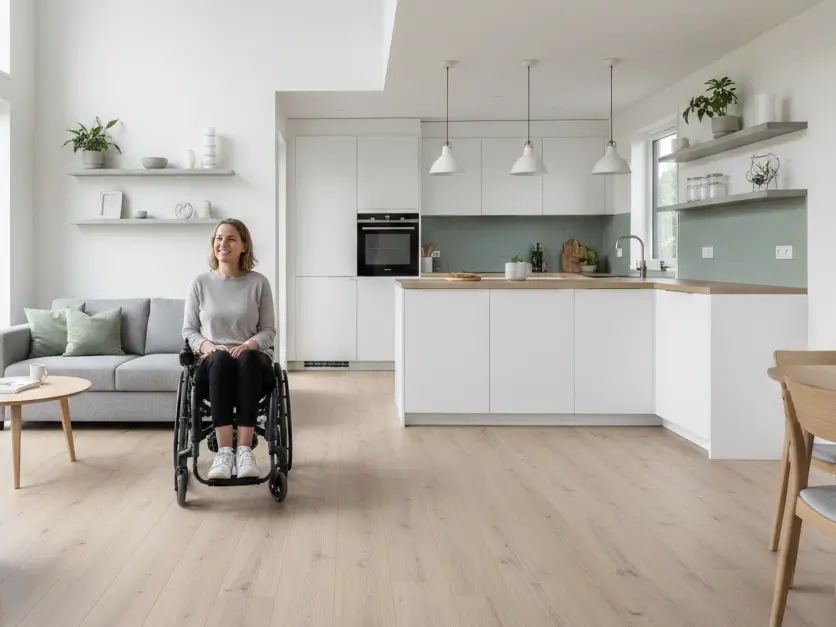
About 40% of tiny house owners are over 50. For this demographic, the “cute” sleeping loft is a future liability. The layout must center on main-floor living. This demands a longer footprint (28-34 feet) to accommodate a ground-floor bedroom and a larger bathroom (min 5×8 feet) for mobility maneuvering.
The No-Loft Rule
As we age, knees and hips often disagree with ladders. Even stairs can become a hassle.
The “Silver Tsunami” Layout Spec:
- Clearance: You need wider walkways. Aim for 32-36 inches rather than the standard tight 24 inches.
- Bathroom: A curb-less shower pan is essential for future accessibility. Standard tiny house fiberglass inserts often have high steps.
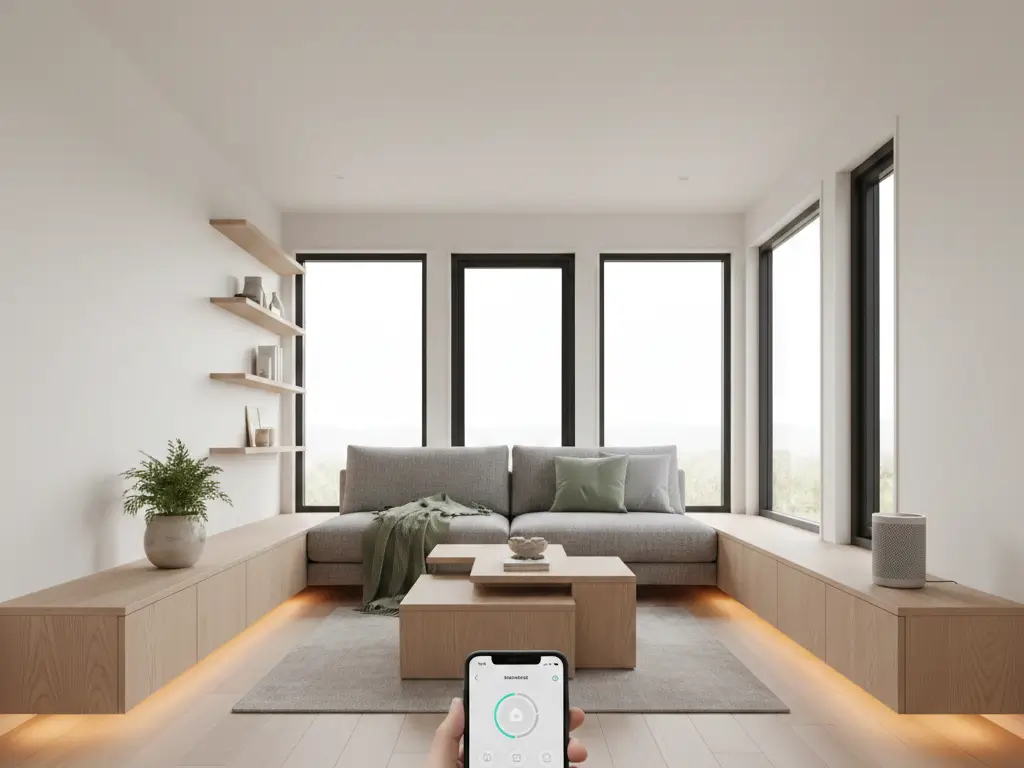
- Lighting: Eyesight changes require brighter, layered lighting. Under-cabinet lighting isn’t just aesthetic here; it’s a safety feature.
I always recommend that retirees look into accessibility design principles before buying a pre-built shell. Retrofitting a narrow bathroom later is incredibly expensive.
Comparison: Which Layout Fits Your Demographic?
Don’t buy a house built for a nomad if you are a nester. A solo layout maximizes flow; a family layout maximizes barriers (walls/doors). A couple’s layout maximizes sound dampening. Below is a quick comparison of space allocation based on who lives there.
| Feature | Solo Dweller (200 sq ft) | Couple (350 sq ft) | Family (600 sq ft) | Retiree (400 sq ft) |
| Sleeping | Loft (Open) | Loft (Enclosed/Curtain) | Bunks + Main Floor | Main Floor Bedroom |
| Kitchen | Kitchenette (6 ft) | Galley (8-10 ft) | Full L-Shape | U-Shape (Accessibility) |
| Storage | Open Shelving | Closed Cabinetry | Under-floor/Built-ins | Easy-reach Drawers |
| Priority | Flexibility/Office | Privacy/Sound | Durability/Safety | Comfort/Flow |
For any demographic, the “feel” of the space relies heavily on aesthetics. A family might want durable, bright surfaces, while a couple might want a moody, cozy vibe. Check out our guide on tiny house style aesthetics to match the look to the function.
The Pet Factor: The Hidden Roommate
We can’t talk about tiny house demographics lifestyle without mentioning the non-human residents. Over 60% of tiny house owners have pets.
In a 4,000 sq ft house, a dog crate is invisible. In 300 sq ft, it’s a coffee table.
- Cats: Vertical space is key. Cat walks along the ceiling beams save floor space.
- Dogs: You need designated “landing zones” for muddy paws near the door.
For specific build-outs, look at our guide to tiny houses with pets.
Final Thoughts
The statistics tell us that the tiny house movement is diverse, but your home shouldn’t be a statistic. It should be a glove that fits your life.
If you are a solo freelancer, don’t build a massive dining hall you’ll never use. If you are retiring, don’t let a builder talk you into a loft.
- Track where you spend your time for 48 hours.
- If you have a hobby like painting or biking, measure your gear. It needs a home.
- Demographic needs often clash with zoning (e.g., families need more space than some parking limits allow). Review tiny house legal and zoning issues.
Your demographic defines your design. Embrace it, and the small space will feel huge.
For more inspiration on how to start building, visit veniola.com.